Caffeine vs Modafinil: Which Improves Focus More?
If you've ever Googled caffeine vs modafinil at 2 AM during a shift, you're not alone. These are two of the most widely studied wakefulness-promoting medications, and there’s even head-to-head research comparing both options.
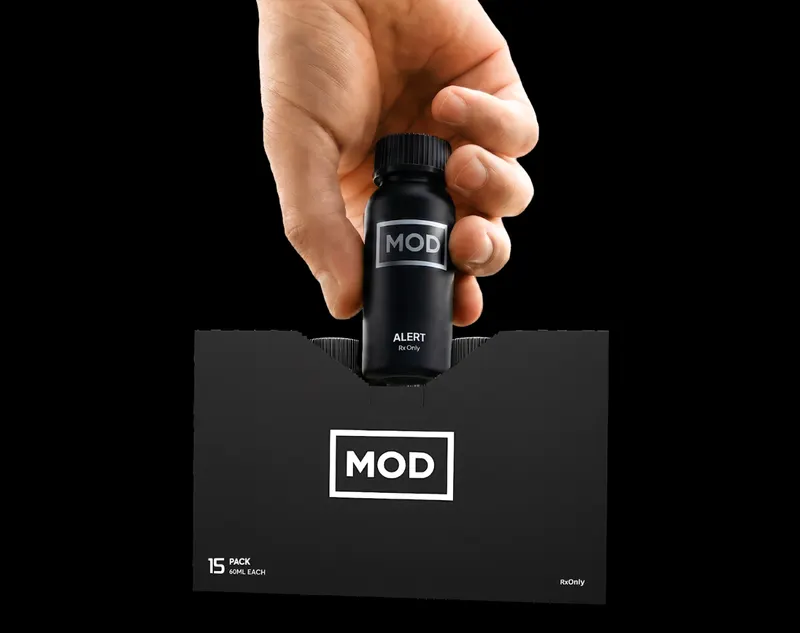
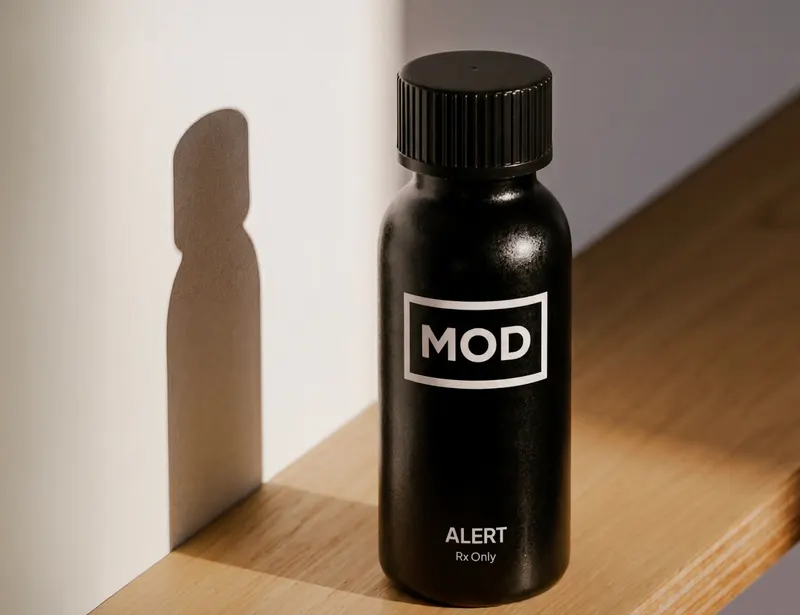
Here’s the honest answer: both can improve alertness, but they do it differently. Caffeine is faster and easier to get, while modafinil may provide longer-lasting wakefulness, steadier focus, and fewer crashes. And if you're wondering whether you have to choose between the two, MOD Alert by MOD is a prescription liquid medication that combines 150 mg of Modafinil and 60 mg of Caffeine in one formulation.
The right option depends on your symptoms, your schedule, and what your healthcare provider recommends.
Let's break down what science says.
Key Takeaways
- Duration of focus: Modafinil may last longer, with effects that often extend 12 hours, versus caffeine’s shorter 4 to 6 hour window
- Speed and accessibility: Caffeine wins, it kicks in faster, costs less, and is available without a prescription
- Sustained wakefulness: Modafinil may hold up better during longer periods of wakefulness, with a steadier feel for some people
- Tolerance: Caffeine tolerance can build quickly with daily use, while modafinil may stay effective longer for some users
- Practical trade-off: Caffeine is the simpler short-term option. Modafinil requires a prescription but may offer longer, steadier performance
- Bottom line: Both can improve alertness, but modafinil may offer smoother, longer-lasting wakefulness while caffeine remains the faster, more accessible choice

Quick Overview
Caffeine
Caffeine is the world's most widely used psychoactive substance. Found in coffee, tea, energy drinks, and over-the-counter pills, it works by blocking adenosine receptors in the brain, which helps reduce feelings of sleepiness. It’s fast, affordable, and easy to find.
The downside is that its effects are shorter-lived, and it can cause jitters, crashes, and sleep disruption for some people.
Modafinil
Modafinil (brand name: Provigil) is a prescription wakefulness-promoting medication approved for narcolepsy, obstructive sleep apnea, and shift work sleep disorder. It’s also classified as a Schedule IV controlled substance.
Unlike caffeine, modafinil appears to work mainly by reducing dopamine reuptake while affecting several wakefulness pathways. That broader effect may help support wakefulness for 12 to 15 hours with a smoother feel than caffeine for some people.
How Each Works: Mechanism of Action Explained Simply
How Caffeine Works
Think of adenosine as your brain's “time to sleep” signal. Throughout the day, adenosine builds up in your brain. The more that accumulates, the sleepier you feel. Caffeine is similar enough to adenosine to block those receptors, which helps you feel more alert.
The result is simple: your brain doesn’t register the sleepy signal as strongly. You feel more awake. But the underlying sleep pressure is still building, which helps explain why some people feel a crash later on.
Caffeine can also influence other neurotransmitters tied to alertness, including dopamine and acetylcholine.
How Modafinil Works
Modafinil takes a different route. Its main known action is weak inhibition of the dopamine transporter, which increases dopamine availability in the brain.
It may also affect:
- Norepinephrine, which supports alertness
- Orexin and histamine pathways, which help regulate wakefulness
- Other brain systems involved in attention and arousal
This broader wakefulness effect is one reason modafinil can feel different from caffeine. Instead of mainly blocking a sleepy signal, it appears to support several alertness pathways at once. The trade-off is that it usually takes longer to kick in and requires a prescription.
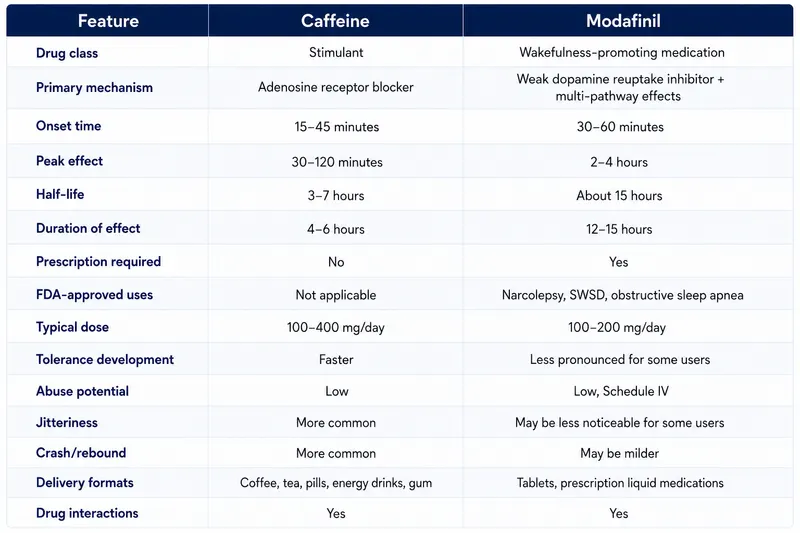
Feature-by-Feature Comparison: Caffeine vs Modafinil
Potential Side Effects Comparison
Both substances can cause potential side effects. For modafinil, potential side effects include headache, nausea, decreased appetite, anxiety, insomnia, dizziness, diarrhea, and runny nose.
Important: Modafinil can interact with other medications and may reduce the effectiveness of hormonal birth control. It may also interact with certain antibiotics, antivirals, and antifungals, so it’s important to review your current medications with your healthcare provider.
Who Should Choose Caffeine
Caffeine is likely the better choice if you:
- Need a quick boost for a few hours — studying for an exam, powering through an afternoon meeting, or finishing a project
- Don’t want to see a doctor or get a prescription — caffeine is available everywhere
- Are on a tight budget — caffeine is inexpensive and easy to dose
- Already respond well to coffee — if it works for you without major side effects, there may be no reason to switch
- Need flexibility in dosing — it’s easy to adjust throughout the day
- Want something socially effortless — nobody thinks twice about a cup of coffee
- Are otherwise healthy and well-rested — in one low-dose caffeine vs modafinil study, caffeine performed similarly for short-term cognitive tasks
The research backs this up. For healthy adults who aren’t chronically sleep-deprived, caffeine at standard doses may provide short-term focus benefits that are similar to modafinil’s.
Who Should Choose Modafinil
Modafinil may be the better option if you:
- Work overnight or rotating shifts — modafinil is FDA-approved for Shift Work Sleep Disorder
- Need focus for 10+ hours — one dose may cover a longer stretch without repeated dosing
- Experience significant jitters or anxiety from caffeine — some people find modafinil feels steadier
- Have built up strong caffeine tolerance — modafinil works through different pathways
- Deal with excessive daytime sleepiness related to a diagnosed sleep disorder
- Want fewer peaks and valleys — modafinil may provide more even wakefulness
- Have discussed it with your healthcare provider and they’ve determined it’s appropriate
For shift workers in particular, the longer duration can be a real advantage. MOD Alert by MOD contains 150 mg of Modafinil and 60 mg of Caffeine in a single liquid formulation designed for wakefulness and focus.
What About Using Both?
Some people use caffeine and modafinil together, and some prescription formulations are designed around that combination.
The idea is simple: caffeine can help with quicker early alertness, while modafinil may provide longer-lasting wakefulness as it builds. Products like MOD Alert by MOD are built around that approach, by combining Modafinil with Caffeine in one prescription liquid medication.
That said, combining stimulants can increase side effects, especially insomnia, anxiety, and elevated heart rate. This should be something you review with your prescribing provider.
Modafinil vs Coffee: The Everyday Practical Question
Most people searching modafinil vs coffee are really asking, “Should I replace my morning coffee with modafinil?” For most healthy, well-rested adults, probably not.
The Dagan head-to-head study found that 200 mg of caffeine performed similarly to 200 mg of modafinil for short-term cognitive performance. If coffee handles your focus needs and you sleep well, you may not need a prescription option.
Where the equation may change:
- You drink 4+ cups daily and still feel foggy — this may suggest caffeine tolerance
- You need all-day alertness from one dose — modafinil lasts much longer
- Coffee gives you anxiety or GI issues — another approach may feel more tolerable
- You work nights or rotating shifts — modafinil was developed for this kind of problem
Coffee is a tool. Modafinil is a tool. The better choice depends on the job.
Caffeine vs Modafinil for Shift Work: A Special Case
Shift workers face a different version of this question. The issue isn’t just feeling tired; it’s trying to stay alert when your body clock is pushing the other way. This is known as Shift Work Sleep Disorder.
Caffeine can temporarily offset sleepiness, but it does not fix circadian misalignment. Modafinil, by comparison, is approved specifically for shift work sleep disorder and is used to promote wakefulness during those hours.
Key considerations for shift workers:
- 12-hour shifts: Caffeine may require repeated dosing, while modafinil may last through more of the shift
- Rotating schedules: Caffeine tolerance can build quickly when intake becomes frequent
- Safety-sensitive roles: Longer, steadier wakefulness may matter more in jobs where lapses carry real risk
- Post-shift sleep: Timing matters with both, especially with modafinil’s longer half-life
For people with diagnosed SWSD, modafinil is the more evidence-based prescription option. For occasional overtime or one late night, caffeine may still be enough.
Final Verdict
There’s no single answer that fits everyone.
Choose caffeine if you want affordable, widely available focus for a few hours at a time.
Choose modafinil if you’re dealing with shift work, excessive daytime sleepiness, or situations where a short caffeine boost isn’t enough.
Or consider whether you need both. For some shift workers, a prescription option that combines modafinil’s longer duration with caffeine’s faster onset may be the most practical fit. See if MOD is right for you and take the online assessment.
Either way, talk to your doctor. Focus isn’t just about what you take, it’s also about sleep, nutrition, exercise, and addressing the root cause of your fatigue.
FAQs
Is modafinil stronger than caffeine?
Not necessarily stronger, but longer-lasting. Research suggests that at comparable doses, caffeine and modafinil can perform similarly in short-term tasks. Modafinil’s main advantage is duration.
Can you take caffeine and modafinil together?
Some people do, and some prescription formulations deliberately combine them. Because they work through different mechanisms, they may complement each other. However, combining them can also raise the risk of side effects like insomnia, anxiety, and elevated heart rate. Always consult your healthcare provider before combining them.
Does modafinil work if caffeine doesn’t?
It can. Because modafinil works differently from caffeine, some people with high caffeine tolerance still respond well to modafinil. MOD Alert by MOD pairs both ingredients in one prescription liquid medication.
Is modafinil safer than caffeine?
They have different risk profiles. Caffeine can cause jitters, crashes, and sleep disruption. Modafinil may cause potential side effects such as headache, nausea, decreased appetite, anxiety, insomnia, dizziness, diarrhea, and runny nose. Your healthcare provider can help determine which option is more appropriate for you.
How long does modafinil last compared to coffee?
Modafinil typically lasts 12 to 15 hours and has an elimination half-life of about 15 hours. Coffee is much shorter-lived by comparison, usually around 4 to 6 hours in noticeable effect.
Is modafinil addictive?
Modafinil is classified as a Schedule IV controlled substance, which means it has recognized medical use with lower abuse potential than Schedule II stimulants. That said, misuse is still possible and should be taken seriously.
Do I need a prescription for modafinil?
Yes. Modafinil requires a prescription in the United States. MOD offers telehealth prescribing through MOD.com for eligible patients seeking prescription liquid formulations such as MOD Alert.
What’s the best dose of caffeine for focus?
For many adults, 200 mg is a common moderate dose used in research. The Dagan comparison study used 200 mg of caffeine and found it comparable to 200 mg of modafinil in short-term testing.
This article is provided for informational purposes only and does not constitute medical advice. The information presented is not a substitute for professional medical advice, diagnosis, or treatment. Always consult your healthcare provider to discuss the risks, benefits, and appropriateness of any treatment.
MOD offers access to healthcare providers who may prescribe compounded medications for the treatment of excessive daytime sleepiness associated with shift work sleep disorder (SWSD), when clinically appropriate.
The featured products include compounded medications that have not been approved by the FDA. Compounded medications may be prescribed under federal law but are not the same as, nor are they generic versions of, any FDA-approved medication. The FDA does not review compounded medications for safety, effectiveness, or manufacturing quality of compounded products. A prescription will only be written if deemed appropriate after the digital consultation by the licensed medical provider. Individual results may vary.