How to Survive Night Shifts as a Server in 2026
You know the pattern: you drag through side work, feel strangely wired when you finally get home, and start the next shift only half-recovered.
That is not just a motivation problem. Sleep Foundation says about 20% of the U.S. full-time workforce does some form of shift work, and shift work sleep disorder affects 10% to 40% of people who work nontraditional shifts. A server ergonomics study found servers carried about 16.4 kg per hour, or 6.3 kg per tray. More than 90% reported standing 5 to 8 hours per shift.
The best way to survive night shifts as a server is to make the shift more predictable: protect a fixed sleep window, eat before the rush, use caffeine early, and hydrate through service. Then follow the same post-close wind-down every time. This guide helps you build that routine around real restaurant work: late meals, sore feet, caffeine timing, post-close recovery, and the point where normal night-shift fatigue may be worth discussing with a clinician.
Key Takeaways
- Night-shift survival for servers starts before clock-in with a protected sleep window, a real pre-shift meal, and a caffeine cutoff you decide in advance.
- OSHA says injury rates are 30% greater during night shifts than day shifts, so fatigue management is a safety issue, not just a comfort issue.
- CDC/NIOSH advises reducing food intake between midnight and 6 a.m. and avoiding large meals 1 to 2 hours before your main sleep episode.
- Healthy food for night shift workers is usually boring on purpose: protein, slower carbs, fruit, yogurt, water, and smaller snacks instead of giant post-close meals.
- A fixed sleep window is the most important prerequisite for surviving restaurant nights in 2026 because every other tactic works worse when sleep timing is random.
- If your sleepiness stays severe after you fix sleep timing, food, hydration, and caffeine habits, it may be time to ask a clinician about Shift Work Sleep Disorder (SWSD).
How to Survive Night Shifts as a Server Before Work
Before work, survive night shifts as a server by sleeping first, eating before service, planning caffeine early, and cutting as many decisions as possible. Generic advice about "just get more sleep" misses what serving actually feels like. You are moving fast, carrying weight, multitasking across tables, and then trying to sleep when the rest of the world is waking up.
Set a Sleep Anchor Before the Shift
Start with your sleep anchor. If you work steady nights, a Sleep Foundation guide recommends keeping a consistent sleep schedule even on days off when possible. If your schedule rotates, sleep soon after you get home and use a pre-shift nap when needed.
Prepare Food, Water, and Caffeine Early
Before you leave for work, handle the basics that usually fail first:
- Eat a real meal with protein and carbs.
- Pack one easy snack for the second half of the shift.
- Fill your water bottle before you get rushed.
- Put your caffeine plan on a timer instead of trusting tired judgment later.
- Bring backup socks or supportive insoles if your feet tend to get wrecked.
Treat Fatigue as a Safety Issue
OSHA reports accident and injury rates are 18% greater during evening shifts and 30% greater during night shifts, so fatigue is a safety issue as much as a comfort issue. That matters in restaurants because tired servers are still lifting trays, walking slick floors, handling hot plates, and driving home after close.
How to Survive Night Shifts as a Server With Better Food
To survive a night shift, most servers do best with a real pre-shift meal, smaller snacks during service, and a lighter post-close meal. A pre-shift meal is the best defense against the fries-all-night, giant-meal-at-2-a.m. cycle that wrecks recovery.
Eat a Real Meal Before Service
Servers often go in underfed, snack on fries or bread during the rush, crush caffeine late, then eat a huge post-close meal because they are starving. A real pre-shift meal gives you a better base before the rush starts.
Good options include:
- Rice and chicken
- Eggs and toast
- A turkey sandwich
- Yogurt with fruit
- A rice bowl with protein
Keep Overnight Snacks Small
CDC/NIOSH guidance says to avoid or reduce food intake between midnight and 6 a.m. It also recommends choosing high-quality foods during shift and avoiding large meals 1 to 2 hours before the main sleep episode.
For most servers, that means a snack you can eat fast, such as:
- A banana
- A protein bar
- Greek yogurt
- A cheese stick
- Nuts
Keep the Post-Close Meal Light
A NIOSH module also recommends avoiding alcohol, added sugar, and heavy, fatty, or spicy foods close to sleep.
If you are trying to sleep soon after getting home, aim for calm digestion, not a food coma.
How to Stay Sharp Through the 3 AM Wall
To stay sharp on a restaurant night shift, build alertness early with light, movement, food, and planned caffeine instead of trying to rescue yourself late. Early caffeine is the best alertness tool for most servers because it helps service without following you all the way into your sleep window.
Use Caffeine in the First Half of the Shift
If you slam caffeine late, skip water, and eat nothing until the rush is over, the back half of the shift gets ugly fast. A NIOSH sleep module notes that caffeine has a 5 to 6 hour half-life. That is why late coffee can still be hanging around when you are trying to sleep after close.
Move Before Your Focus Drops
Movement helps most when it happens before you are already fading. Reset your posture, walk the long route when service allows, refill water, or do a quick station reset before the late-shift crash hits.
Save Simple Tasks for the Slump
A workable server plan looks like this:
- Use your main caffeine in the first half of the shift.
- Move whenever service rhythm allows instead of locking into one posture.
- Eat a small snack before you get shaky or irritable.
- Save mentally simple side work for the part of the shift when your focus drops.
- Keep bright light on during work, then reduce light exposure on the way home.
If you know the 3 AM wall is coming, plan for it before service starts.
Protect Your Feet, Back, and Hydration on Shift
Servers protect themselves best when they treat body maintenance as part of the shift instead of something to worry about only after the pain starts. In the server ergonomics study, more than 90% of servers stood 5 to 8 hours per shift, and upper-back, lower-back, and neck discomfort were common by the end of the shift.
Choose Shoes Before Pain Starts
Wear the most supportive shoes your dress code allows. If your feet usually hurt by close, backup socks or supportive insoles are not extra, they are part of the shift plan.
Reset Posture During Natural Pauses
Reset your posture when you print checks, enter orders, wipe down stations, or wait for the kitchen. Those small resets matter more when you repeat them all night.
Hydrate Before You Feel Behind
Drink water between tables instead of waiting for a break that never comes. Dehydration makes fatigue feel worse, especially when the floor is hot, busy, or understaffed.
How to Survive Night Shifts as a Server After Close
After a closing shift, fall asleep faster with a dark, repetitive wind-down and a lighter meal that does not keep digestion running. A lighter post-close meal is often the better option for most servers because it may lower the chance that digestion keeps you awake.
Make the Commute Part of Recovery
Use the commute and first 30 minutes at home on purpose:
- Keep the ride home quiet.
- Wear dark sunglasses if you are leaving in full morning light.
- Avoid reward scrolling in bed.
- Keep the room cool, dark, and as quiet as possible.
- Eat lightly if you are hungry, not heavily because you feel entitled to it.
Cut Light Before Bed
As Sleep Foundation notes, most shift workers sleep fewer hours than non-shift workers. Your routine needs to protect the sleep you can get. Reducing bright light after close helps your body understand that the shift is over.
Keep the Wind-Down Short
A good wind-down does not need to be elaborate. It needs to be repeatable. Eat lightly, shower if needed, keep the room cool and dark, and avoid turning bedtime into another hour of scrolling.
How to Survive Night Shifts as a Server: Meal Plan
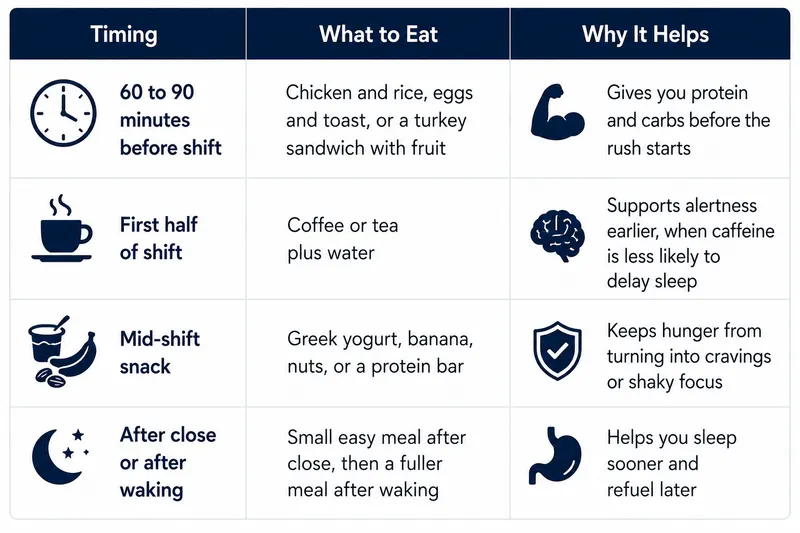
This 12 hour night shift meal plan works best when it keeps energy steady and avoids a heavy food hit right before sleep.
Before the Shift
Eat 60 to 90 minutes before clock-in. Choose protein and carbs so you are not trying to survive the rush on caffeine alone.
During the Shift
Use coffee or tea in the first half of the shift, then switch to water. Add a small snack before you feel shaky or irritable.
After Close
Eat a small, easy meal after close if you are hungry, then save the fuller meal for after waking.
The Biggest Night-Shift Mistakes Servers Make
Most servers struggle more on night shifts because they repeat a few predictable mistakes.
Starting the Shift Underfed
Going into the shift underfed makes late-night cravings, irritability, and over-caffeinating more likely.
Treating Caffeine Like an All-Night Drip
Caffeine works better when it is planned early. Late caffeine can make the post-close sleep window harder to protect.
Saving All Calories for After Close
A huge post-close meal may feel deserved, but it can make sleep harder if you are trying to go to bed soon after getting home.
Sleeping at Random Times
A random sleep schedule makes every shift harder. Even an imperfect sleep anchor is usually better than improvising every day.
Ignoring Severe Exhaustion
Constant exhaustion is not always “just hospitality.” If sleepiness stays severe after you fix the basics, it may be time to ask a clinician about SWSD.
When Night-Shift Fatigue Could Be Shift Work Sleep Disorder
Night-shift fatigue may be Shift Work Sleep Disorder when severe sleepiness and insomnia continue even after you tighten sleep, food, light, and caffeine habits.
Signs It May Be More Than Normal Tiredness
At that point, the conversation should get more clinical. Sleep Foundation says SWSD affects 10% to 40% of people who work nontraditional shifts, so it is not rare.
- Unsafe commutes
- Falling asleep unintentionally
- Severe sleepiness during work
- Staying wired during your planned sleep window
- Symptoms that continue after routine changes
When to Talk With a Clinician
If you are fighting unsafe commutes, falling asleep unintentionally, or staying wired during your planned sleep window even after doing the basics well, it is important to talk with a clinician.
Where Medication Fits
If medication becomes part of that discussion, keep the framing accurate. The active ingredient modafinil is FDA-approved as a wakefulness-promoting agent for excessive sleepiness associated with SWSD. MOD's products are compounded medications, not FDA-approved finished products.
For eligible patients, MOD offers a telehealth prescription process that includes provider review and ship-to-door fulfillment if prescribed. Depending on the plan, that may include a compounded prescription-strength drink that uses modafinil as a non-amphetamine wakefulness option for shift workers. Potential side effects with modafinil-based care can include headache, nausea, anxiety, and insomnia, so it is important to review risks and fit with your provider.
Where MOD Fits for Servers With SWSD Concerns
There is no single best fix for every server working nights. Routine changes should usually come first: protect your sleep window, time meals better, use caffeine earlier, stay hydrated, and make the post-close routine predictable.
Start With Routine Changes First
For servers whose main issue is a messy routine, sleep tools and schedule cleanup should come first because they improve recovery without adding more stimulation.
Use Coffee or Tea When the Problem Is Early-Shift Energy
For servers who mostly need help getting through the first half of service, coffee or tea is usually the better fit because it is simple and low-friction when used early.
Consider MOD When SWSD Is Part of the Conversation
For servers with persistent excessive sleepiness, unsafe commutes, or a pattern that sounds like SWSD, MOD may be worth discussing with a clinician because it is built around prescription wakefulness support for qualifying shift workers.
If you are still figuring out How to Survive Night Shifts as a Server after you have already tightened sleep, food, hydration, and caffeine habits, MOD may be worth evaluating as part of a clinical conversation.
Frequently Asked Questions
Why am I tired on the drive home but awake in bed?
That usually happens because your body is exhausted while your nervous system is still activated from bright light, movement, stress, food, alcohol, or late caffeine. The fix is a faster, darker, lower-stimulation wind-down rather than trying to out-scroll the problem. Keep the commute quiet, reduce morning light, eat lightly if needed, and get into a cool, dark room quickly.
How do you survive the night shift without crashing?
You survive the night shift by sleeping before work, eating before the rush, using caffeine early, and avoiding a messy post-close recovery. The more consistent your routine is, the less every shift feels like a separate emergency. For servers, the best plan is usually a real pre-shift meal, one fast snack, water during service, and a caffeine cutoff chosen before you get tired.
Is it unhealthy to work an overnight shift?
Working overnight is not automatically unhealthy, but it raises the risk of sleep disruption, fatigue-related mistakes, and harder recovery when your routine slips. OSHA says injury rates are higher on evening and night shifts, which is why sleep timing, food, hydration, and commute safety matter so much for servers. The goal is to reduce risk, not pretend the schedule is easy.
What if all I can eat all night is fries and dessert?
Eat before you clock in and bring one backup snack so the staff-food situation cannot fully dictate your night. Protein bars, Greek yogurt, fruit, nuts, sandwiches, rice bowls, and jerky are not glamorous, but they work better than trying to run a whole shift on fried leftovers. Even one planned snack can reduce the urge to overeat after close.
How do you sleep after a late or overnight shift?
Sleep comes easier after a late shift when you cut bright light, keep the room cool and dark, eat lightly, and get into bed quickly. A repeatable wind-down routine usually works better than trying random sleep hacks. If you leave work after sunrise, sunglasses on the commute and blackout curtains at home can make daytime sleep easier to protect.
Night-shift serving gets more manageable when you treat fatigue like a system problem. Build a routine you can repeat, protect your sleep like a shift, and get clinical help when the problem is bigger than normal restaurant burnout.
This article is provided for informational purposes only and does not constitute medical advice. The information presented is not a substitute for professional medical advice, diagnosis, or treatment. Always consult your healthcare provider to discuss the risks, benefits, and appropriateness of any treatment.
MOD offers access to healthcare providers who may prescribe compounded medications for the treatment of excessive daytime sleepiness associated with shift work sleep disorder (SWSD), when clinically appropriate.
The featured products include compounded medications that have not been approved by the FDA. Compounded medications may be prescribed under federal law but are not the same as, nor are they generic versions of, any FDA-approved medication. The FDA does not review compounded medications for safety, effectiveness, or manufacturing quality of compounded products. A prescription will only be written if deemed appropriate after the digital consultation by the licensed medical provider. Individual results may vary.
MOD is not a compounding pharmacy but a telemedicine service that links patients to licensed medical providers.