Shift Work Sleep Disorder Test (2026): Do You Have SWSD?

The best shift work sleep disorder test is a structured screening checklist that asks whether your insomnia, excessive sleepiness, and work schedule fit Shift Work Sleep Disorder. Here are the core signs: symptoms tied to night or rotating shifts, reduced sleep despite real sleep-protection efforts, and problems that keep showing up for at least 3 months.
If you're searching for a shift work sleep disorder test, you're probably trying to answer a practical question: is this normal night-shift exhaustion, or does it look like SWSD? A self-test cannot diagnose Shift Work Sleep Disorder, but it can show whether your pattern matches the clinical diagnosis criteria doctors review.
Cleveland Clinic says about 20% of the full-time U.S. workforce does some form of shift work, and SWSD affects 10% to 40% of people working nontraditional hours. This guide gives you a practical shift work sleep disorder checklist, explains diagnosis, shows what to track for 14 days, and lays out when it's important to stop white-knuckling it and talk to a provider.
Key Takeaways
- A useful shift work sleep disorder test is a screening tool, not a diagnosis.
- SWSD usually means both insomnia during planned sleep and excessive sleepiness during work or commute hours.
- Sleep Foundation notes that people with shift work disorder often lose 1 to 4 hours of sleep per night.
- Doctors usually want a 14-day sleep log, and they may add actigraphy or a sleep study to rule out something else.
- CDC/NIOSH data shows night-shift workers report more short sleep, insomnia, and daytime sleepiness than daytime workers.
- A positive self-screen plus drowsy driving, near-misses, or on-shift errors is a sign to arrange medical follow-up promptly.

Shift Work Sleep Disorder Test: Do You Have SWSD?
A shift work sleep disorder test is a screening checklist that asks whether insomnia, excessive sleepiness, and reduced sleep line up with a night, rotating, or early-morning work schedule for at least 3 months. It cannot diagnose SWSD, but it can show whether your pattern looks strong enough to justify medical follow-up.
Answer each item with yes or no based on your last 3 months:
- Do you regularly struggle to fall asleep or stay asleep when your schedule says it is time to sleep?
- Do you feel excessively sleepy during shifts, your commute, or hours when you must stay alert?
- Did your symptoms start or get much worse after moving to night, early-morning, rotating, or extended shifts?
- Are you sleeping less overall because your work schedule overlaps with the time your body naturally wants to sleep?
- Have these symptoms continued for at least 3 months?
- Have your symptoms hurt performance, mood, concentration, reaction time, or safety at work or on the road?
- Do your symptoms still happen even when you make a real effort to protect sleep, light exposure, and caffeine timing?
How to score it
Score the checklist by counting yes answers, then use the total to judge whether SWSD looks less likely, possible, or more likely.
0-2 yes answers:SWSD is less likely, though sleep debt or schedule problems may still be in play.3-4 yes answers:SWSD is possible. Start a 14-day sleep log.5-7 yes answers:SWSD is more likely and worth discussing with a provider.
This isn't an official shift work sleep disorder diagnosis. It's a pattern check built around timing, persistence, symptom severity, and whether another cause explains the problem better.
What a Shift Work Sleep Disorder Test Needs
A trustworthy self-test checks symptoms, duration, impairment, alternative causes, and whether you have enough pattern data for a clinician to review. It should connect symptoms to shift timing, confirm the 3-month window, and show whether the pattern is hurting safety or daily function. That gives a provider enough context to judge whether the problem fits SWSD or points somewhere else. A PubMed study found probable shift work disorder in 10.5% of workers on non-standard schedules and 12.7% of rotating shift workers.
Why SWSD Matters Now
SWSD matters now because more people are working schedules that fight their body clock while still being expected to make sharp decisions, drive home safely, and recover fast enough to do it again. Cleveland Clinic estimates that about 20% of the full-time U.S. workforce does some form of shift work, and SWSD affects 10% to 40% of people working nontraditional hours.
That gap between what your job demands and when your brain wants to sleep is not just annoying. It can raise the odds of short sleep, more errors, and drowsy driving, which is why a solid self-screen is worth taking seriously.
Shift Work Sleep Disorder Checklist: 7 Signs to Track
The clearest shift work sleep disorder checklist starts with the core symptoms, then adds the clues that show your fatigue is becoming a real medical or safety issue.
- Insomnia during planned sleep: You get home exhausted and still can't fall asleep, or you wake up too early and can't get back down.
- Excessive sleepiness during wake hours: You feel drowsy during charting, driving, monitoring screens, or other work that requires attention.
- Shortened total sleep time: Sleep Foundation reports that people with shift work disorder often lose 1 to 4 hours of sleep per night.
- Concentration problems: Brain fog, slower reaction time, missed steps, and more rereading than usual.
- Mood changes: Irritability, low frustration tolerance, or feeling emotionally fried after strings of shifts.
- Physical spillover: Headaches, stomach issues, or feeling "wired and tired" at the same time.
- Safety consequences: Near-misses, microsleeps, drifting lanes on the drive home, or mistakes you normally would not make.
CDC/NIOSH found that night-shift workers had the highest risk for sleep problems in its analysis.
How Doctors Diagnose Shift Work Sleep Disorder
Doctors diagnose shift work sleep disorder by matching symptoms to your schedule, confirming the pattern over time, and ruling out other causes.
Providers usually compare your symptoms with shift timing, sleep opportunity, daytime sleepiness, and clues that point to sleep apnea, insomnia, or medication effects.
That is why details about snoring, stimulant use, mood changes, and recovery sleep often matter during the workup.
StatPearls adds that polysomnography usually is not needed unless another disorder such as sleep apnea is suspected.
What to Track for 14 Days Before Your Appointment
Track your sleep timing, total sleep, shift hours, caffeine, medications, and safety lapses for 14 days so your provider can see the pattern clearly.
- (What to track) - Shift start and end time, (Why it matters) - Shows schedule pattern, (Example) - 7 PM to 7 AM
- (What to track) - Time you got in bed, (Why it matters) - Measures sleep opportunity, (Example) - 8:30 AM
- (What to track) - Time you think you fell asleep, (Why it matters) - Shows sleep onset delay, (Example) - 9:20 AM
- (What to track) - Wake-ups during sleep, (Why it matters) - Captures fragmentation, (Example) - Woke twice
- (What to track) - Final wake time, (Why it matters) - Shows total sleep window, (Example) - 2:15 PM
- (What to track) - Caffeine, nicotine, alcohol, meds, (Why it matters) - Helps explain interference, (Example) - Coffee at 2 AM
- (What to track) - Sleepiness rating before work, mid-shift, commute home, (Why it matters) - Highlights risk windows, (Example) - 8/10 at 6 AM
- (What to track) - Errors, near-misses, lane drifting, missed alarms, (Why it matters) - Flags safety urgency, (Example) - Nearly nodded off driving home
Could It Be Sleep Apnea, Insomnia, or Burnout Instead?
A positive shift work sleep disorder test does not automatically mean SWSD because several other conditions can cause overlapping symptoms.
- (Condition) - SWSD, (Clues that point there) - Symptoms line up with shift timing and improve when schedule normalizes, (What usually comes next) - Sleep log, actigraphy, schedule review
- (Condition) - Obstructive sleep apnea, (Clues that point there) - Loud snoring, witnessed pauses, morning headaches, high blood pressure, (What usually comes next) - Sleep study or home sleep apnea test
- (Condition) - Primary insomnia, (Clues that point there) - Trouble sleeping even without shift overlap, (What usually comes next) - Broader insomnia assessment
- (Condition) - Burnout or depression, (Clues that point there) - Low mood, loss of interest, emotional exhaustion beyond sleep timing, (What usually comes next) - Mental health screening plus sleep review
- (Condition) - Medication or substance effect, (Clues that point there) - Sleep disruption changed after stimulant, alcohol, cannabis, or sedative use, (What usually comes next) - Medication review and adjustment
Cleveland Clinic notes that providers may order a sleep study or other tests to rule out another condition such as sleep apnea or medication side effects.
When a Shift Work Sleep Disorder Test Is Urgent
A positive self-test becomes urgent when your symptoms are affecting safety, especially during the commute home or during high-consequence work. OSHA says accident and injury rates are higher during evening and night shifts than day shifts, so the red flags below are not "push through it" issues:
- You have nodded off at a red light or drifted in your lane.
- You are missing charting steps, forgetting routine tasks, or making unusual errors.
- Coworkers have noticed you zoning out.
- You need extreme caffeine escalation just to stay minimally functional.
- You feel unsafe supervising patients, driving, handling tools, or making decisions.
If any of those are happening, it's important to change how you get home and arrange medical follow-up promptly. If you are too sleepy to drive, find another ride, nap before leaving, or use employer support if available.
Shift Work Sleep Disorder Test Next Steps
Shift work sleep disorder treatment usually starts with schedule and light strategy, then adds sleep-timing tools or medication when symptoms are persistent or high-risk. Cleveland Clinic says treatment can include lifestyle changes, light therapy, and medication.
1. MOD Telehealth Prescription for Shift Workers
Best for: Shift workers who want a shift-worker-specific telehealth prescription path rather than a broad general telehealth platform
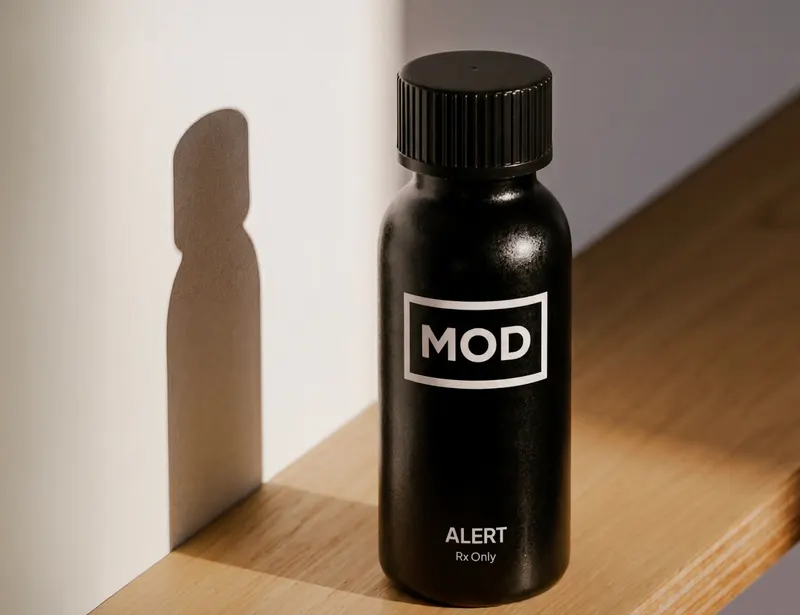
MOD is the most tailored product option in this guide for people who want a shift-worker-specific telehealth prescription workflow. A licensed provider reviews your intake, and if prescribed, medication ships to your door.
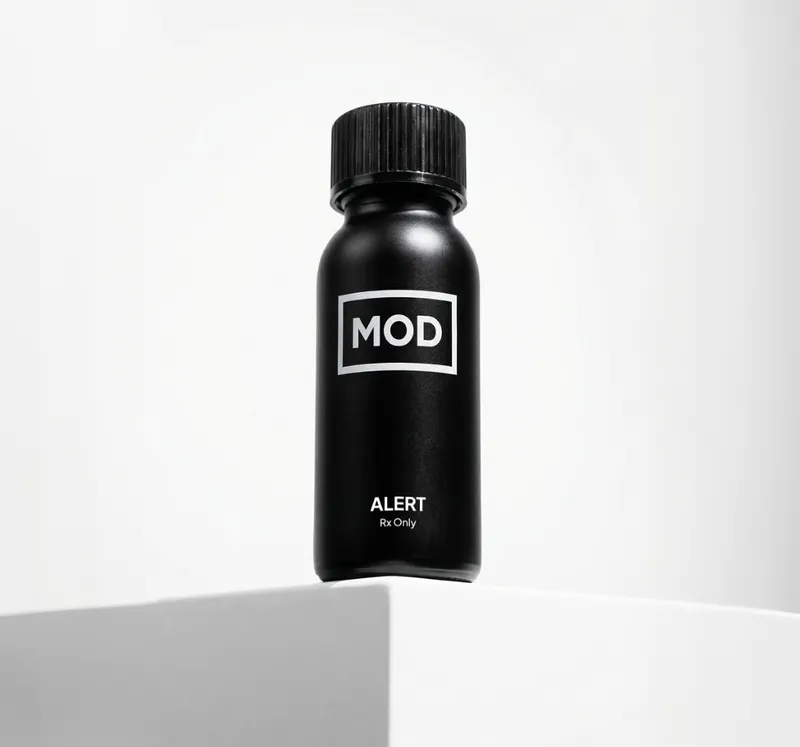
MOD products are compounded medications, even though modafinil, one active ingredient in MOD Alert, is FDA-approved for Shift Work Sleep Disorder. MOD Alert is positioned as a compounded prescription-strength drink built around modafinil and caffeine, with modafinil acting as a non-amphetamine wakefulness-promoting medication. It is still important to review potential side effects, interactions, and fit with your provider.
If you want a closer look at that shift-worker-specific route, learn more about MOD.
2. Sleep Scheduling and Light Control
Best for: People with mild to moderate symptoms, especially if their schedule is at least somewhat predictable
This is usually the first lifestyle move because it targets the circadian mismatch directly. It is relatively low cost, but it can be hard to execute with rotating shifts or a noisy daytime home. Start here if symptoms are mild to moderate and you still have room to improve your routine.
3. Melatonin or Other Sleep-Timing Support
Best for: People who can fall asleep eventually but struggle to shift sleep timing after night or early-morning work
These tools may help when the main problem is falling asleep at the wrong hour rather than staying awake on shift. They cost less than most prescription approaches, but timing mistakes can make grogginess worse and they are often not enough on their own when symptoms are severe.
4. Prescription Wakefulness Medication
Best for: People with diagnosed SWSD or persistent symptoms that warrant provider evaluation, especially when sleepiness affects work, safety-sensitive duties, or the commute home
This comes into the picture when schedule cleanup is not enough and the safety stakes are real. The DailyMed label for modafinil lists it as approved to improve wakefulness in adults with excessive sleepiness associated with SWSD.
In a separate New England Journal of Medicine trial, modafinil reduced commute-home accidents or near-accidents from 54% with placebo to 29% with treatment, though residual sleepiness remained. This option has a stronger evidence base than consumer fatigue hacks, but it does not fix circadian mismatch by itself and potential side effects or interactions still matter.
Best Practices if Your SWSD Screen Looks Positive
- Keep a 14-day sleep log before your appointment so the provider can compare symptoms, shift timing, and recovery days.
- Protect your sleep window aggressively with blackout curtains, earplugs or white noise, and a post-shift routine that does not slide all over the place.
- Time caffeine carefully so it supports your shift without wrecking the sleep block you are trying to preserve later.
- Bring up potential side effects, safety issues, snoring, and mental health symptoms honestly so the evaluation does not miss another cause.
- If your job or commute has become unsafe, treat that as a prompt medical issue rather than something to grind through.
Common Mistakes After a Positive SWSD Self-Test
- Treating a self-test score like a diagnosis instead of a reason to get assessed properly.
- Leaning harder on caffeine while ignoring light exposure, sleep timing, and actual time in bed.
- Brushing off drowsy driving, microsleeps, or near-misses because they feel "normal" after night shifts.
- Assuming every fatigue problem is SWSD when sleep apnea, insomnia, depression, or medication effects may also be involved.
- Starting a medication conversation without also talking through potential side effects, schedule realities, and whether the plan fits your job demands.
Conclusion
A shift work sleep disorder test cannot diagnose you, but it can help you see whether your symptoms follow a pattern worth taking seriously. If insomnia, excessive sleepiness, reduced sleep, and safety issues keep lining up with your shift schedule, the next step is not more guesswork. It is better tracking, a clear conversation with a healthcare provider, and a plan that matches your actual work hours.
For shift workers who need more than general sleep advice, MOD offers a prescription-focused path built around the realities of night, rotating, and extended shifts. MOD products are compounded medications designed for patients with Shift Work Sleep Disorder, and a licensed provider can help determine whether a MOD option fits your symptoms, health history, schedule, and safety needs. See if MOD is right for you.
Frequently Asked Questions
How do I know if this is SWSD or if I am just burned out?
You are more likely dealing with SWSD when symptoms track your shift schedule and sleep window instead of showing up as all-day emotional exhaustion. SWSD symptoms track closely with your work hours, while burnout usually spills beyond sleep timing into motivation, mood, and emotional exhaustion. If you also have loud snoring, breathing pauses, or mood symptoms that feel bigger than fatigue, bring that up with a provider.
Is there an official shift work sleep disorder test?
No single online quiz can diagnose SWSD. An official shift work sleep disorder diagnosis comes from a healthcare provider who reviews your symptoms, schedule, sleep log, and whether another condition explains the problem better. A self-test is still useful because it can organize your symptoms before an appointment and show whether your sleepiness, insomnia, and work schedule follow a consistent pattern.
What does a shift work disorder diagnosis require?
A shift work disorder diagnosis usually requires symptoms that match the shift schedule, persist for at least 3 months, and impair function. Sleep Foundation says providers also usually want at least 14 days of sleep tracking. A provider may also review caffeine use, medication timing, snoring, mental health symptoms, and recovery sleep before deciding whether the pattern fits SWSD.
What tests are used to diagnose shift work disorder?
Doctors usually use a shift history, symptom review, and a 14-day sleep log, then add actigraphy or other tests as needed. Sleep Foundation says actigraphy can help document your sleep-wake pattern at home. A sleep study may also help rule out causes such as sleep apnea when your symptoms suggest something beyond SWSD.
When should I talk to a doctor, and can modafinil help?
Talk to a doctor when symptoms last 3 months, your checklist score is high, or sleepiness is creating driving or work-safety problems. If prescribed appropriately, modafinil can help improve wakefulness in adults with excessive sleepiness associated with SWSD. It is not a substitute for diagnosis, sleep protection, or safety planning.
This article is provided for informational purposes only and does not constitute medical advice. The information presented is not a substitute for professional medical advice, diagnosis, or treatment. Always consult your healthcare provider to discuss the risks, benefits, and appropriateness of any treatment.
MOD offers access to healthcare providers who may prescribe compounded medications for the treatment of excessive daytime sleepiness associated with shift work sleep disorder (SWSD), when clinically appropriate.
The featured products include compounded medications that have not been approved by the FDA. Compounded medications may be prescribed under federal law but are not the same as, nor are they generic versions of, any FDA-approved medication. The FDA does not review compounded medications for safety, effectiveness, or manufacturing quality of compounded products. A prescription will only be written if deemed appropriate after the digital consultation by the licensed medical provider. Individual results may vary.
MOD is not a compounding pharmacy but a telemedicine service that links patients to licensed medical providers.