If Every Energy Drink Crashes You, You're Not the Problem
You drink the energy drink. You feel great, maybe for an hour, maybe two. Then it hits: the headache, the fog, the drag that's somehow worse than before you cracked the can. So you try a sugar-free version. Same result. You try a different brand. Still crashing. At this point it's easy to think something is wrong with you. There isn't. The energy drink crash is a predictable physiological outcome, and it is a common experience for many people who rely on energy drinks.
Key Takeaways
- An energy drink crash happens because of two separate mechanisms: caffeine blocking adenosine receptors, which then flood back, and a blood sugar spike followed by a sharp drop.
- The caffeine half-life is about 5 hours for most adults, meaning the worst of the crash often hits mid-shift or mid-afternoon, exactly when you need to be sharp.
- Sugar-free energy drinks remove the blood sugar problem but leave the adenosine rebound intact, so you can still crash.
- Caffeine tolerance develops quickly with regular use, which means daily energy drink users often need progressively more caffeine to feel the same effect.
- Shift workers are especially vulnerable because energy drink use at irregular hours compounds adenosine disruption with circadian rhythm desynchronization.
- The crash is not about willpower, and for many people it comes down to how energy drinks work in the body.
What Is an Energy Drink Crash?
An energy drink crash is the sudden onset of fatigue, headache, irritability, and difficulty concentrating that can occur 2 to 6 hours after consuming an energy drink, usually driven by caffeine rebound and, in sugary drinks, sometimes worsened by a blood sugar drop.
In other words: the alertness you felt wasn't free. Your body was borrowing energy against a debt that always comes due. When caffeine wears off, you don't return to your baseline, you often land below it. That's the crash.
It's not one thing. It's two things happening at once, and most energy drinks trigger both.
The Two-Part Crash: Adenosine Rebound + Sugar Spike
Understanding the energy drink crash requires looking at what's happening in your brain and bloodstream simultaneously. The two drivers, caffeine's effect on adenosine and the blood sugar rollercoaster, compound each other.
Part 1: The Caffeine Trap, Adenosine Rebound
Adenosine is a neurotransmitter that accumulates in your brain the longer you're awake. The more it builds up, the more tired you feel. Caffeine works by blocking adenosine receptors. It doesn't eliminate adenosine, it just keeps it from docking, as explained in this overview of caffeine withdrawal.
The problem: adenosine keeps accumulating the entire time caffeine is blocking it. When the caffeine clears, all that built-up adenosine floods the receptors at once. That's the crash, not a slow fade, but a wave.
Caffeine's half-life is approximately 5 hours for most healthy adults, though it can vary widely depending on metabolism, age, medications, smoking status, and pregnancy. For a 200 mg energy drink consumed at noon, that means significant caffeine decline starts around 5 PM, right when a long-day or early-evening shift worker needs to stay sharp.
Energy drinks typically contain 150 to 300 mg of caffeine per can, and some brands push higher. The FDA recommends no more than 400 mg per day for most healthy adults, a limit that one or two strong energy drinks can push you close to.
Part 2: The Sugar Spike That Tanks Your Blood Glucose
The caffeine rebound is only part of the story for most energy drinks. The sugar load adds a second crash on top of it.
A standard can of Rockstar contains 62 g of sugar. Monster has 54 g. Red Bull has 38 g. The American Heart Association recommends no more than 36 g of added sugar per day for men and 25 g for women. A single energy drink can blow past those limits before lunch.
That much sugar causes a rapid spike in blood glucose, which triggers an insulin response to bring it back down. The correction can feel steep, leaving you with low energy, difficulty concentrating, and that irritable, foggy feeling that makes the post-drink slump feel worse than the tiredness that drove you to drink it in the first place.
The sugar crash typically hits 2 to 4 hours post-consumption. The caffeine rebound follows 3 to 6 hours out. If you drink a sugary energy drink mid-morning, you're looking at a two-wave crash system arriving right through the afternoon.
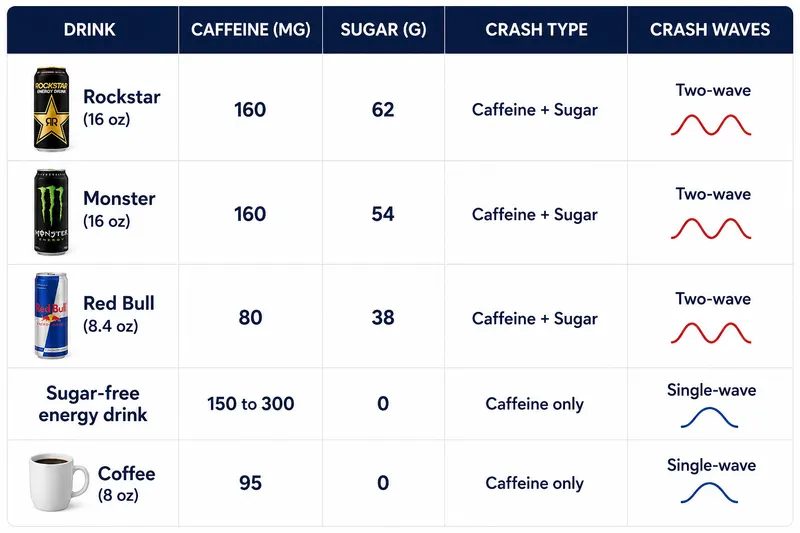
Yes, sugar-free energy drinks still cause a crash. They eliminate the blood sugar problem but leave the caffeine and adenosine rebound completely intact.
If you've switched to sugar-free versions hoping to fix the crash and found it didn't help much, that's why. The sugar was one driver, but not the only one. Removing it reduces the severity and timing of the first crash wave, but the caffeine rebound still hits when the caffeine clears your system.
There's also an emerging area of research suggesting that sugar-free energy drinks may not be as metabolically neutral as their marketing implies, though more human studies are needed before drawing firm conclusions.
Bottom line: going sugar-free is a partial fix, at best.
How Long Does an Energy Drink Crash Last?
For occasional energy drink users, the acute crash typically passes within a few hours once it sets in. The timing depends on which wave hits: the blood sugar drop, usually 2 to 4 hours post-drink, or the caffeine decline, often 3 to 6 hours out, with full caffeine clearance taking much longer, as outlined in this review of caffeine pharmacology.
For daily energy drink users, the picture changes. If you drink them every day, your body adapts to constant caffeine presence, and skipping even one day can trigger caffeine withdrawal, which is a different, more prolonged experience. This summary of caffeine withdrawal timing notes that withdrawal often begins 12 to 24 hours after cessation, peaks at 20 to 51 hours, and can last 2 to 9 days.
That's not a caffeine crash, that's a dependency cycle. And energy drinks, with their high caffeine loads, accelerate it.
Why Some People Crash Harder Than Others
Not everyone hits the wall the same way. Several factors determine crash severity:
Caffeine metabolism speed. The CYP1A2 liver enzyme processes caffeine. People with slower-metabolizing variants clear caffeine more slowly, which sounds like a benefit, but it means adenosine blockade lasts longer and the rebound can be sharper when it finally clears.
Caffeine tolerance. Habitual energy drink consumers are often in a cycle where they're not getting the same boost anymore, they're mostly drinking to feel normal and avoid withdrawal. Daily use creates a fatigue deficit that compounds over time.
Timing relative to your circadian rhythm. Consuming energy drinks at irregular hours, especially night shifts, compounds the adenosine disruption with circadian misalignment. Shift workers dealing with Shift Work Sleep Disorder, or SWSD, are especially vulnerable because their baseline sleep-wake rhythm is already disrupted.
Sensitivity to blood sugar swings. People with insulin sensitivity differences or those who consume energy drinks on an empty stomach will often experience sharper glucose spikes and steeper corrections, intensifying the blood sugar crash.
What the Crash Actually Feels Like
Common symptoms of an energy drink crash include:
- Headache, the most common complaint and the most consistently documented caffeine withdrawal symptom
- Intense fatigue, worse than baseline tiredness
- Difficulty concentrating, mental fog and poor focus
- Irritability, emotional dysregulation accompanying the neurochemical dip
- Jitteriness or restlessness, sometimes reported during the tail end of the caffeine phase
- Dizziness, particularly in people sensitive to blood pressure or blood sugar shifts
- Depressed mood, which can accompany caffeine withdrawal
The headache component deserves special mention. Clinical literature on caffeine withdrawal headache recognizes it as a real withdrawal symptom.
How to Recover From an Energy Drink Crash
There's no instant fix, but a few strategies for boosting energy without crashing can shorten the recovery window:
Water. Caffeine has mild diuretic effects. Mild dehydration compounds fatigue and headaches. Drinking water during and after an energy drink helps blunt both.
Food with protein and complex carbs. If you're in a sugar crash, eating a balanced meal, not more sugar, helps stabilize blood glucose more sustainably than another energy drink.
Walk or move briefly. Light physical movement increases alertness through mechanisms separate from caffeine, including increased cerebral blood flow.
Wait it out. Sometimes the crash needs to be cleared. The worst of the acute crash is usually over within 1 to 2 hours for occasional users. Reaching for another energy drink at this point restarts the cycle and builds tolerance faster.
Avoid stacking. The temptation to drink a second energy drink mid-crash is real. It provides short-term relief and deepens the tolerance trap. Over time, this is how energy drink users end up needing three cans a day just to feel functional.
Is There a Way to Get Energy Without the Crash?
The adenosine rebound crash is a design feature of caffeine's mechanism, not a flaw in any particular product. Every caffeine source triggers it to some degree. Any caffeine-based product, energy drink, coffee, or caffeine pill, sets off the same rebound pathway. The real question is whether there are options that work through different mechanisms.
Modafinil, a wakefulness-promoting agent, is one studied alternative. Unlike caffeine, modafinil's mechanism does not rely primarily on adenosine receptor blockade. A comparison study on modafinil and caffeine during sleep deprivation found that both helped maintain alertness, but they worked differently and had different performance profiles.
Modafinil is FDA-approved for excessive sleepiness associated with Shift Work Sleep Disorder, narcolepsy, and obstructive sleep apnea. It is often used when sustained wakefulness is needed over a longer window than caffeine typically provides.
If you're in a crash cycle and nothing OTC is helping, especially if you work shifts, it may be worth learning whether a prescription-strength alternative to energy drinks is appropriate for your situation.
Modafinil Side Effects and Safety
Modafinil isn't caffeine, and it's important to understand what you're working with before considering it.
Potential side effects of modafinil may include headache, nausea, decreased appetite, anxiety, insomnia, dizziness, diarrhea, and runny nose.
Drug interactions: Modafinil may reduce the effectiveness of hormonal contraceptives and can interact with certain medications. Tell your prescribing provider about all medications and supplements you're taking.
Who should not use modafinil: Modafinil is not appropriate for people with a history of hypersensitivity to the drug, certain heart conditions, or those who are pregnant or breastfeeding. It's a Schedule IV controlled substance, it requires a prescription, and only a licensed provider can determine whether it's appropriate for you.
As with any prescription medication, consult your healthcare provider to review whether modafinil is right for your specific situation.
How to Get Started with MOD
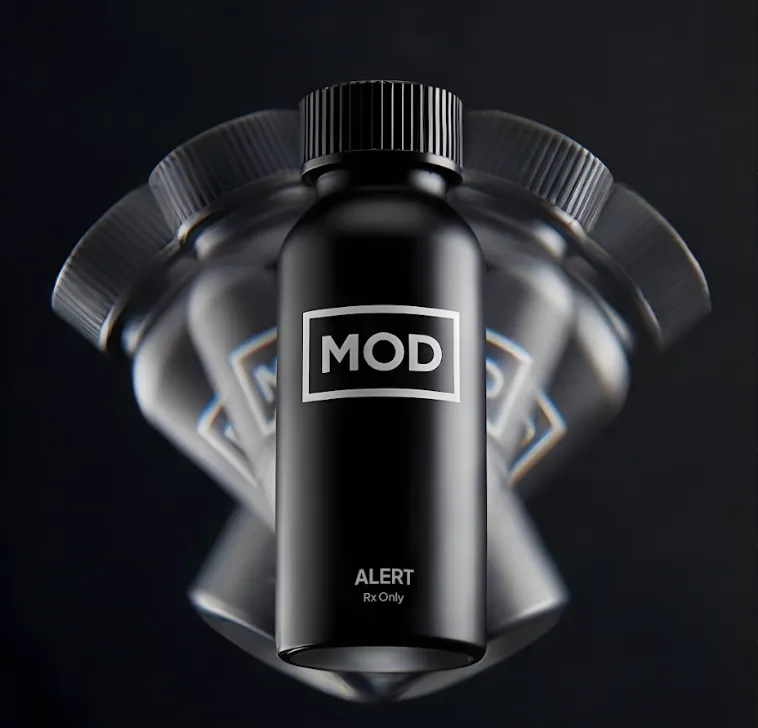
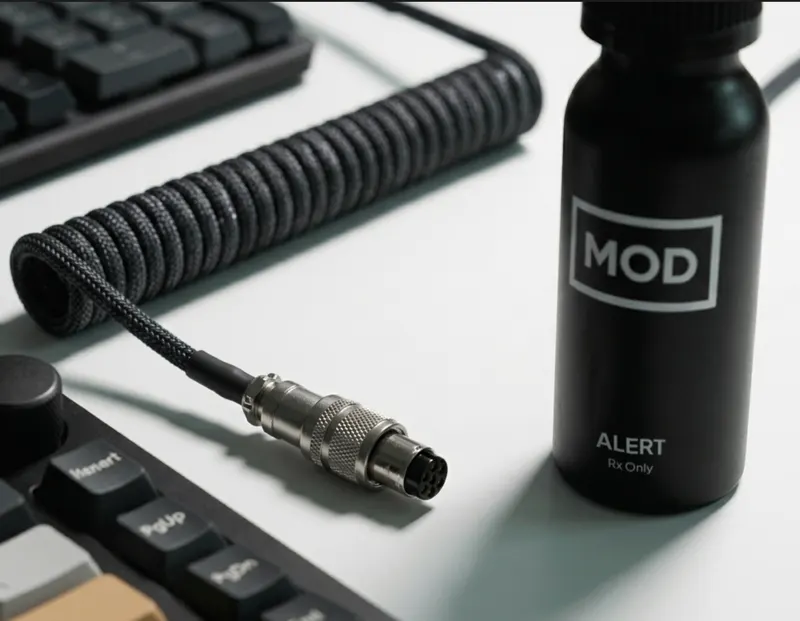
If your work schedule makes caffeine-based solutions structurally insufficient, you can access Modafinil through MOD.com's compounded prescription-strength drinks, specifically designed for people with Shift Work Sleep Disorder.
MOD offers MOD Alert, which combines Modafinil 150 mg + caffeine 60 mg.
The process is fully telehealth: complete an online intake form, a licensed provider reviews your information, and if appropriate, your medication ships directly to your door. No waiting rooms.
See if MOD is right for you, take the free online assessment →
Frequently Asked Questions
Why do energy drinks crash you?
Energy drink crashes happen because of two compounding mechanisms: caffeine temporarily blocks adenosine receptors while adenosine keeps accumulating, then floods back when caffeine clears. For sugary drinks, a blood sugar spike triggers an insulin response that can leave you feeling depleted afterward. Both waves can hit within 2 to 6 hours of consumption.
How long does an energy drink crash last?
For occasional users, the acute crash typically passes within a few hours. For daily energy drink users, skipping a drink can trigger caffeine withdrawal. This overview of withdrawal timing and symptoms notes that it begins 12 to 24 hours after stopping, peaks at 20 to 51 hours, and can last 2 to 9 days.
Do sugar-free energy drinks still cause a crash?
Yes. Sugar-free energy drinks eliminate the blood sugar crash but leave the caffeine and adenosine rebound intact. If you've tried sugar-free versions and still crashed, that's why.
What is the difference between a caffeine crash and a sugar crash?
A caffeine crash is caused by adenosine receptor rebound when caffeine clears, often starting a few hours after consumption. A sugar crash is tied to the body's response to a large sugar spike. Both can happen from the same energy drink and overlap.
Can energy drinks cause long-term fatigue?
They can contribute to it. Regular caffeine use can build tolerance and increase the chance that people are using caffeine mainly to avoid withdrawal rather than to gain real energy.
How do I avoid the energy drink crash?
Moderating caffeine intake, eating before consuming caffeinated drinks, using sugar-free options, and honoring your caffeine cutoff time, no caffeine within 6 to 8 hours of intended sleep, can all reduce crash severity. For people who need sustained alertness over 8 to 12 or more hours, especially shift workers, caffeine-based solutions may be structurally insufficient.
Why does caffeine make me feel tired instead of awake?
If caffeine consistently makes you feel tired, it may indicate high baseline caffeine tolerance. It can also mean the crash is arriving faster than you expect, or that caffeine is disrupting your sleep quality and keeping you chronically sleep-deprived.
What are the symptoms of an energy drink crash?
Energy drink crash symptoms include sudden intense fatigue, headache, difficulty concentrating, irritability, and depressed mood. Some users also experience dizziness and jitteriness.
How do you recover from an energy drink crash?
The fastest recovery from an energy drink crash combines drinking water, eating protein with complex carbs to stabilize blood glucose, and brief light movement to boost alertness through non-caffeine pathways. The acute crash typically passes in 1 to 2 hours for occasional users. Avoid drinking another energy drink mid-crash, it restarts the cycle and accelerates tolerance buildup.
This article is provided for informational purposes only and does not constitute medical advice. The information presented is not a substitute for professional medical advice, diagnosis, or treatment. Always consult your healthcare provider to discuss the risks, benefits, and appropriateness of any treatment.
MOD offers access to healthcare providers who may prescribe compounded medications for the treatment of excessive daytime sleepiness associated with shift work sleep disorder (SWSD), when clinically appropriate.
The featured products include compounded medications that have not been approved by the FDA. Compounded medications may be prescribed under federal law but are not the same as, nor are they generic versions of, any FDA-approved medication. The FDA does not review compounded medications for safety, effectiveness, or manufacturing quality of compounded products. A prescription will only be written if deemed appropriate after the digital consultation by the licensed medical provider. Individual results may vary.