Best Energy Drinks for ER Doctors and Residents 2026
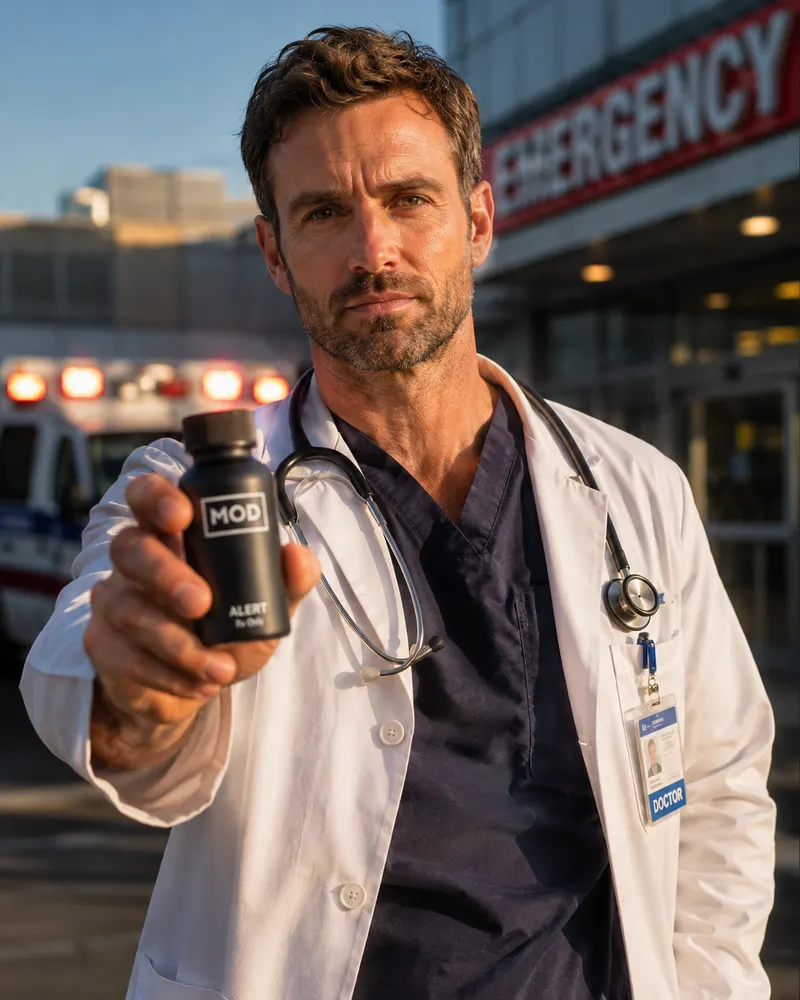
Twelve-hour shifts, unpredictable trauma cases, and critical decisions at 3 AM demand more than a vending machine can provide. ER doctors and residents face a unique challenge: staying alert enough to save lives while managing the physiological toll of chronic sleep disruption and circadian misalignment.
The stakes are higher than most professions. When 27% of resident physicians turn to energy drinks during night shifts, choosing the right option becomes a clinical decision in itself. The wrong choice can mean a hard crash mid-code, jitters during a delicate procedure, or insomnia that ruins the next day's recovery sleep. For healthcare professionals dealing with excessive daytime sleepiness or shift work sleep disorder, prescription options like MOD Alert offer an alternative to traditional energy drinks, combining modafinil with caffeine for wakefulness support that may last up to 12 hours.
This guide breaks down what actually works for ER professionals, from evidence-based caffeine strategies to prescription medications designed specifically for shift work demands. Whether you need something from the break room vending machine at 2 AM or a more structured approach to managing overnight fatigue, these options address the real challenges of emergency medicine schedules.
Key Takeaways
- MOD Alert provides prescription wakefulness support with 150 mg modafinil and 60 mg caffeine, designed for adults managing demanding shift schedules and excessive daytime sleepiness associated with SWSD
- Evidence suggests 100 to 200 mg caffeine improves reaction time by 8 to 14% in sleep-deprived workers, making dose control essential
- Caffeine timing matters: consuming caffeine in the last four to five hours of a night shift compromises post-shift sleep quality
- Sugar-free options dominate healthcare worker preferences due to sustained energy profiles and fewer highs and lows
- Prescription alternatives like modafinil have clinical evidence for improving wakefulness in people with shift work sleep disorder, but they require medical review and are not appropriate for everyone
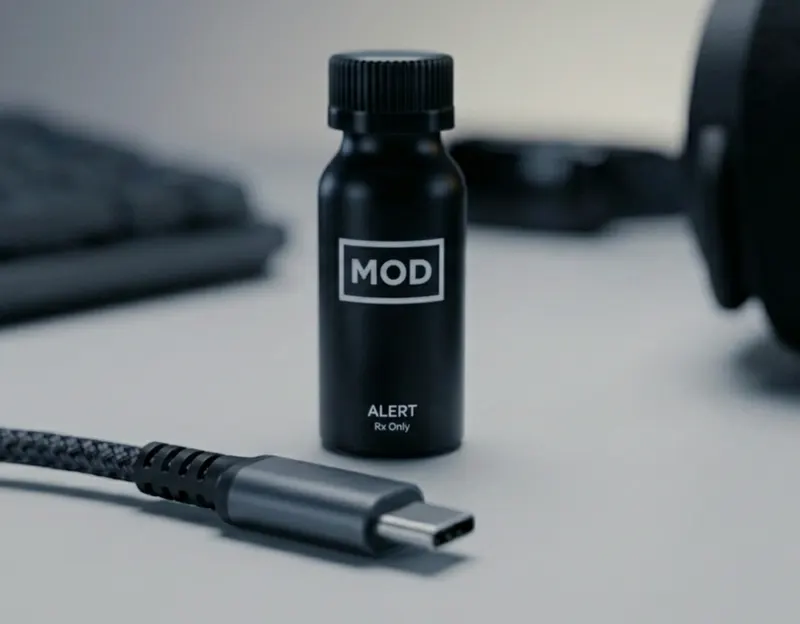
1. MOD Alert: Prescription Wakefulness Support for Demanding Shifts
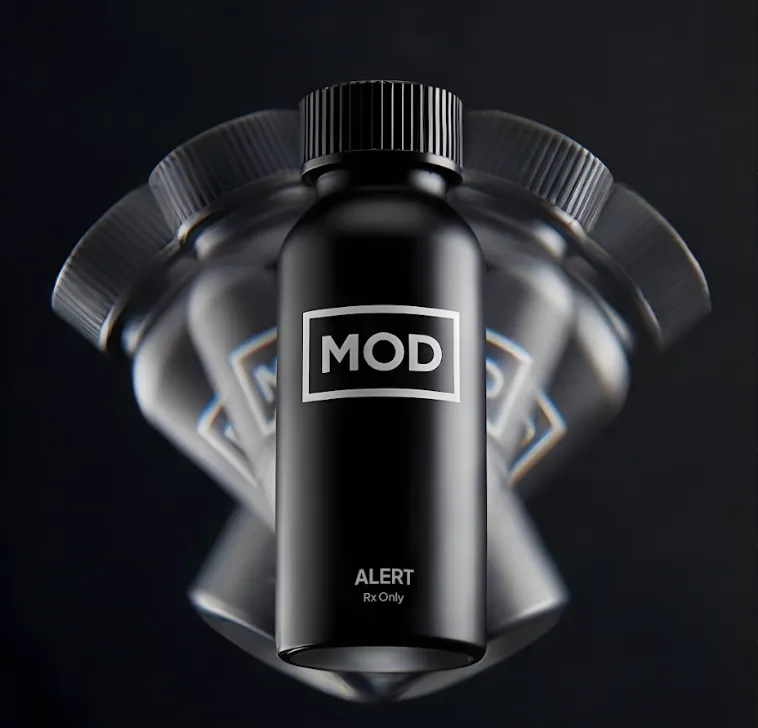
MOD Alert is not an over-the-counter energy drink. It is a prescription medication containing 150 mg modafinil and 60 mg caffeine, accessed through an online medical intake with a licensed healthcare provider. For ER doctors and residents experiencing excessive daytime sleepiness or shift work sleep disorder, MOD Alert offers wakefulness support that may last up to 12 hours.
What makes MOD Alert different
Traditional energy drinks deliver a caffeine spike followed by a noticeable drop. MOD Alert takes a different approach by combining modafinil, a wakefulness-promoting medication FDA-approved for shift work sleep disorder, with a measured caffeine dose. This combination aims to provide steadier alertness without the dramatic energy swings common to high-caffeine beverages.
Clinical research has evaluated modafinil in shift work sleep disorder, including studies focused on wakefulness and performance during night shifts. Individual sleep response can vary, so timing and medical fit should be reviewed with a healthcare provider.
Core capabilities
- Duration: May support wakefulness for up to 12 hours, covering a full ER shift
- Formulation: 150 mg modafinil plus 60 mg caffeine in a compounded liquid medication
- Access: Online medical intake through telemedicine with US-licensed providers
- Delivery: Prescription fulfilled and shipped directly to your address
Who benefits most
MOD Alert may help ER professionals who:
- Work rotating or permanent night shifts with excessive daytime sleepiness
- Experience shift work sleep disorder symptoms
- Find caffeine alone insufficient for 12-hour overnight shifts
- Need prescription wakefulness support that can be reviewed for timing, fit, and safety by a licensed healthcare provider
Considerations
MOD Alert requires a prescription and is not appropriate for everyone. The medical intake process evaluates whether this medication fits your specific situation. For questions about eligibility or how the process works, the MOD FAQ covers common concerns.
Explore MOD Alert
Visit mod.com/mod-energy to learn more about prescription wakefulness support designed for demanding schedules.
2. CELSIUS
CELSIUS has become a staple in hospital vending machines for good reason. At under $2 per can when purchased in multi-packs, it delivers 200 mg of caffeine with zero sugar.
- Caffeine: 200 mg per 12 oz can
- Sugar: 0 g
- Price: Approximately $1.92 per can in 12-packs
- Flavors: 29 options
The 200 mg caffeine dose sits within the 100 to 200 mg range shown to improve reaction time by 8 to 14% in sleep-deprived workers. The formula combines green tea extract with guarana for a caffeine profile that tends to feel smoother than synthetic caffeine sources.
3. Ghost Energy
Ghost Energy includes Alpha-GPC and NeuroFactor (coffee fruit extract), ingredients associated with memory and cognitive function support. Healthcare workers have noted its appeal during documentation-heavy portions of shifts when focus matters alongside alertness.
- Caffeine: 200 mg per 16 oz can
- Sugar: 0 g
- Price: Approximately $2.50 per can
- Certifications: NSF Certified for Sport
Additional ingredients include L-theanine, which may promote calm focus alongside caffeine.
4. Night Shift Energy
Night Shift Energy was created by Dr. Thomas Jeider, an ER physician with over 12 years of night shift experience. His formula addresses complaints about conventional energy drinks.
- Dual caffeine system: Dynamine for faster onset plus L-theanine to extend duration
- Immune support: Five Defenders mushroom complex
- Sleep recovery: Added magnesium
- Flavors: Grapefruit, blueberry, citrus tea
As a newer brand, Night Shift Energy has limited availability and pricing information. ER doctors interested may need to order directly.
5. Monster Ultra
Monster Ultra earns its place for consistent availability in hospital vending machines. Healthcare workers describe it as a "reliable option at 2 a.m." that is "widely available, usually zero-sugar, and familiar in many hospital vending machines."
- Caffeine: 140 to 160 mg per 16 oz can (varies by flavor)
- Sugar: 0 g (Ultra line)
- Price: $2.20 to $2.50 per can
- Availability: Most hospital vending machines
The moderate caffeine content (lower than CELSIUS or Ghost) makes Monster Ultra reasonable for mid-shift energy when coffee is not available, or for caffeine-sensitive individuals who find 200 mg excessive.
6. Legion Energy Drink
Legion Energy Drink targets health-conscious professionals willing to pay more for ingredient transparency.
- Natural caffeine: 150 mg from green coffee beans
- Full transparency: Clinically effective doses of all 8 ingredients listed
- Third-party tested: Independent verification of contents
- Minimal calories: Only 5 calories, sweetened with stevia and erythritol
Additional ingredients include L-theanine, citicoline, and taurine.
7. Red Bull
Red Bull's primary advantage for ER professionals is its packaging. Available in multiple sizes from 8.4 oz to 16 oz, Red Bull allows dose control.
The 8.4 oz can delivers 80 mg caffeine, the 12 oz delivers 114 mg, and the 16 oz delivers 151 mg. This granularity helps ER doctors match caffeine intake to time remaining in shift, individual caffeine sensitivity, and how much coffee they have already consumed.
- Caffeine range: 80 to 151 mg depending on size
- Sugar: 27 to 51 g (regular) or 0 g (sugar-free versions)
- Certification: NSF Certified for Sport
- Global standardization: Same formula worldwide
Choose sugar-free versions to avoid significant sugar content in regular versions.
8. Zevia Energy
Zevia Energy targets ER doctors who scrutinize every label. With zero sugar, zero calories, and zero artificial ingredients, it offers alertness support for those who avoid artificial sweeteners and dyes.
- Caffeine: Approximately 120 mg from organic sources
- Sugar: 0 g
- Artificial ingredients: None
- Sweetener: Plant-based stevia
Stevia flavor takes adjustment for some, and the caffeine content is lower than many competitors at 120 mg. Availability in hospital vending machines is less common.
Choosing the Right Option for Your Shift
The best energy drink for ER doctors depends on individual physiology, shift patterns, and personal preferences.
For shift work sleep disorder or excessive daytime sleepiness: MOD Alert offers prescription wakefulness support designed for adults managing demanding schedules.
As a practical rule, avoid caffeine late in your shift when possible, especially within the last four to six hours before your planned sleep window.
Frequently Asked Questions
How does modafinil compare to caffeine for staying alert during night shifts?
Modafinil works differently than caffeine. While caffeine blocks adenosine receptors to reduce sleepiness, modafinil promotes wakefulness through multiple pathways and is FDA-approved specifically for shift work sleep disorder. MOD Alert combines 150 mg modafinil with 60 mg caffeine for healthcare professionals who need prescription wakefulness support.
What is the safest amount of caffeine for a 12-hour ER shift?
Research suggests 100 to 200 mg caffeine improves reaction time by 8 to 14% in sleep-deprived workers. The FDA recommends limiting daily caffeine to 400 mg. More important than total amount is timing: avoid caffeine in the last four to five hours of your shift. For a 7 PM to 7 AM shift, this means stopping caffeine consumption around 2 to 3 AM to protect your daytime sleep.
Can energy drinks interfere with my ability to sleep after a night shift?
Yes. Caffeine has a half-life of 5 to 7 hours, meaning half the caffeine from a drink consumed at 4 AM is still in your system at 9 to 11 AM when you are trying to sleep. Strategic timing matters more than which drink you choose. For ER professionals struggling with post-shift sleep despite good caffeine timing, prescription options like MOD Alert may be worth discussing with a healthcare provider.
Are there non-caffeinated options that help with alertness during shifts?
Some ER doctors use strategic short naps, bright light exposure, and meal timing to support alertness without caffeine. For many night shift workers, caffeine timing, sleep strategies, light exposure, and, when appropriate, prescription options may all be part of a broader fatigue-management plan. Matcha and green tea offer lower caffeine options (30 to 80 mg) that can serve as a gentler foundation before adding stronger options if needed.
How do I access prescription wakefulness support like MOD Alert?
MOD Alert is accessed through an online medical intake with a US-licensed healthcare provider. The process evaluates whether prescription wakefulness support is appropriate for your situation. If prescribed, the medication is compounded and shipped directly to you. For questions about the process, MOD's FAQ covers common concerns about eligibility and how telemedicine consultations work.
This article is provided for informational purposes only and does not constitute medical advice. The information presented is not a substitute for professional medical advice, diagnosis, or treatment. Always consult your healthcare provider to discuss the risks, benefits, and appropriateness of any treatment.
MOD offers access to healthcare providers who may prescribe compounded medications for the treatment of excessive daytime sleepiness associated with shift work sleep disorder (SWSD), when clinically appropriate.
The featured products include compounded medications that have not been approved by the FDA. Compounded medications may be prescribed under federal law but are not the same as, nor are they generic versions of, any FDA-approved medication. The FDA does not review compounded medications for safety, effectiveness, or manufacturing quality of compounded products. A prescription will only be written if deemed appropriate after the digital consultation by the licensed medical provider. Individual results may vary.
MOD is not a compounding pharmacy but a telemedicine service that links patients to licensed medical providers.