Tim Ferriss Nootropic Stack: What He Takes in 2026
The Tim Ferriss nootropic stack is one of the more publicly documented biohacker supplement protocols, built around a mix of supplements, lifestyle habits, and occasional prescription medication use. Here are the six items Ferriss has publicly documented: creatine monohydrate, ubiquinol (CoQ10), lion's mane extract, low-dose lithium orotate, MCT oil, and intermittent modafinil. Ferriss, author of The 4-Hour Workweek and host of The Tim Ferriss Show, approaches cognitive enhancement with a high bar. He tends to apply a skeptical filter, weighing personal experience, available research, and long-term trade-offs before keeping anything in his routine. His 2016 blog post "My Favorite Smart Drugs" is the primary source on his stack.
The Tim Ferriss nootropic stack is rigorously sourced, not because Ferriss is a neuroscientist, but because he cross-references personal experiments against PubMed, Examine.com, and physician consultations. That's why it gets taken seriously outside biohacker circles.
Key Takeaways
- Ferriss's core daily stack includes creatine monohydrate, ubiquinol (CoQ10), and occasionally lion's mane extract
- He uses lithium orotate at low doses (5 mg elemental) for long-term neuroprotection, not daily stimulation
- Ferriss has used modafinil but describes it as potent and intermittent, not a daily driver, and experienced migraines at certain doses
- He prioritizes exercise, sleep, and meditation over any supplement
- Several items in his stack have peer-reviewed research behind them, though the strength of evidence varies by supplement and use case
- Prescription wakefulness medications like modafinil differ fundamentally from over-the-counter nootropics in mechanism, duration, and regulatory status
Tim Ferriss Nootropic Stack: Quick Reference (2026)
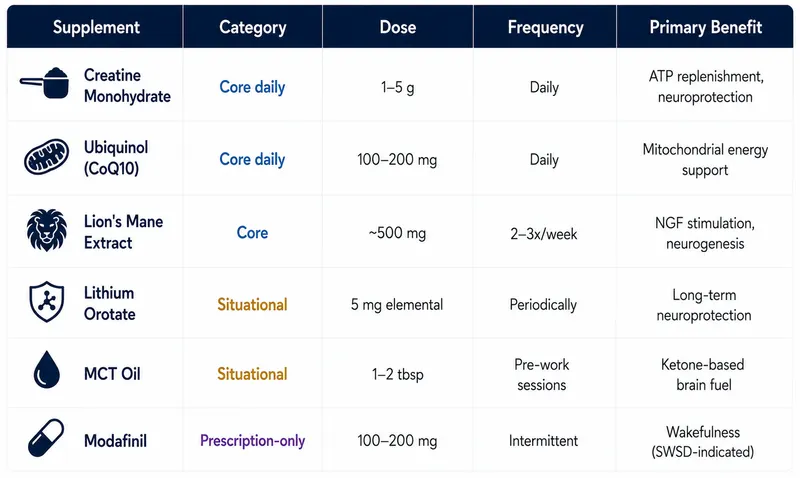
Tim Ferriss Nootropic Stack, the 6 items at a glance:
- Creatine Monohydrate, daily brain fuel and neuroprotection (1-5 g/day)
- Ubiquinol (CoQ10), mitochondrial energy support (100-200 mg/day)
- Lion's Mane Extract, NGF stimulation for neurogenesis (~500 mg, 2-3x/week)
- Lithium Orotate, long-term neuroprotection (5 mg elemental, periodically)
- MCT Oil, ketone-based brain fuel (1-2 tbsp before demanding work sessions)
- Modafinil, prescription wakefulness agent (100-200 mg, intermittent use only)
The Tim Ferriss nootropic stack has evolved over the years, but it consistently reflects one core philosophy: lifestyle first, targeted interventions second. Ferriss has said publicly that for roughly 90% of nootropic options, the short-term benefits aren't worth the long-term trade-offs. What survived his filter is worth understanding in detail.
What Is the Tim Ferriss Nootropic Stack?
The Tim Ferriss nootropic stack is the evidence-filtered set of cognitive supplements and prescription medications Ferriss has publicly disclosed since 2016. It is not a proprietary blend or sponsorship, it is a curated protocol of six items: creatine monohydrate, ubiquinol, lion's mane extract, lithium orotate, MCT oil, and intermittent modafinil, chosen through personal experimentation and peer-reviewed research.
What separates the Tim Ferriss nootropic stack from typical influencer supplement lists: Ferriss has been transparent about what didn't work, what caused side effects (modafinil migraines), and what he stopped taking (most conventional nootropics). That intellectual honesty is why his stack carries more weight than generic biohacker roundups.
His approach splits into two tiers:
- Core stack (daily or near-daily): creatine monohydrate, ubiquinol, lion's mane extract
- Situational stack (intermittent or as-needed): modafinil, lithium orotate, MCT oil, synthetic ketones, yerba mate
The distinction matters. The Tim Ferriss nootropic stack's daily tier is about baseline maintenance, keeping the brain well-fueled and protected over decades. Situational ones are deployed for specific demands: long-haul travel, high-stakes creative work, or periods of disrupted sleep.
The Core Daily Stack
The core Tim Ferriss nootropic stack consists of three supplements he takes daily or near-daily: creatine monohydrate for brain energy, ubiquinol for mitochondrial support, and lion's mane extract for long-term neurological maintenance.
Creatine Monohydrate
Most people associate creatine with the gym. Ferriss takes it for his brain. In a 2017 podcast discussion, he mentioned a daily dose in the 1-5 g range, citing cognitive and neuroprotective benefits alongside a family history of Alzheimer's.
The science supports this. A 2003 double-blind trial found that creatine supplementation significantly improved working memory and fluid intelligence in healthy adults. The mechanism: creatine replenishes ATP (adenosine triphosphate), the brain's primary energy currency, particularly under cognitive load or sleep deprivation.
What to know: Creatine is inexpensive, well-researched, and has one of the strongest safety profiles in the supplement literature. Effects are more pronounced in vegetarians and those with lower baseline creatine from diet.
Ubiquinol (CoQ10)
Ferriss takes ubiquinol alongside creatine as a mitochondrial support pairing. Ubiquinol is the reduced, active form of coenzyme Q10, the molecule that sits at the heart of cellular energy production in the mitochondria.
As we age, CoQ10 levels decline naturally. Supplementation is intended to counteract that drop, keeping mitochondrial function, and by extension, brain energy output, more consistent. Ferriss treats this as part of a longer-term aging and neuroprotection strategy rather than a same-day focus booster.
Lion's Mane Extract
Ferriss mentions lion's mane (Hericium erinaceus) as an occasional addition, roughly 2-3 times per week at around 500 mg, often pre-deep-work sessions. He's combined it with chaga and coffee via Four Sigmatic Mushroom Coffee products.
The interest here is neurogenesis. Lion's mane contains bioactive compounds called hericenones and erinacines that research suggests may stimulate nerve growth factor (NGF) synthesis. A 2009 clinical trial in Phytotherapy Research found that participants with mild cognitive impairment who took lion's mane for 16 weeks showed significant improvement in cognitive function scores versus placebo, though the effects reversed after stopping.
Lion's mane isn't a stimulant. It won't deliver an immediate focus hit. It's a slow-burn neurological support play, which aligns with Ferriss's longer-term thinking about brain health.
The Situational Stack
The situational Tim Ferriss nootropic stack includes modafinil, lithium orotate, MCT oil, and exogenous ketones, deployed intermittently for specific demands rather than taken as everyday supplements.
Modafinil: What Ferriss Actually Said
Modafinil is the one prescription medication Ferriss has discussed most publicly. He's referenced it across multiple podcast appearances and in his writing, framing it as a high-potency tool that demands respect.
His honest take: he experienced severe migraines when pushing dose or frequency. As a result, he uses modafinil intermittently, specific situations, not daily. He's not the modafinil evangelist some people expect him to be.
What modafinil actually does is different from caffeine or stimulants like amphetamines. It's classified as a wakefulness-promoting agent. Rather than flooding the brain with dopamine (the mechanism behind Adderall and Ritalin), modafinil primarily works through orexin/hypocretin pathways and inhibits dopamine reuptake more selectively. This gives it a distinct profile: sustained wakefulness without the cardiovascular spikes or crash typical of amphetamines.
The FDA has approved modafinil for three conditions: narcolepsy, obstructive sleep apnea, and Shift Work Sleep Disorder (SWSD). For SWSD specifically, a landmark 2005 trial in the New England Journal of Medicine found modafinil significantly reduced sleepiness and improved performance in night-shift workers compared to placebo.
It's classified Schedule IV, lower abuse potential than Schedule II medications like Adderall. That said, it's still a prescription medication. You can't (and shouldn't) just buy it online.
Lithium Orotate
In a 2018 podcast, Ferriss mentioned taking low-dose lithium orotate at 5 mg elemental lithium periodically. This isn't the high-dose lithium carbonate prescribed for bipolar disorder. Low-dose lithium orotate is a supplemental form used for a different purpose, but clinical safety data is still limited, especially compared with prescription lithium.
Some population-level research has linked low-dose lithium in drinking water to reduced rates of neurodegenerative disease, though clinical evidence for supplemental lithium orotate specifically is still thin. Ferriss treats this as a speculative hedge, not a proven intervention, and he's careful to note that.
MCT Oil and Synthetic Ketones
Ferriss uses MCT (medium-chain triglyceride) oil strategically before demanding mental work. MCTs are rapidly converted to ketones by the liver, and ketones can cross the blood-brain barrier to serve as an alternative fuel source when glucose is limited. This is the cognitive-fuel logic behind ketogenic diet research.
He's also experimented with exogenous ketone salts and esters during writing or podcast recording sessions. The evidence on ketones for cognition is still emerging, but the mechanism is sound.
How to Get Started with a Prescription Modafinil Option
If you're interested in modafinil specifically, particularly for shift work or disrupted sleep schedules, the right path is through a licensed provider, not a grey-market online purchase.
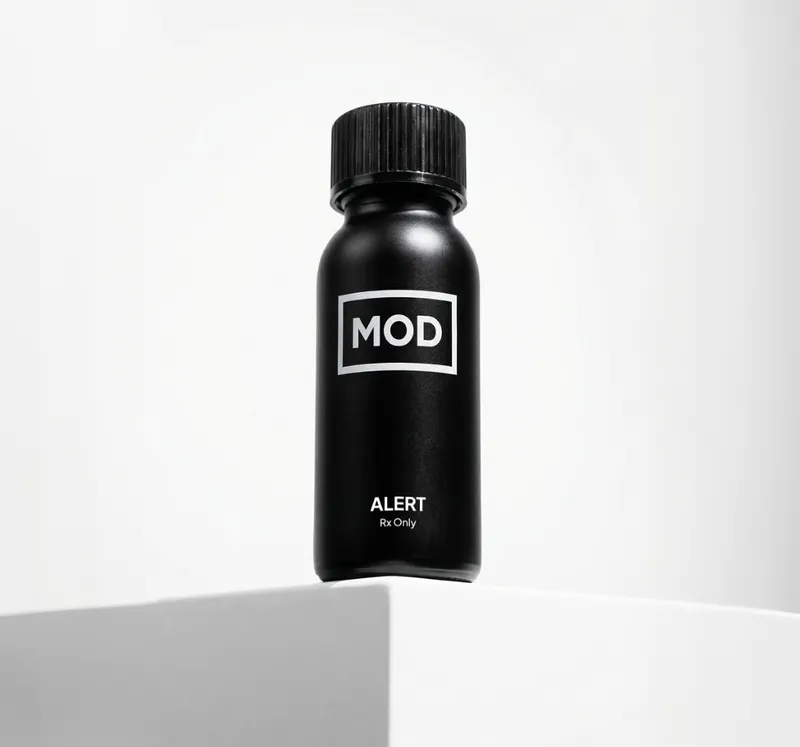
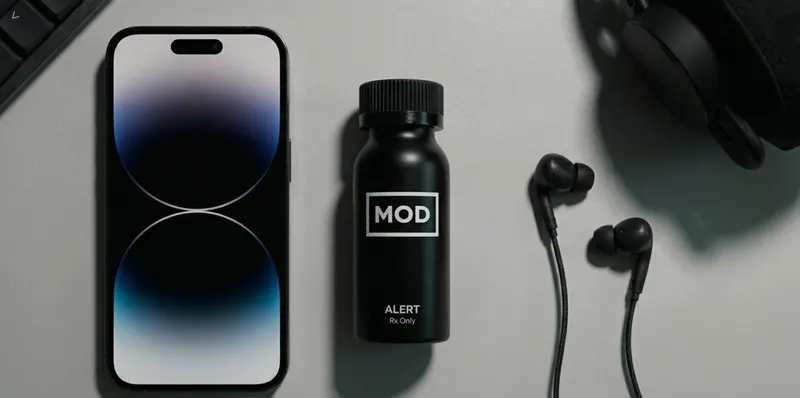
MOD.com offers a compounded prescription-strength drink containing modafinil as the active ingredient, specifically formulated for people managing Shift Work Sleep Disorder. The process is straightforward: complete an online assessment, a licensed medical provider reviews your intake, and if appropriate, your medication ships directly to you.
MOD Alert contains 150 mg modafinil plus 60 mg of caffeine for sustained wakefulness up to 12 hours. This is a compounded medication, not an over-the-counter supplement, and not FDA-approved as a product (though modafinil as an active ingredient is FDA-approved for SWSD).
Frequently Asked Questions
What nootropics does Tim Ferriss actually take?
Ferriss's publicly disclosed stack includes creatine monohydrate, ubiquinol (CoQ10), lion's mane extract, low-dose lithium orotate, MCT oil, and intermittent modafinil. He's been consistent in emphasizing that lifestyle factors, sleep, exercise, meditation, do more for cognitive performance than any supplement.
What is the best nootropic stack for focus?
There's no universal "best" stack, it depends on your goals, health history, and baseline habits. For evidence-backed daily support, creatine and lion's mane have the strongest research. For wakefulness and shift work specifically, prescription modafinil has FDA backing for SWSD. An online assessment through a telehealth provider is the right starting point for the prescription route.
Is the Tim Ferriss nootropic stack safe?
Most of the over-the-counter components in the Tim Ferriss nootropic stack (creatine, lion's mane, ubiquinol) have strong safety profiles in the research literature. Modafinil and lithium orotate require more care, modafinil because it's a prescription medication with real drug interactions, and lithium orotate because clinical safety data at supplemental doses is still limited. It's always important to consult your healthcare provider before starting any new medication or supplement.
How is modafinil different from Adderall?
Modafinil is a Schedule IV wakefulness-promoting agent; Adderall is a Schedule II amphetamine. Modafinil works primarily through orexin pathways and selective dopamine reuptake inhibition, producing sustained wakefulness without the same cardiovascular effects or crash profile as amphetamines. It also has lower abuse potential by regulatory classification. That said, both require prescriptions and both have real side effects, they're not interchangeable.
What Does Tim Ferriss Say About Nootropics Overall?
Ferriss's consistent message is skepticism, not enthusiasm. He's stated that for the majority of cognitive enhancement options he's tested, the trade-offs aren't worth it. The Tim Ferriss nootropic stack reflects a high bar: strong evidence, manageable side effects, and a clear mechanism. He also emphasizes that no supplement compensates for chronic sleep deprivation, poor diet, or sedentary lifestyle.
Can You Stack Creatine, Lion's Mane, and MCT Oil?
These three are commonly taken together, but it’s still important to check with a healthcare provider, especially if you take medications or have health conditions. Creatine is typically taken once daily (3-5 g), lion's mane 2-3 times per week (around 500 mg), and MCT oil is added to coffee or taken before mentally demanding work. Start with each one separately so you can assess your individual response before combining them.
Can I get modafinil without a prescription?
No. Modafinil is a Schedule IV controlled substance in the United States, requiring a prescription from a licensed provider. Grey-market or online purchases without a prescription are illegal and carry real risks: counterfeit medications, unknown dosing, and no provider oversight for potential drug interactions. If you have a clinical indication like Shift Work Sleep Disorder, the correct path is a formal evaluation through a telehealth or in-person provider. MOD's online assessment covers common questions about the prescription intake process.
This article is provided for informational purposes only and does not constitute medical advice. The information presented is not a substitute for professional medical advice, diagnosis, or treatment. Always consult your healthcare provider to discuss the risks, benefits, and appropriateness of any treatment.
MOD offers access to healthcare providers who may prescribe compounded medications for the treatment of excessive daytime sleepiness associated with shift work sleep disorder (SWSD), when clinically appropriate.
The featured products include compounded medications that have not been approved by the FDA. Compounded medications may be prescribed under federal law but are not the same as, nor are they generic versions of, any FDA-approved medication. The FDA does not review compounded medications for safety, effectiveness, or manufacturing quality of compounded products. A prescription will only be written if deemed appropriate after the digital consultation by the licensed medical provider. Individual results may vary.
MOD is not a compounding pharmacy but a telemedicine service that links patients to licensed medical providers.