Is Shift Work Sleep Disorder a Disability in 2026?

Shift Work Sleep Disorder (SWSD) can qualify as a disability under the ADA when a shift-driven sleep problem substantially limits sleeping, thinking, concentrating, or working and those limits are medically documented. Does that happen in every case? No. SWSD becomes a disability when the record shows ongoing functional limits, not ordinary tiredness.
If you are asking this question, you are usually dealing with more than a rough week. You may be missing sleep before every shift. You may be white-knuckling the drive home. You may also be wondering whether HR will treat the problem like a medical condition or a scheduling complaint. In a 2023 overview, Cleveland Clinic notes that 10% to 40% of people who work nontraditional shifts develop SWSD. That range helps explain why this keeps coming up for nurses, drivers, factory workers, EMTs, and other overnight workers.
Key Takeaways
- SWSD is not automatically a disability, yet it may qualify when symptoms substantially limit major life activities such as sleeping, concentrating, thinking, or working.
- Diagnosis alone is rarely enough. A stronger ADA case usually depends on symptom logs, provider notes, work impact, and a clear record that the problem is ongoing.
- Sleep Foundation says people with SWSD typically lose one to four hours of sleep per night and have symptoms for at least three months before the diagnosis fits.
- OSHA says accident and injury rates are 18% higher on evening shifts and 30% higher on night shifts. That is one reason employers take documented fatigue-related safety issues seriously.
- Modafinil, a wakefulness-promoting agent, is FDA-approved to improve wakefulness in adults with excessive sleepiness associated with shift work disorder, but MOD products are compounded medications and are not FDA-approved products.

How It Works Under the ADA
Shift work sleep disorder can be a disability under the ADA when medically documented symptoms substantial limits sleeping, concentrating, thinking, or working. It is not automatically a disability just because night shifts are hard. The deciding issue is whether SWSD causes ongoing functional limits that materially affect daily life or safe job performance.
The ADA defines disability as a physical or mental impairment that substantially limits one or more major life activities. Those activities explicitly include sleeping, concentrating, thinking, and working. That is why SWSD can fit the framework in the right case. The legal issue is not whether shift work is hard. It is whether your medically documented symptoms materially limit daily function compared with most people.
This is where many workers get tripped up. Plenty of people work nights and feel lousy the next day. That alone usually is not enough. A stronger case looks more like persistent insomnia during daytime sleep windows, excessive sleepiness at work, documented mistakes or safety events, and a clinician tying those limits to a shift-based circadian disorder instead of ordinary fatigue.
In other words, the ADA question depends on proof. Sleep logs are especially useful when symptoms fluctuate. The most persuasive cases show that SWSD impairs safe, reliable work in a measurable way.
Sleep Foundation explains that SWSD symptoms should match the work schedule for at least three months. The same guide notes that people with the condition often lose one to four hours of sleep per night. That helps show why the disorder can have real functional consequences.
How SWSD Is Diagnosed
Shift work sleep disorder is diagnosed through symptom history, schedule pattern, sleep tracking, and rule-out testing rather than one bad night or blood test.
Sleep Foundation says the core diagnostic picture includes insomnia and/or excessive sleepiness. It also includes:
- Reduced total sleep time because of a work schedule
- Symptoms that continue for at least three months
- A pattern that follows overnight, early morning, or rotating shifts
Cleveland Clinic describes SWSD as a circadian rhythm sleep disorder tied to overnight, early morning, or rotating shifts. In practice, providers often use a sleep history, a sleep diary, and sometimes actigraphy. The goal is to see whether the problem follows the shift schedule instead of another condition.
That last part is important. A good evaluation may also look for:
- Obstructive sleep apnea
- Restless legs syndrome
- Depression
- Substance use
- Medication issues
If another condition explains the symptoms better, the SWSD case weakens. If the symptoms line up cleanly with shift timing, the diagnosis gets stronger.
Before an appointment, document when you try to sleep, how long you actually sleep, whether symptoms improve on days off, and whether you have had near-misses, attendance issues, or concentration problems at work. That pattern is usually more useful than saying you are “always exhausted.”
Key Benefits of Getting It Documented
Untreated SWSD does not just feel miserable. Clear diagnosis and documentation can improve patient safety, make workplace conversations more concrete, and help a provider choose treatment that actually fits the pattern.
OSHA says accident and injury rates are 18% higher during evening shifts and 30% higher during night shifts than during day shifts. That helps explain why untreated SWSD can become a workplace safety problem, especially in roles where lapses in alertness can quickly lead to mistakes or near-misses.
That safety context matters for disability discussions because it helps explain why a worker may request more than generic wellness advice. If staying on a rotating overnight schedule leads to repeated near-misses, unsafe driving home, or documented performance breakdowns, the accommodation conversation becomes easier to understand.
According to the Job Accommodation Network, a shift change can fall into two different buckets. In some jobs, it is simply a schedule modification. In others, moving from nights to days is a reassignment that depends on a vacant position. The EEOC also notes that possible accommodations can include altered work schedules, unpaid leave, telework, and reassignment.
Common accommodation requests for SWSD may include:
- A consistent schedule instead of rotating shifts.
- A move off overnight work if a daytime role is available.
- Later start times after overnight duty.
- Temporary medical leave while treatment is being adjusted.
- Additional recovery time between shifts.
- Reassignment to a vacant role that better fits medical restrictions.
What employers do not have to provide is any change that removes essential job functions or creates undue hardship. It is also important to remember that a doctor note saying “no nights” is helpful, yet it is not magic. The request still moves through an ADA-style interactive process.
Potential Side Effects and Safety
If a provider recommends medication for excessive sleepiness, it is important to weigh benefits against potential side effects and drug interactions rather than treating wakefulness support like a casual fix.
DailyMed says modafinil is indicated to improve wakefulness in adults with excessive sleepiness associated with shift work disorder. Potential side effects include headache, nausea, nervousness, anxiety, and insomnia. The label also warns about rare but serious reactions including rash and psychiatric symptoms, which is why it is important to review risks with your provider before starting treatment.
Medication may improve wakefulness, yet it does not erase the underlying circadian mismatch. The best treatment plan usually combines medical evaluation with schedule changes, light timing, and a dark, quiet daytime sleep setup.

Who Should and Shouldn’t Use Wakefulness Medication?
Wakefulness medication may make sense for adults with documented SWSD whose main problem is excessive sleepiness during required shift hours. It is usually a conversation for people who have already:
- Tracked symptoms over time
- Reviewed possible schedule changes
- Ruled out other causes of sleepiness with a clinician
Cleveland Clinic lists practical options such as sleep scheduling, bright light exposure, melatonin, and better sleep hygiene. For some workers, those steps are enough to reduce symptoms. For others, especially on fixed nights or harsh rotations, the sleep-wake mismatch keeps winning.
When excessive sleepiness is the main problem, modafinil is one of the best-known wakefulness-promoting agents. DailyMed says modafinil is indicated to improve wakefulness in adults with excessive sleepiness associated with shift work disorder. The same prescribing information notes important precautions, including:
- Serious rash risk
- Possible psychiatric reactions
- Reduced effectiveness of steroidal contraceptives during treatment and for one month after stopping
Treatment decisions still need to be individualized, and it’s important to consult your healthcare provider about interactions, pregnancy considerations, cardiovascular history, and mental health history.
If you mainly have trouble sleeping during the day but not severe on-shift sleepiness, behavioral changes may deserve more attention first. If another condition such as sleep apnea, restless legs syndrome, depression, or substance use may be driving symptoms, it is important to sort that out before assuming SWSD is the whole story.
How to Get Started with MOD
SWSD disability questions are really documentation questions. If your symptoms are occasional, the ADA may not come into play. If your sleep disruption repeatedly affects safety, concentration, attendance, or job performance, it is important to track the pattern and talk with a healthcare provider.
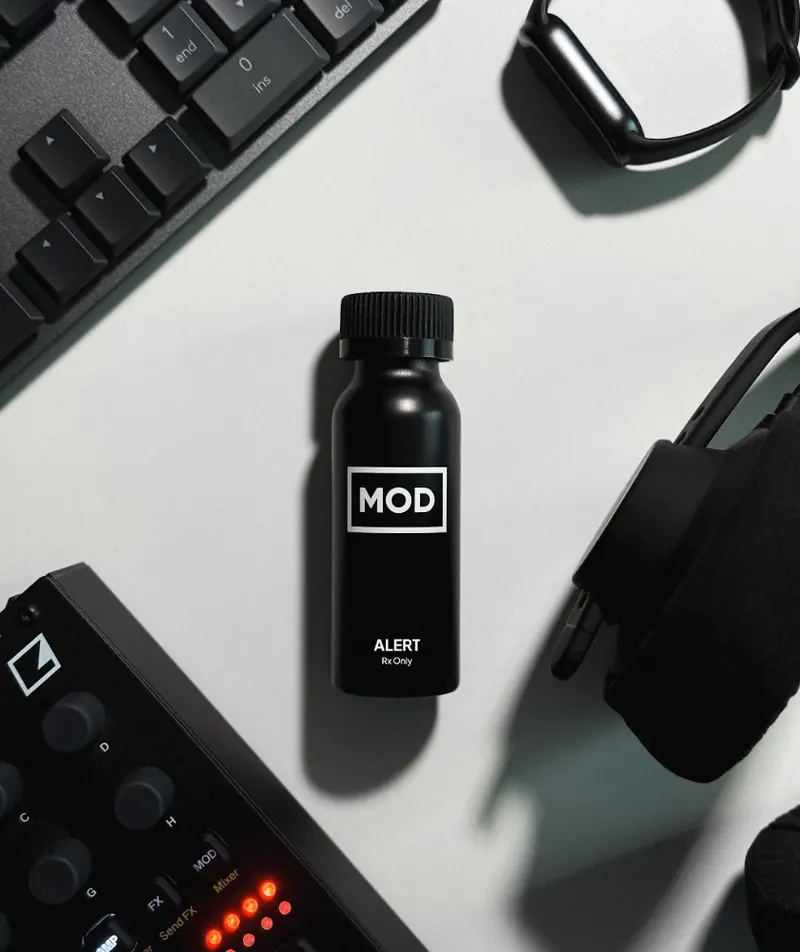
For shift workers whose biggest issue is excessive sleepiness during required work hours, MOD plans may be worth discussing after the basics are addressed. MOD is designed around provider-reviewed access to compounded prescription-strength drinks for shift workers, not generic energy support. It does not replace medical evaluation, workplace documentation, or an ADA accommodation process, but it may fit into a broader care plan when a licensed provider decides treatment is appropriate.
Frequently Asked Questions
Can SWSD qualify as a disability?
Yes, SWSD can qualify as a disability when medically documented symptoms substantially limit major life activities such as sleeping, concentrating, thinking, or working. It is not automatic. A stronger case usually includes symptom logs, provider notes, workplace impact, safety concerns, and evidence that the problem is ongoing rather than ordinary tiredness after a difficult shift.
Can SWSD qualify for SSDI too?
SWSD can qualify differently under Social Security because SSDI focuses on whether you can sustain substantial work. SSA says a disabling condition generally must affect your ability to work for a year or more. In 2026, substantial gainful activity is $1,690 per month for non-blind individuals, which makes SSDI a higher bar than requesting workplace accommodations.
When should you talk to a sleep specialist or employer?
Talk to a sleep specialist or employer once shift-related fatigue starts affecting safety, attendance, concentration, or recovery between shifts. That is especially important if you are sleeping through alarms, drifting off while driving home, making repeated mistakes, or feeling unable to function on days off. Documentation makes both medical treatment and workplace conversations clearer.
Will HR ask for a doctor’s note or records?
Most employers ask for a doctor’s note or accommodation form first, then request only enough medical information to understand restrictions and expected duration. They usually do not need your entire medical chart. The goal is to support the interactive process, not to prove every detail of your medical history.
Can modafinil help with SWSD?
Modafinil can help some adults with SWSD by improving wakefulness during required work hours when excessive sleepiness is the main problem. It does not fix the underlying circadian mismatch, so clinicians usually consider it alongside sleep scheduling, light timing, and better daytime sleep conditions. MOD products are compounded medications.
This article is provided for informational purposes only and does not constitute medical advice. The information presented is not a substitute for professional medical advice, diagnosis, or treatment. Always consult your healthcare provider to discuss the risks, benefits, and appropriateness of any treatment.
MOD offers access to healthcare providers who may prescribe compounded medications for the treatment of excessive daytime sleepiness associated with shift work sleep disorder (SWSD), when clinically appropriate.
The featured products include compounded medications that have not been approved by the FDA. Compounded medications may be prescribed under federal law but are not the same as, nor are they generic versions of, any FDA-approved medication. The FDA does not review compounded medications for safety, effectiveness, or manufacturing quality of compounded products. A prescription will only be written if deemed appropriate after the digital consultation by the licensed medical provider. Individual results may vary.
MOD is not a compounding pharmacy but a telemedicine service that links patients to licensed medical providers.