Modafinil vs Vyvanse in 2026
If you are comparing modafinil vs vyvanse, the first question is not which medication feels stronger. It is whether you are trying to treat diagnosed ADHD or stay alert during overnight work and Shift Work Sleep Disorder (SWSD). Vyvanse is usually stronger for ADHD, while modafinil is usually stronger for shift-work wakefulness and lower misuse risk.
That split matters because Vyvanse is an amphetamine-based ADHD medication, while modafinil is a wakefulness-promoting medication FDA-approved for narcolepsy, obstructive sleep apnea-related sleepiness, and SWSD. Side effects, scheduling rules, and access friction are different enough that the better choice depends on your diagnosis, your schedule, and what tradeoffs you can realistically tolerate.
Key Takeaways
- Vyvanse wins for diagnosed ADHD. A 2019 meta-analysis found lisdexamfetamine had the largest effect size in adults with ADHD, while modafinil showed no efficacy versus placebo in that dataset.
- Modafinil wins for shift-work wakefulness. In a SWSD trial, modafinil improved clinical symptoms in 74% of patients versus 36% on placebo.
- Vyvanse carries more refill and misuse friction. The DailyMed label classifies it as Schedule II and includes a boxed warning for abuse and misuse.
- Modafinil still needs real prescription oversight. It is a Schedule IV controlled substance, not a casual productivity medication.
- MOD.com products are separate from generic modafinil. Generic modafinil is an FDA-approved medication for specific sleep-wake disorders, while MOD products are compounded medications that use modafinil in liquid prescription formulations designed for shift workers.
Quick Overview
Modafinil: Modafinil is a prescription wakefulness-promoting medication. It is FDA-approved to improve wakefulness in adults with narcolepsy, obstructive sleep apnea-related excessive sleepiness, and SWSD. It is not FDA-approved for ADHD, and the evidence for adult ADHD is weaker than the evidence for Vyvanse.
Vyvanse: Vyvanse contains lisdexamfetamine, a prodrug of amphetamine, and it is FDA-approved for ADHD and binge eating disorder. It has the better evidence base for core ADHD symptoms, but it also comes with Schedule II monitoring, stricter refill logistics, and a side-effect profile that can be harder to live with day to day.
MOD.com: MOD.com is not the same thing as generic modafinil tablets. MOD Alert is most relevant when the main issue is shift-work wakefulness and energy and contains 150 mg of Modafinil plus 60 mg of Caffeine.
Modafinil vs Vyvanse: What Is the Main Difference?
The main difference is the job each medication is best suited for.
Modafinil is primarily a wakefulness medication. Its strongest use case is excessive sleepiness tied to narcolepsy, obstructive sleep apnea, or SWSD. It can help people stay awake and functional when their sleep-wake schedule is disrupted, especially when used under medical supervision.
Vyvanse is primarily an ADHD medication. It is an amphetamine-based stimulant used to treat attention, impulsivity, and executive-function symptoms in people diagnosed with ADHD. It can also be used for binge eating disorder in adults.
That means the better option depends on the problem you are trying to solve. If the issue is diagnosed ADHD, Vyvanse is usually the stronger evidence-based choice. If the issue is staying awake during overnight or rotating shifts, modafinil is usually the more relevant medication category.
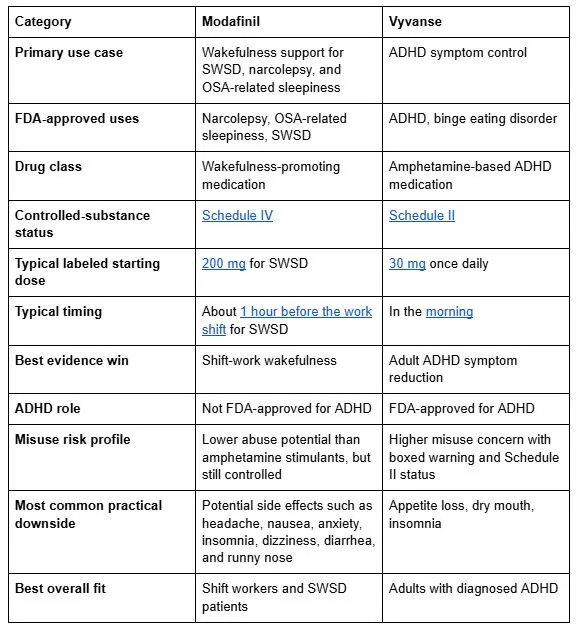
Feature-by-Feature Comparison
Modafinil for Shift-Work Wakefulness
Modafinil is usually the better fit when the core problem is wakefulness, not ADHD symptom control. That matters for people working nights, rotating shifts, early mornings, or long schedules that interfere with sleep timing.
For SWSD, modafinil is typically taken before the work period to improve alertness during the shift. This makes it different from ADHD medications that are usually taken in the morning for attention and impulse-control symptoms throughout the day.
Modafinil is also a Schedule IV controlled substance, which means it still requires prescription oversight. It has lower abuse potential than amphetamine-based stimulants, but it should not be treated as a casual productivity drug.
Vyvanse for ADHD
Vyvanse is usually the better fit when the core problem is diagnosed ADHD. It is designed to treat symptoms such as poor attention, impulsivity, and executive dysfunction.
Because Vyvanse is an amphetamine-based medication, it is more tightly controlled than modafinil. It is a Schedule II medication and carries a boxed warning for abuse and misuse. For some patients, that does not rule it out, but it does make prescriber oversight, refill planning, and side-effect monitoring more important.
Vyvanse is not FDA-approved for SWSD. So if the main issue is off-hours wakefulness rather than ADHD, it is usually a less direct fit.
Pros and Cons
Modafinil
Pros
- Stronger fit for SWSD and shift-work wakefulness.
- FDA-approved for narcolepsy, OSA-related sleepiness, and SWSD.
- Schedule IV rather than Schedule II.
- Lower misuse concern than amphetamine-based stimulants.
- Usually more relevant than Vyvanse when the problem is overnight alertness.
Cons
- Not FDA-approved for ADHD.
- Still requires prescription oversight.
- Can cause potential side effects such as headache, nausea, anxiety, insomnia, dizziness, diarrhea, and runny nose.
- Can reduce hormonal contraceptive effectiveness during treatment and for one month after stopping.
- Timing matters because late dosing can interfere with sleep.
Vyvanse
Pros
- Stronger evidence than modafinil for adult ADHD symptom control.
- FDA-approved for ADHD.
- Also FDA-approved for binge eating disorder in adults.
- More logical when a clinician is treating attention regulation, impulsivity, and executive-function symptoms directly.
Cons
- Schedule II status brings more refill friction and misuse concerns.
- Appetite suppression, dry mouth, and insomnia are common enough to affect daily life.
- It is not FDA-approved for SWSD.
- It may be a weaker fit when the main issue is shift-work fatigue rather than ADHD.
Side Effects Comparison
The useful frame is not which option is better in the abstract. It is which downside profile fits your life better.
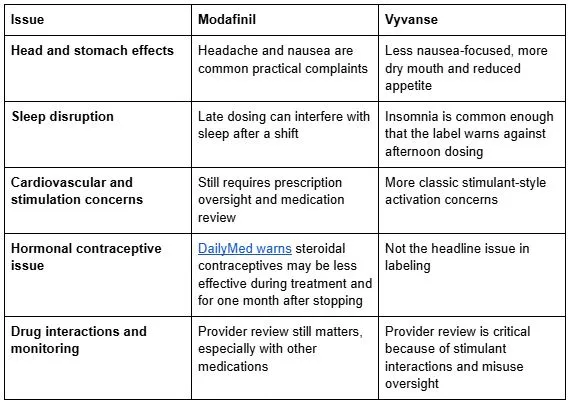
Consult your healthcare provider to determine which option is right for you.
Who Should Choose Modafinil
Modafinil is usually the better discussion if your biggest problem is staying awake and functional during overnight work, rotating schedules, or confirmed SWSD. That is where the medication has FDA approval, and it is where the clinical logic is strongest.
It may also make sense if you want a non-amphetamine wakefulness medication and your prescriber agrees that your symptoms are tied to a sleep-wake disorder rather than ADHD.
Who Should Choose Vyvanse
Vyvanse is usually the better discussion if you have diagnosed ADHD and want the option with stronger evidence for attention regulation, impulsivity, and executive function. It is also the more logical choice when your clinician is treating ADHD directly and you are comfortable with Schedule II monitoring, stricter refill logistics, and stimulant tradeoffs.
Where MOD.com Fits
MOD.com enters the picture after the generic modafinil vs Vyvanse decision is clear.
If your main problem is ADHD, Vyvanse is usually the more direct medication category. But if your main problem is shift-work wakefulness, overnight fatigue, or SWSD, MOD.com may be a more relevant access route because its products are built around shift workers.
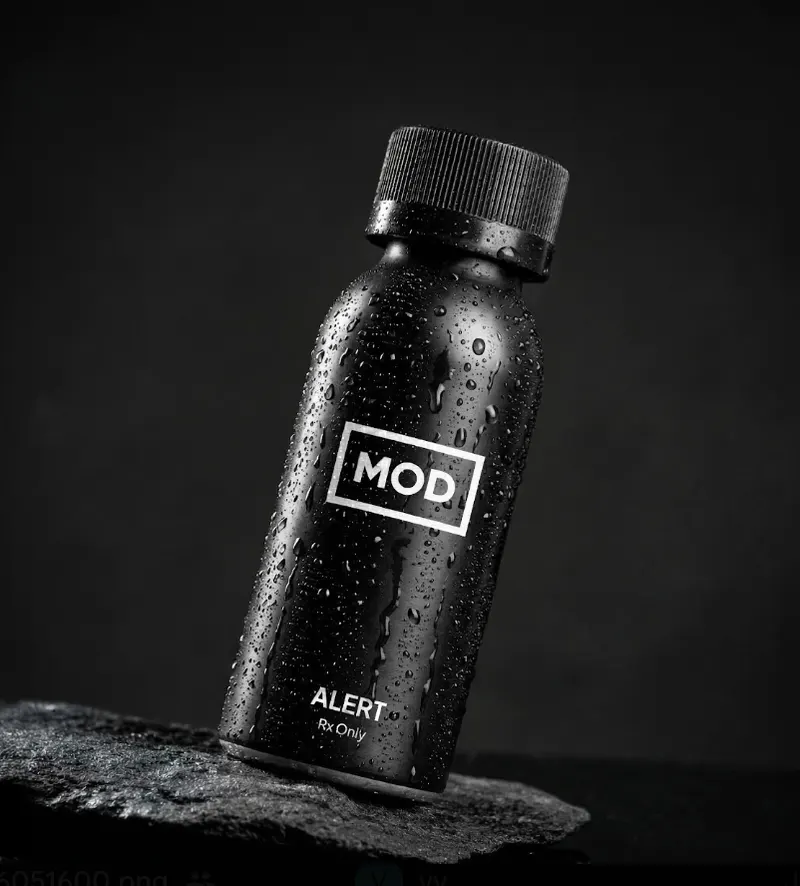
MOD Alert is the most relevant MOD option when the topic is wakefulness, shift-work energy, SWSD, or a caffeine-alternative discussion. It combines 150 mg modafinil with 60 mg caffeine in a compounded prescription drink.
MOD products are not the same as generic modafinil tablets. They are compounded medications, and compounded medications are not FDA-approved as finished products.
Final Verdict
The verdict is simple: Vyvanse is usually the better ADHD medication, and modafinil is usually the better shift-work wakefulness medication.
For readers comparing the medications directly, start with the diagnosis or use case. Vyvanse is the more defensible choice when diagnosed ADHD is the core problem. Modafinil is the more relevant choice when the issue is wakefulness during night shifts, rotating schedules, or SWSD.
Why MOD May Fit Shift Workers Better
For MOD.com, the more useful question is not whether modafinil or Vyvanse is universally better. It is whether your real problem is ADHD symptom control or shift-work wakefulness.
If the issue is staying alert through overnight work, rotating schedules, or SWSD, MOD’s shift-worker-focused products may fit the use case better than an ADHD-centered medication comparison. MOD Alert is focused on sustained wakefulness and energy during demanding shifts.
If shift-work wakefulness is the real issue, explore MOD plans to see whether a MOD option fits your schedule.
Frequently Asked Questions
What is the difference between Vyvanse and modafinil?
Vyvanse is a Schedule II ADHD stimulant, while modafinil is a Schedule IV wakefulness medication used for narcolepsy, OSA-related sleepiness, and shift work. Vyvanse mainly targets ADHD and binge eating disorder, while modafinil is used for sleep-wake disorders. The better option depends on whether the core issue is ADHD symptom control or shift-work wakefulness.
Can you take modafinil and Vyvanse together?
Only under prescriber supervision, because combining modafinil and Vyvanse can raise risks such as insomnia, faster heart rate, and higher blood pressure. Both can increase stimulation-related side effects, so any combination should be reviewed by a prescriber who knows your diagnosis, dose, medical history, and other medications.
Is modafinil approved for ADHD?
No. Modafinil is not FDA-approved for ADHD, and adult-ADHD trials have not matched the evidence strength seen with lisdexamfetamine so far. In the 2019 adult-ADHD meta-analysis, modafinil showed no efficacy versus placebo, while lisdexamfetamine had the largest effect size among the included drugs.
Is Vyvanse stronger than modafinil?
For ADHD symptom control, Vyvanse is usually stronger because it is an amphetamine-based treatment with better adult-ADHD evidence than modafinil. For shift-work wakefulness, modafinil is often the better fit because it targets wakefulness with less misuse and refill friction than Vyvanse.
Where does MOD.com fit into modafinil vs Vyvanse?
MOD.com fits best when the reader’s real problem is shift-work wakefulness rather than diagnosed ADHD. MOD Alert supports sustained energy and alertness during shifts. MOD products are compounded medications, not generic modafinil tablets.
This article is provided for informational purposes only and does not constitute medical advice. The information presented is not a substitute for professional medical advice, diagnosis, or treatment. Always consult your healthcare provider to discuss the risks, benefits, and appropriateness of any treatment.
MOD offers access to healthcare providers who may prescribe compounded medications for the treatment of excessive daytime sleepiness associated with shift work sleep disorder (SWSD), when clinically appropriate.
The featured products include compounded medications that have not been approved by the FDA. Compounded medications may be prescribed under federal law but are not the same as, nor are they generic versions of, any FDA-approved medication. The FDA does not review compounded medications for safety, effectiveness, or manufacturing quality of compounded products. A prescription will only be written if deemed appropriate after the digital consultation by the licensed medical provider. Individual results may vary.
MOD is not a compounding pharmacy but a telemedicine service that links patients to licensed medical providers.