Common Side Effects of Modafinil

Modafinil is one of the most widely prescribed wakefulness-promoting medications for excessive daytime sleepiness caused by narcolepsy, obstructive sleep apnea, and Shift Work Sleep Disorder (SWSD). It helps many people stay awake, focused, and productive during demanding schedules without producing the intense stimulation associated with traditional amphetamine medications.
Like any prescription medication, however, modafinil can cause side effects. Fortunately, most are mild and improve as your body adjusts to treatment. Rare but serious adverse reactions can occur, making it important to understand when symptoms are expected—and when they require immediate medical attention.
Below, we'll review the most common side effects of modafinil, the rare but serious reactions to watch for, and who should speak with their healthcare provider before starting treatment.
Key Takeaways
- Most people tolerate modafinil well, and when side effects occur, they're usually mild and temporary.
- The most commonly reported side effects include headache, dizziness, nervousness, nausea, diarrhea, indigestion, runny nose, back pain, increased heart rate, palpitations, and mild increases in blood pressure.
- Rare but serious reactions can include severe skin reactions, allergic reactions, chest pain, irregular heart rhythms, and psychiatric symptoms such as hallucinations or mania.
- People with heart disease, bipolar disorder, psychosis, liver disease, kidney disease, or those who are pregnant should discuss modafinil with their healthcare provider before starting treatment.
- MOD Alert is available through MOD's online telehealth platform for eligible adults diagnosed with Shift Work Sleep Disorder.

What Is Modafinil?
Modafinil is a prescription wakefulness-promoting medication that works by increasing activity in several neurotransmitter systems involved in alertness, including dopamine, norepinephrine, histamine, serotonin, glutamate, and orexin.
Unlike traditional stimulants, modafinil does not typically produce rapid spikes in dopamine activity, contributing to its lower abuse potential and smoother wakefulness profile.
The medication is FDA-approved for treating:
- Narcolepsy
- Obstructive sleep apnea (OSA)-related excessive daytime sleepiness
- Shift Work Sleep Disorder (SWSD)
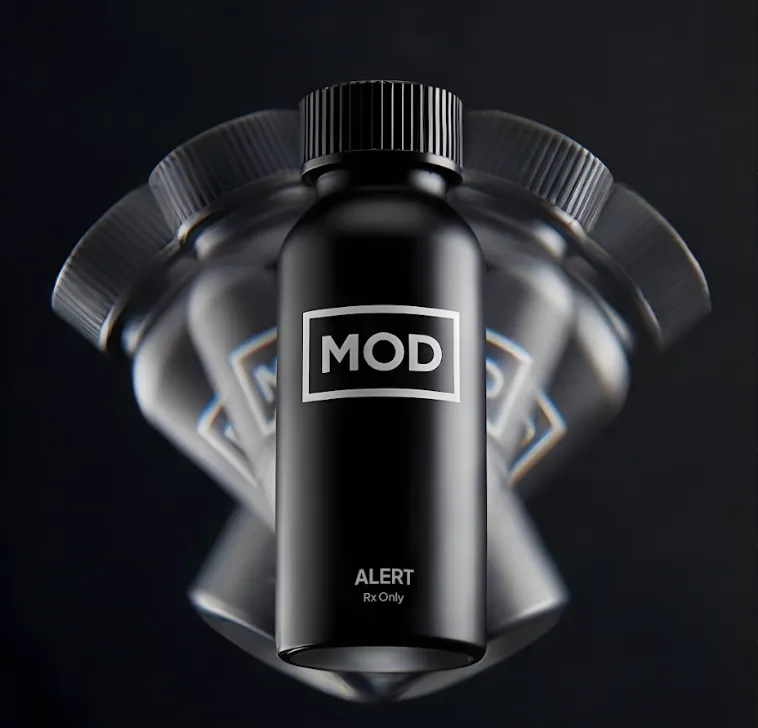
MOD Alert contains compounded liquid modafinil together with 60 mg of caffeine and is available through MOD's online telehealth platform for eligible adults diagnosed with Shift Work Sleep Disorder.
Common Side Effects of Modafinil
Most people experience few, if any, side effects while taking modafinil. When they do occur, they're usually mild and often improve during the first few weeks of treatment.
The most commonly reported side effects include:
Nervous System
- Headache
- Dizziness
- Nervousness
Cardiovascular
- Increased blood pressure
- Increased heart rate (tachycardia)
- Palpitations
Gastrointestinal
- Nausea
- Indigestion (dyspepsia)
- Diarrhea
Respiratory
- Runny nose (rhinitis)
Musculoskeletal
- Back pain
If these symptoms persist, become bothersome, or worsen over time, contact your healthcare provider.
Serious Adverse Effects
Serious side effects are uncommon, but they require prompt medical evaluation.
Cardiovascular Complications
Although rare, modafinil has been associated with:
- Chest pain
- Cardiac arrhythmias
- Cardiomyopathy
Individuals with known cardiovascular disease or uncontrolled hypertension should discuss these risks with their healthcare provider before beginning treatment.
Seek emergency medical care if you develop chest pain, fainting, severe palpitations, or difficulty breathing.
Psychiatric Reactions
Because modafinil acts on several neurotransmitters involved in mood and cognition, rare psychiatric reactions have been reported.
These may include:
- Agitation
- Psychosis
- Delusions
- Hallucinations
- Mania
- Suicidal thoughts
- Worsening psychotic or manic symptoms
These reactions occur most often in people with a history of bipolar disorder, psychosis, or other serious psychiatric illnesses, although they have occasionally been reported in people without previous psychiatric diagnoses.
If you notice significant changes in mood, behavior, or thinking while taking modafinil, contact your healthcare provider immediately.
Serious Allergic Reactions
Although uncommon, modafinil has been associated with serious hypersensitivity reactions.
Stop taking modafinil and seek immediate medical attention if you develop:
- Rash
- Hives (urticaria)
- Itching (pruritus)
- Swelling of the lips, tongue, face, mouth, or throat (angioedema)
- Difficulty breathing
Rare but potentially life-threatening skin reactions have also been reported, including:
- Stevens-Johnson syndrome (SJS)
- Toxic epidermal necrolysis (TEN)
- Drug Reaction with Eosinophilia and Systemic Symptoms (DRESS)
Any new rash while taking modafinil should be evaluated immediately because it can be difficult to distinguish a mild rash from the early stages of a serious skin reaction.
Who Should Use Modafinil With Caution?
Modafinil isn't appropriate for everyone.
Talk with your healthcare provider before starting treatment if you have:
- Heart disease
- High blood pressure
- Cardiac arrhythmias
- Bipolar disorder
- Psychosis
- Liver disease
- Kidney disease
- A history of stimulant-related heart problems
- Pregnancy or plans to become pregnant
- Breastfeeding
Your healthcare provider may recommend closer monitoring, dose adjustments, or a different treatment depending on your medical history.
Is Modafinil Addictive?
Compared with traditional stimulants, modafinil has a relatively low potential for abuse.
Because it produces a slower increase in dopamine activity and typically doesn't cause intense euphoria, it is classified as a Schedule IV controlled substance, indicating a lower abuse potential than Schedule II stimulants such as Adderall or Ritalin.
However, misuse and psychological dependence have been reported. Always take modafinil exactly as prescribed and avoid taking more than your healthcare provider recommends.
Final Thoughts
For most people, modafinil is well tolerated and provides long-lasting wakefulness with relatively few side effects. Most reactions are mild and improve as treatment continues, while serious complications remain uncommon.
Understanding the difference between expected side effects and symptoms that require urgent medical attention can help you use the medication safely and confidently.
If you're an eligible adult with Shift Work Sleep Disorder, MOD Alert provides compounded liquid modafinil with 60 mg of caffeine through MOD's convenient online telehealth platform. After completing an online medical evaluation, a licensed provider will determine whether treatment is appropriate, and approved prescriptions are delivered directly to your door.
Explore MOD Alert
Long shifts, demanding schedules, and busy lives require reliable support.
MOD makes it easy to get prescription wakefulness support completely online.
Complete a medical intake, connect with a licensed healthcare provider, and find out whether MOD Alert may be appropriate for you.
No waiting rooms. No pharmacy lines. Just convenient, modern care designed for busy adults.

FAQs
What are the most common side effects of modafinil?
The most commonly reported side effects include headache, dizziness, nervousness, nausea, diarrhea, indigestion, runny nose, back pain, increased heart rate, palpitations, and mild increases in blood pressure.
Can modafinil cause serious side effects?
Yes. Although rare, serious reactions can include chest pain, irregular heart rhythms, severe allergic reactions, Stevens-Johnson syndrome (SJS), Toxic Epidermal Necrolysis (TEN), DRESS syndrome, psychosis, hallucinations, and mania.
Should I stop taking modafinil if I develop a rash?
Yes. Any rash that develops while taking modafinil should be evaluated by a healthcare provider immediately because serious skin reactions, although rare, can become life-threatening.
Who should avoid modafinil?
People with significant cardiovascular disease, uncontrolled hypertension, certain psychiatric disorders, severe liver disease, or those who are pregnant or breastfeeding should discuss the risks and benefits with their healthcare provider before starting treatment.
Is modafinil habit-forming?
Modafinil has a lower abuse potential than traditional stimulants and is classified as a Schedule IV controlled substance. While dependence is uncommon, it is still important to use the medication exactly as prescribed.
This article is provided for informational purposes only and does not constitute medical advice. The information presented is not a substitute for professional medical advice, diagnosis, or treatment. Always consult your healthcare provider to discuss the risks, benefits, and appropriateness of any treatment.
MOD offers access to healthcare providers who may prescribe compounded medications for the treatment of excessive daytime sleepiness associated with shift work sleep disorder (SWSD), when clinically appropriate.
The featured products include compounded medications that have not been approved by the FDA. Compounded medications may be prescribed under federal law but are not the same as, nor are they generic versions of, any FDA-approved medication. The FDA does not review compounded medications for safety, effectiveness, or manufacturing quality of compounded products. A prescription will only be written if deemed appropriate after the digital consultation by the licensed medical provider. Individual results may vary.
MOD is not a compounding pharmacy but a telemedicine service that links patients to licensed medical providers.