What Are the Best Alternatives to Adderall?

Adderall has long been one of the most commonly prescribed medications for attention-deficit/hyperactivity disorder (ADHD). It works well for many people—but it’s not the right fit for everyone.
Some individuals experience side effects like anxiety, insomnia, or appetite suppression. Others may prefer options with lower misuse potential, fewer stimulatory effects, or more flexible use cases. Increasingly, both clinicians and patients are exploring alternatives that support focus and cognitive performance in a more tailored way.
The good news? There are several evidence-backed alternatives to Adderall—ranging from prescription medications to newer wakefulness-promoting agents.
Key Takeaways
- Adderall isn’t the only effective option for focus and attention
- Modafinil offers a non-amphetamine alternative with clinical support
- Methylphenidate remains a strong and widely used alternative
- Non-stimulants provide lower misuse risk options
- Cognitive performance can be enhanced through multiple mechanisms
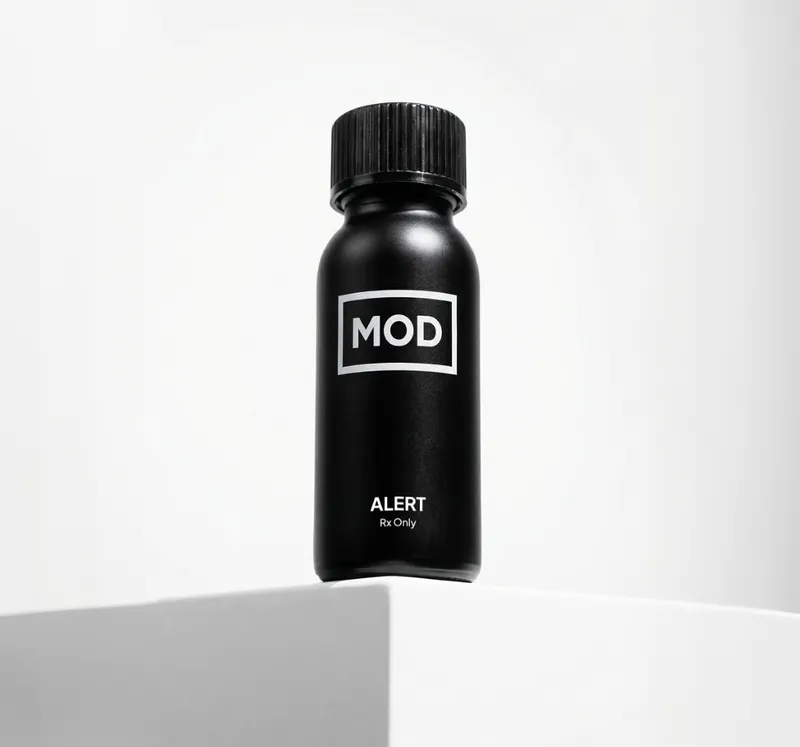
- Newer approaches (like MOD) are expanding personalized options
Why Look for an Alternative to Adderall?
Adderall (mixed amphetamine salts) increases dopamine and norepinephrine levels in the brain, improving attention and reducing impulsivity. However, stimulants can also cause:
- Increased heart rate and blood pressure
- Anxiety or jitteriness
- Sleep disruption
- Appetite suppression
- Risk of dependence or misuse
While stimulants remain first-line for ADHD, not all patients tolerate them well, and alternative options are often necessary. Evidence from a large meta-analysis published in The Lancet Psychiatry highlights variability in both efficacy and tolerability across ADHD medications
1. Modafinil (and Armodafinil)
One of the most studied non-amphetamine alternatives is modafinil.
Why it’s different:
- Distinct mechanism (dopamine reuptake inhibition + orexin/histamine pathways)
- Lower abuse potential than traditional stimulants
- More stable “wakefulness” effect
Evidence:
Clinical studies suggest modafinil can significantly improve ADHD symptoms compared to placebo and may serve as a viable alternative to traditional stimulants.
Earlier comparative research also found modafinil to have similar efficacy to dextroamphetamine in adults with ADHD, and newer analyses suggest comparable improvements in attention when compared with methylphenidate.
Best for:
- Sustained mental clarity
- Patients who don’t tolerate amphetamines
- Daytime fatigue or brain fog
2. Methylphenidate-Based Medications
Examples include:
- Ritalin
- Concerta
- Focalin
Key differences from Adderall:
- Primarily block dopamine and norepinephrine reuptake
- Often perceived as less intense than amphetamines
Evidence:
Methylphenidate remains one of the most extensively studied ADHD medications, with strong evidence supporting improvements in attention and executive function.
Best for:
- Patients who need stimulant therapy but don’t tolerate amphetamines
3. Non-Stimulant ADHD Medications
Common options include:
- Atomoxetine
- Guanfacine
- Clonidine
Why consider them:
- No abuse potential
- Helpful for patients with anxiety, tics, or substance use risk
Evidence:
Atomoxetine has demonstrated efficacy comparable to methylphenidate in some populations and is widely used when stimulant risks outweigh benefits. It is also less likely to be associated with misuse.
Trade-offs:
- Slower onset (weeks vs. hours)
- May be less potent than stimulants overall
4. Cognitive Enhancers & Wakefulness Agents
Beyond traditional ADHD medications, cognitive enhancers like modafinil and stimulant-based agents have been studied for broader cognitive effects.
Evidence:
A review of cognitive enhancers found that both modafinil and methylphenidate improve attention, reaction time, and executive function across various populations.
These findings reinforce that multiple pharmacologic pathways—not just amphetamines—can enhance cognition.
5. Lifestyle & Behavioral Strategies
Even the most effective medication works best when combined with foundational habits.
High-impact strategies:
- Consistent sleep-wake cycles
- Regular exercise
- Structured work intervals
- Nutrient-dense, high-protein diet
Clinical guidelines emphasize that combining behavioral strategies with pharmacologic treatment leads to better long-term outcomes.
Where MOD Fits In
Newer formulations are exploring combinations that go beyond traditional stimulants.
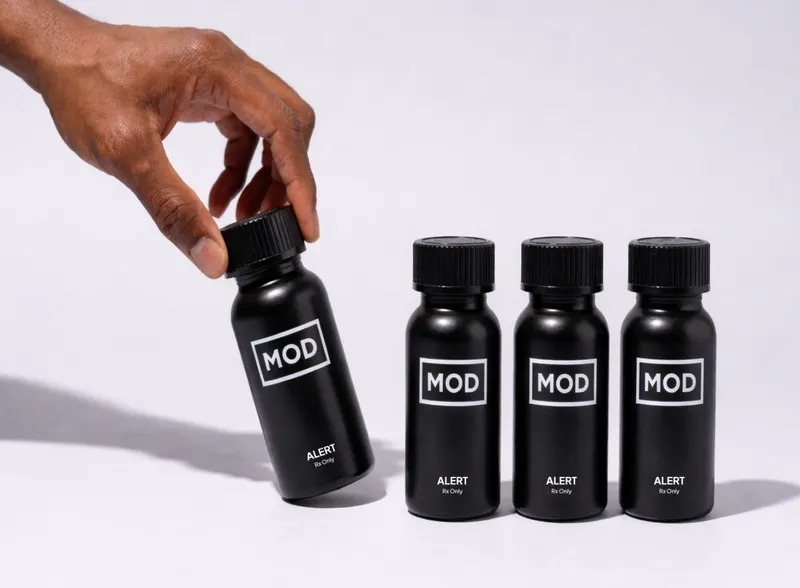
MOD products are designed to:
- Support sustained cognitive performance
- Combine wakefulness-promoting agents with faster-acting energy support
- Offer a more balanced alternative to high-intensity stimulants
This reflects a shift toward precision-based cognitive enhancement—less about overstimulation, and more about stability, control, and consistency.
FAQs
Is modafinil as effective as Adderall?
These medications work in different ways to enhance cognition and attention.
What’s the safest alternative to Adderall?
Non-stimulants like Modafinil and Atomoxetine have limited abuse potential, though effectiveness varies.
Can I switch from Adderall to another medication?
Yes, but this should always be done under medical supervision.
Are there non-prescription options?
Caffeine-based stacks and lifestyle interventions can help with mild focus issues, but they are not equivalent to prescription treatments.
This article is provided for informational purposes only and does not constitute medical advice. The information presented is not a substitute for professional medical advice, diagnosis, or treatment. Always consult your healthcare provider to discuss the risks, benefits, and appropriateness of any treatment.
MOD offers access to healthcare providers who may prescribe compounded medications for the treatment of excessive daytime sleepiness associated with shift work sleep disorder (SWSD), when clinically appropriate.
The featured products include compounded medications that have not been approved by the FDA. Compounded medications may be prescribed under federal law but are not the same as, nor are they generic versions of, any FDA-approved medication. The FDA does not review compounded medications for safety, effectiveness, or manufacturing quality of compounded products. A prescription will only be written if deemed appropriate after the digital consultation by the licensed medical provider. Individual results may vary.
MOD is not a compounding pharmacy but a telemedicine service that links patients to licensed medical providers.