How to Survive Night Shifts as an IT Support Technician
Working nights in IT support means solving urgent technical problems when your body is naturally prepared for sleep. A server outage at 3 AM, an overnight maintenance window, or a high-priority ticket can require careful decisions during the hours when alertness is often lowest.
The goal is not to force your body to ignore fatigue. It is to protect enough sleep, use alertness strategies carefully, reduce unnecessary cognitive load, and seek medical care when persistent sleepiness may indicate shift work disorder.
Key Takeaways
- Night work conflicts with the body’s circadian rhythm, which can make daytime sleep shorter and overnight alertness harder to maintain.
- Protecting enough total sleep is more important than trying to function on a short daytime sleep window.
- Planned naps, carefully timed caffeine, bright light early in the shift, and a dark sleep environment may help manage fatigue.
- Clear handovers, documented troubleshooting steps, and secure remote access reduce the mental load placed on overnight technicians.
- Adults with persistent insomnia or excessive sleepiness related to shift work should speak with a healthcare provider about possible shift work disorder and appropriate treatment options.
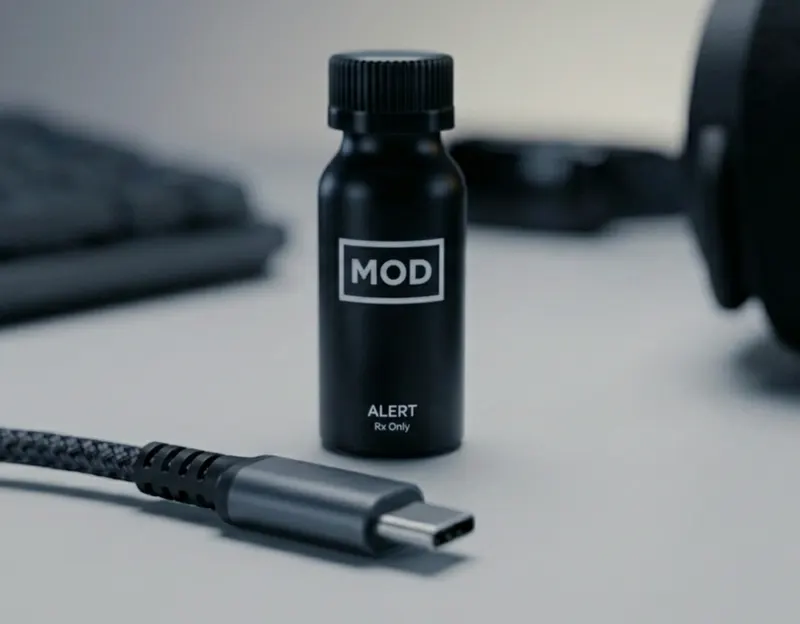
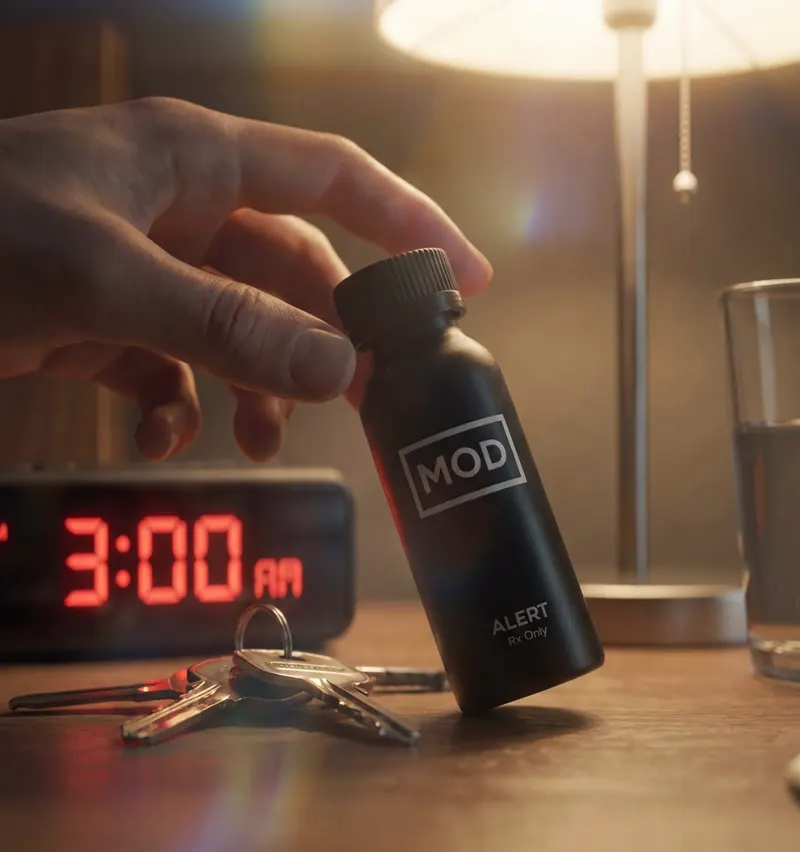
- MOD Alert is a compounded prescription medication for excessive sleepiness associated with SWSD, and it is not FDA-approved.
Build a Sustainable Night Shift Sleep Schedule
Your circadian rhythm follows a roughly 24-hour pattern that helps regulate sleep, wakefulness, hormones, and body temperature. Night work places your schedule in conflict with that internal timing. NIOSH guidance for night workers explains that the body is naturally driven toward sleep at night and wakefulness during daylight hours.
Protect Enough Total Sleep
There is no single sleep schedule that works for every night shift technician. For a 7 PM to 7 AM shift, one possible starting point is:
- Wind down after work: Keep the trip home and the first hour after work as calm and dim as practical.
- Main sleep period: Aim for a protected daytime sleep window soon after arriving home.
- Pre-shift nap: Add a short nap before work when your main sleep period is not long enough.
- Wake-up buffer: Leave enough time before work to eat, prepare, and become fully alert.
Night workers often get less sleep than day workers. NIOSH advises workers to sleep as long as possible and consider a pre-shift nap when needed. Do not treat six hours as automatically adequate simply because the sleep felt uninterrupted.
Make Daytime Sleep Easier
A daytime bedroom should be as dark, quiet, and comfortable as practical:
- Use blackout curtains or a sleep mask.
- Silence nonessential notifications.
- Use earplugs, a fan, or white noise if daytime sounds wake you.
- Keep the room comfortably cool.
- Ask household members to protect your main sleep window.
Daytime sleep may still be shorter because the circadian system promotes wakefulness as the day progresses. A split schedule, with a main sleep period after work and a shorter pre-shift nap, may be more realistic for some workers.
Be Careful With Melatonin
Melatonin may be appropriate for some shift workers, but timing matters. NIOSH notes that taking it at the wrong time may shift the circadian clock in an unhelpful direction or provide little benefit. Discuss melatonin with a healthcare provider rather than assuming it should always be taken immediately after every shift.

Stay Alert During Overnight IT Support
Fatigue often becomes strongest between about 2 AM and 6 AM. That window deserves extra planning, especially when you are handling access changes, production incidents, security alerts, or irreversible system actions.
Use Caffeine Strategically
Caffeine may improve alertness, but it can also interfere with later sleep. NIOSH notes that caffeine can reduce sleep, so timing matters.
A practical approach is to:
- Use modest amounts early in the shift rather than repeatedly dosing all night.
- Stop several hours before your intended sleep period.
- Avoid combining multiple high-caffeine drinks without tracking the total amount.
- Pay attention to anxiety, palpitations, stomach upset, and worsening post-shift sleep.
Avoid treating caffeine plus supplements as a guaranteed way to prevent jitters or maintain alertness. Responses vary, and precise supplement combinations should not be presented as universal shift work protocols.
Use Light at the Right Time
Light is a strong circadian signal. NIOSH advises full-time night workers that they may be more alert when they increase light exposure early in the shift.
During the first half of the shift, use a well-lit workspace when possible. After work, reduce unnecessary bright light and keep your bedroom dark. Anyone considering a formal light therapy device should get individualized guidance, especially if they have an eye condition, bipolar disorder, or take medication that affects light sensitivity.
Move and Rotate Tasks
Brief movement breaks can help interrupt monotony and give you a chance to reassess your alertness. When workload permits:
- Stand or walk for a few minutes every hour or two.
- Alternate between calls, documentation, monitoring, and troubleshooting.
- Schedule a second-person review for high-risk changes during the lowest-alertness hours.
- Use checklists for repetitive or safety-critical tasks.
Movement can provide a temporary lift, but it does not replace sleep.

Recognize Possible Shift Work Disorder
Shift work disorder is a circadian rhythm sleep-wake disorder associated with work that overlaps the usual sleep period. Common shift work disorder symptoms include excessive sleepiness during work, insomnia when trying to sleep, low energy, difficulty concentrating, headaches, and irritability.
Occasional tiredness after a difficult shift is not enough to diagnose the condition. Speak with a healthcare provider when sleepiness or insomnia is persistent, linked to your work schedule, and affecting job performance, driving, relationships, or daily functioning. Other conditions, including sleep apnea, medication effects, depression, and insufficient sleep, can also cause excessive sleepiness.
When Prescription Treatment May Be Considered
For adults diagnosed with shift work disorder, a clinician may consider wakefulness-promoting medication alongside sleep scheduling and other strategies. Modafinil tablets are FDA-approved for shift work disorder when used to improve wakefulness in adults with excessive sleepiness associated with the condition.
Modafinil is not a substitute for adequate sleep, and it may not eliminate all sleepiness. Potential side effects, drug interactions, and individual health risks require review by a licensed healthcare provider.
Protect Your Long-Term Health
Night work is associated with sleep disruption and may be linked with gastrointestinal, psychological, cardiovascular, and metabolic health concerns. NIOSH summarizes several shift work health risks, while also noting that individual risk varies.
Practical steps include:
- Attend routine medical checkups and mention your work schedule.
- Seek care for persistent sleep problems, mood changes, chest symptoms, or gastrointestinal symptoms.
- Exercise regularly at a time that does not interfere with sleep.
- Avoid relying on alcohol or sedating products to force daytime sleep.
- Review your schedule when fatigue is repeatedly affecting safety or performance.
A stable schedule may reduce frequent switching, but permanent night work still conflicts with normal circadian timing. When schedules rotate, adequate recovery time and predictable rotations are important.

Reduce Cognitive Load in Overnight IT Operations
Good operations design matters because fatigue increases the chance of missed details. The strongest overnight workflows do not depend on memory alone.
Use Structured Handovers
A useful handover should include:
- The current incident or ticket status
- Actions already attempted
- Relevant logs, timestamps, and error messages
- Systems or users affected
- Changes made during the shift
- Clear ownership and the next action
- Any security, access, or safety concerns
Structured handovers can reduce information loss, but avoid claiming a universal percentage reduction in escalations unless a credible study directly supports it.
Configure Secure Remote Access
Unattended remote access may help technicians work on approved endpoints when users are unavailable. It should include controls such as:
- Multi-factor authentication
- Role-based access
- Session logging
- Approval rules for sensitive systems
- Secure credential handling
- Post-reboot reconnection when operationally appropriate
Remote access can reduce waiting, but exact claims about saving 12 to 24 hours should not be generalized across every support environment.
Automate Routine Work Carefully
Automation can help with password workflows, status requests, routing, monitoring, and common troubleshooting steps. Keep human review for high-impact actions, access changes, data deletion, production deployment, or anything difficult to reverse.
The goal is not to maximize automation at all costs. It is to reserve limited overnight attention for decisions that genuinely require judgment.
Manage Career Growth and Life Outside Work
Night shifts can provide independent troubleshooting experience, but advancement and pay vary by employer, market, role, and labor agreement. Do not assume every night position includes a 10% to 20% differential, guaranteed overtime, or faster promotion.
Use the shift to build transferable skills:
- Improve incident documentation.
- Learn basic scripting and automation.
- Strengthen networking and operating system fundamentals.
- Track the problems you resolved and the business impact.
- Ask for a clear path toward senior support, systems administration, networking, cloud, or security roles.
Protect relationships by scheduling regular check-ins, explaining your sleep window, and keeping at least part of your off-day schedule consistent. Completely reversing your sleep schedule every few days can make the transition back to nights harder.

Eat for Steadier Overnight Energy
Meal timing can affect comfort and alertness. NIOSH recommends limiting food intake overnight and avoiding large meals close to the main sleep period. Its guidance suggests workers reduce overnight food intake when practical.
A workable pattern is:
- Eat a balanced meal before the shift.
- Choose smaller meals or snacks overnight.
- Include protein, fiber-rich carbohydrates, fruit, vegetables, and unsaturated fats.
- Avoid very heavy meals near the end of the shift.
- Drink water regularly without forcing excessive amounts.
Do not begin B-complex vitamins, vitamin D, magnesium, or other supplements solely because you work nights. Testing, medical history, diet, and medication interactions should guide supplementation.
Conclusion: How MOD.com May Support Night Shift Technicians
Sleep scheduling, light management, planned naps, careful caffeine use, and strong IT workflows should remain the foundation of night shift fatigue management. Persistent excessive sleepiness, however, may require medical evaluation.
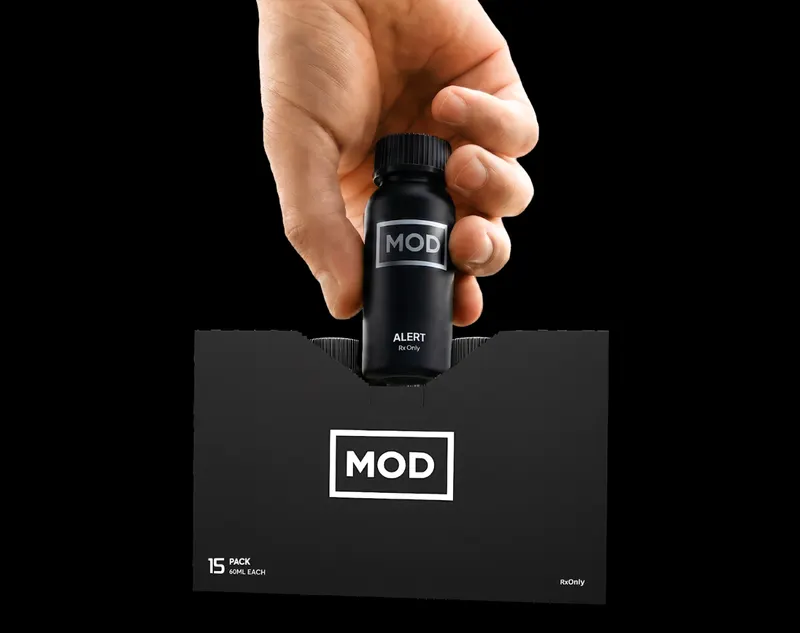
Learn more about MOD if you are experiencing excessive sleepiness associated with shift work disorder. MOD Alert is a compounded prescription medication containing 150 mg modafinil and 60 mg caffeine. It may provide alertness support for up to 12 hours, but results vary. MOD Alert is not FDA-approved, and it requires evaluation by a licensed healthcare provider.
Through MOD treatment plans, eligible adults can complete a medical intake and connect with a licensed healthcare provider completely online. You can also review answers to common MOD questions or contact the MOD support team for practical account and treatment support.
Prescription wakefulness support does not replace adequate sleep or safe scheduling. It is one possible part of a broader plan for adults whose excessive sleepiness is associated with diagnosed shift work disorder.
Frequently Asked Questions
What sleep schedule works for a 7 PM to 7 AM shift?
Start with a protected sleep period soon after arriving home, then add a short pre-shift nap if the main sleep period is too short. The exact hours depend on commute, household responsibilities, and individual sleep needs. The priority is obtaining enough total sleep consistently, not forcing yourself into one supposedly optimal schedule.
When should I stop drinking caffeine during a night shift?
Stop several hours before your planned sleep period, then adjust based on how strongly caffeine affects you. Its effects can persist long after the noticeable boost fades. Using smaller amounts early in the shift is generally less disruptive than repeated doses near sunrise, especially when post-shift sleep is already difficult.
How do I know whether I have shift work disorder?
Persistent insomnia when you try to sleep, excessive sleepiness during work, difficulty concentrating, and impairment in daily life may justify an evaluation. A clinician should confirm that symptoms are linked to the work schedule and consider other causes such as insufficient sleep, sleep apnea, depression, medications, or another sleep disorder.
What is MOD Alert?
MOD Alert is a compounded prescription medication offered through MOD.com for excessive daytime sleepiness associated with shift work disorder. It contains 150 mg modafinil and 60 mg caffeine and may provide alertness support for up to 12 hours. It is not FDA-approved and is prescribed only after review by a licensed healthcare provider.
How can night shift IT work support career growth?
Use overnight work to document complex incidents, practice independent troubleshooting, improve scripts, and build evidence of reliable performance. Ask your employer what skills and results are required for advancement. Pay premiums and promotion speed vary widely, so base career decisions on written policies, actual responsibilities, and the path available within your organization.
This article is provided for informational purposes only and does not constitute medical advice. The information presented is not a substitute for professional medical advice, diagnosis, or treatment. Always consult your healthcare provider to discuss the risks, benefits, and appropriateness of any treatment.
MOD offers access to healthcare providers who may prescribe compounded medications for the treatment of excessive daytime sleepiness associated with shift work sleep disorder (SWSD), when clinically appropriate.
The featured products include compounded medications that have not been approved by the FDA. Compounded medications may be prescribed under federal law but are not the same as, nor are they generic versions of, any FDA-approved medication. The FDA does not review compounded medications for safety, effectiveness, or manufacturing quality of compounded products. A prescription will only be written if deemed appropriate after the digital consultation by the licensed medical provider. Individual results may vary.
MOD is not a compounding pharmacy but a telemedicine service that links patients to licensed medical providers.