How to Stop Relying on Energy Drinks at Work (2026)
If you're cracking open your second or third energy drink before noon, you already know something's off. You're not getting energy anymore, you're borrowing against it. Figuring out how to stop relying on energy drinks isn't a matter of discipline; it's a matter of understanding the neurochemical loop that makes them hard to quit, and building a smarter system in their place.
This guide walks you through how to stop relying on energy drinks, for anyone whose tolerance has crept up, whose sleep has gotten worse, and whose productivity is declining despite the cans piling up in the recycling bin.
Key Takeaways
- Energy drink dependence is clinically recognized, up to 28% of regular caffeine users meet formal criteria for caffeine dependence
- Quitting abruptly triggers withdrawal: headaches, brain fog, and irritability that peak within 20–51 hours and can last up to 9 days
- The crash-and-can cycle is driven by adenosine buildup, caffeine blocks fatigue signals temporarily, but the debt compounds
- Tapering over 2–4 weeks is more sustainable than cold turkey for most people
- Sleep disruption is both a cause and an effect of energy drink dependence, fixing both is required to break the cycle
- For shift workers with diagnosed Shift Work Sleep Disorder (SWSD), prescription-strength wakefulness support may be appropriate
Why Do You Keep Reaching for Another Energy Drink?
If you're consuming energy drinks just to feel normal, that's not a personal failure. It's a predictable consequence of how these drinks work on your brain. Shift workers often rely heavily on caffeine and energy drinks for alertness, and research on shift work and caffeine intake suggests irregular schedules can shape stimulant use patterns.
Three mechanisms drive the cycle:
- Tolerance builds quickly. Your brain adapts to repeated caffeine exposure over time. More caffeine may be needed to produce the same perceived effect, and the ceiling keeps moving.
- The crash worsens your baseline. Some energy drinks can spike blood glucose, contributing to an insulin-driven crash later. You end up more tired than before you drank.
- Poor sleep deepens next-day fatigue. Caffeine consumed even hours earlier can reduce sleep quality. You start the next shift already in deficit, more drinks, smaller effect, worse baseline.
Understanding the mechanism is the first step to breaking it.
Before You Start: Set Honest Expectations
Reducing energy drink dependence is not a 48-hour transformation. If you've been drinking them daily for months, your brain has physically adapted to regular caffeine exposure. Remove caffeine suddenly, and your nervous system responds with rebound fatigue plus withdrawal.
One important distinction: if you work night shifts or rotating schedules, standard sleep hygiene advice may not be enough. Shift Work Sleep Disorder (SWSD) is a recognized medical condition. Step 6 is specifically for those whose situation goes deeper.
Step 1: Track What You're Actually Consuming
Before changing anything, spend 3–5 days logging your intake. Most people significantly underestimate how much caffeine they're consuming across coffee, energy drinks, pre-workouts, and caffeinated sodas.
For each item, note:
- The time of day
- The caffeine content, listed on the label or available via the manufacturer's website
- What you were feeling right before you reached for it
This baseline reveals your actual daily caffeine total. Heavy users often land at 600–900 mg/day, well above the FDA's general guideline of 400 mg for healthy adults. It also identifies your trigger moments: the 3 pm slump, post-lunch fog, mid-shift wall. Don't try to change anything during this tracking period. Observation first.
Step 2: Understand the Crash-and-Can Cycle
The reason energy drinks are hard to quit isn't weakness. It's neurochemistry.
When you're awake, a molecule called adenosine accumulates in the brain and gradually signals fatigue. Caffeine works by blocking adenosine receptors, not by eliminating the adenosine itself. The moment caffeine clears your system, the accumulated adenosine can make fatigue feel sharper. That's the crash.
Energy drinks amplify this with high sugar content and large caffeine doses that can spike dopamine and cortisol simultaneously. Your brain begins associating the drink with relief, not just from tiredness but from discomfort, stress, and boredom. This is how dependence forms.
Research published in PMC/NIH found that 28% of regular caffeine users meet clinical criteria for caffeine dependence, including needing more to achieve the same effect, failed attempts to cut back, and experiencing withdrawal when stopping.
Step 3: Taper Down, Don't Quit Cold Turkey
Caffeine withdrawal is recognized clinically and reliably produces symptoms in daily users who stop abruptly: headaches, fatigue, difficulty concentrating, irritability, and sometimes low mood. These symptoms typically peak at 20–51 hours after the last dose and can persist for up to 9 days.
It's important to consult your healthcare provider before beginning a taper if you consume more than 600 mg/day or have cardiovascular concerns. A practical approach:
Week 1: Cut total daily caffeine by about 25%. If you're consuming 800 mg/day, target about 600 mg. Replace one energy drink with green tea or black coffee.
Week 2: Cut another step down, aiming for 400–450 mg. Drink an additional 16–24 oz of water per day. Dehydration amplifies perceived fatigue.
Week 3–4: Reduce to 200–300 mg/day. At this level, caffeine is supporting your system rather than propping it up artificially.
One rule: don't simultaneously overhaul your diet, exercise routine, and sleep schedule while tapering. Change one variable at a time.
Step 4: Fix the Sleep Problem, Not Just the Drink Problem
Energy drink dependence and poor sleep don't just coexist, they reinforce each other. Caffeine's half-life is roughly 4–6 hours, so a 150 mg drink at 8 AM can still leave meaningful caffeine in your system at 2 PM. Poor sleep deepens fatigue; deeper fatigue drives you back to the can.
Breaking the cycle means improving the quality of your sleep:
- Consistency beats duration. A fixed wake time, within 30 minutes, even on days off, is one of the strongest signals for your circadian clock.
- Light management. Blackout curtains and an eye mask are functional equipment for shift workers, not luxuries. Light suppresses melatonin even through closed eyelids.
- Temperature. A cooler bedroom, often around 65–68°F (18–20°C), may support sleep onset by helping the body lower core temperature.
- Hard caffeine cutoff. No caffeine in the 6 hours before your intended sleep window.
For shift workers: these rules need calibration to your schedule, not a generic 10 PM bedtime.
Step 5: Replace the Ritual, Not Just the Liquid
Energy drinks serve a psychological function beyond caffeine. The act of opening a can, the cold fizz, the break from your workstation, your brain has learned to associate these cues with relief and alertness. The reward response often starts before the caffeine has even absorbed.
When you remove the drink without replacing the ritual, the craving continues:
- Swap the sensory experience. Sparkling water with electrolytes provides the cold, fizzy, hand-held element without the caffeine spike and sugar.
- Keep the break. Stepping away from your workstation for 5–10 minutes has measurable alertness benefits independent of any drink.
- Lower-caffeine bridges. Green tea and matcha naturally contain L-theanine alongside caffeine, promoting calm focus without the edge and crash. This is a more stable physiological response than a high-dose energy drink.
Better Alternatives to Energy Drinks That Actually Last
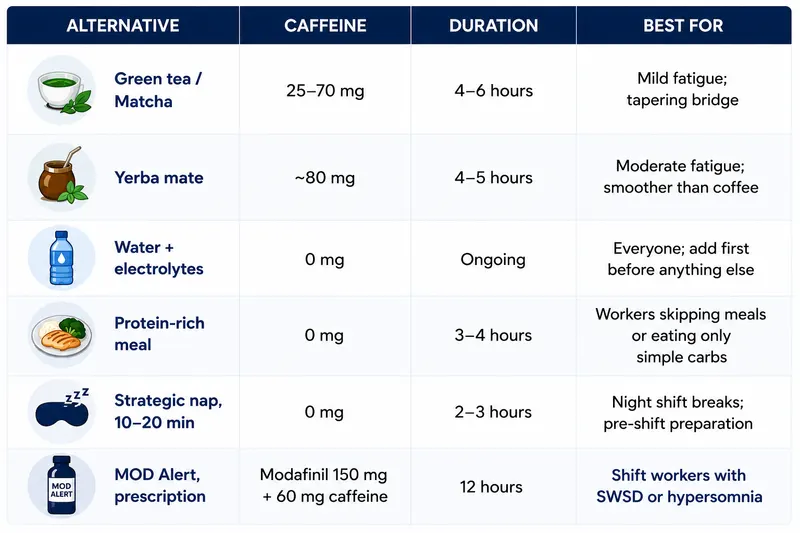
MOD Alert requires a telehealth prescription and is designed for people who've worked through the lifestyle steps and still can't maintain safe alertness.
Step 6: Consider Prescription-Strength Support for Shift Work
For workers who have been through the steps above and still can't maintain alertness safely, or who have been diagnosed with Shift Work Sleep Disorder, lifestyle changes alone may not be sufficient, and that's a clinical reality, not a personal failure.
Modafinil is an FDA-approved wakefulness-promoting agent for SWSD. It operates through a different mechanism than caffeine: rather than blocking adenosine receptors, it modulates dopamine, norepinephrine, and histamine pathways to promote sustained wakefulness. In clinical trials, it significantly reduced sleepiness during night shifts and improved vigilance scores compared to placebo.
Importantly, Modafinil produces less of a crash profile than caffeine-based stimulants and has a lower abuse potential as a Schedule IV medication. Potential side effects include headache, nausea, and insomnia. It's important to discuss your full medical history with a provider before starting. If you experience chest pain, rapid heartbeat, or skin reactions, contact your provider immediately and do not take another dose.
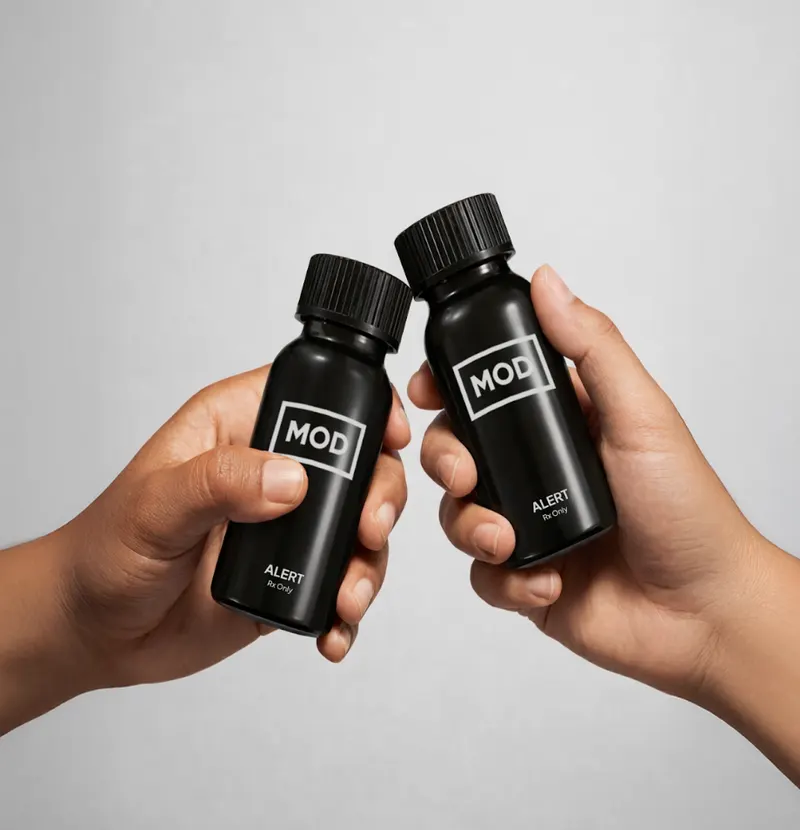
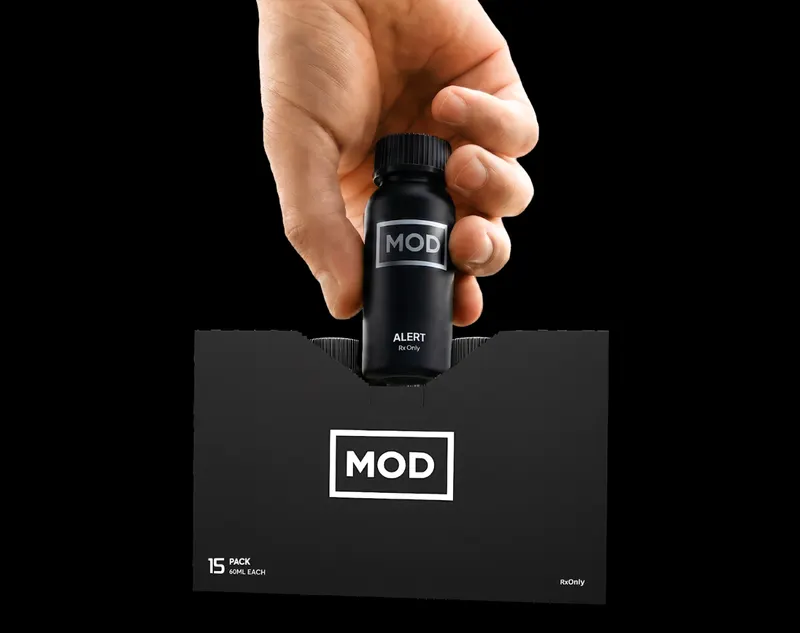
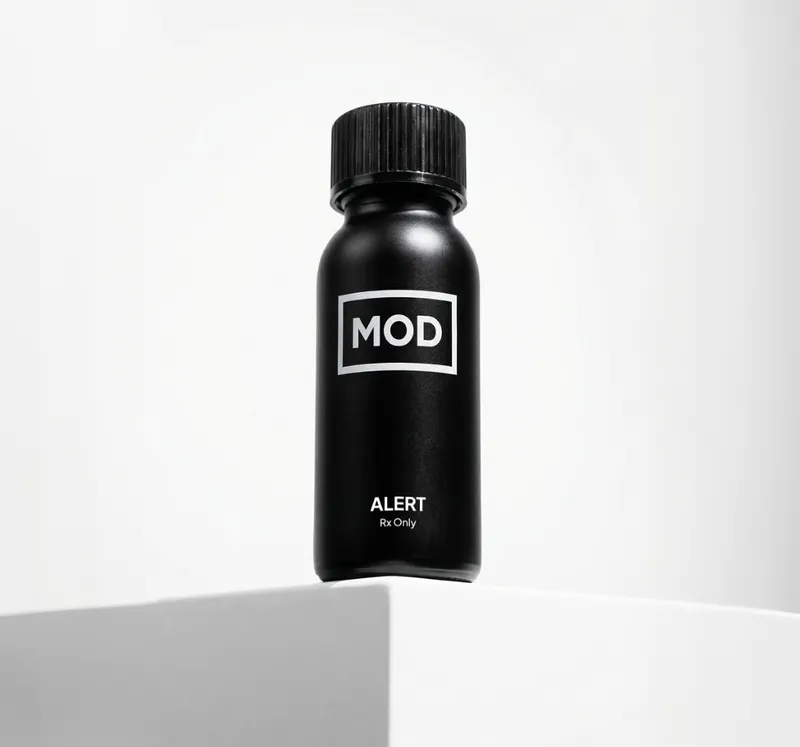
MOD's compounded prescription-strength drinks are formulated for shift workers specifically. MOD Alert contains 150 mg of modafinil plus 60 mg of caffeine for sustained wakefulness across a 12-hour shift. These are compounded medications, not FDA-approved products, and they require a telehealth prescription.
The process: complete an online assessment, a licensed provider reviews your intake and medical history, and if appropriate, your medication ships directly to your door.
Tips for Making the Switch Stick
Time your water intake. Drink 16 oz of water when you first wake up before any stimulant. Mild dehydration is a common, underappreciated driver of fatigue that's often mistaken for a caffeine craving.
Front-load your caffeine. Whatever caffeine you're still using should be consumed earlier in your shift, not during the back half. Late-shift caffeine wrecks the recovery sleep you need to avoid starting the next shift in deficit.
A 10-minute walk outperforms a can. Light movement increases alertness through endorphin release and core body temperature changes.
Track mood alongside energy. Withdrawal affects mood before it affects energy levels. Log how you're feeling daily so you don't interpret normal withdrawal progress as a bad day that justifies going back to the full dose.
Mistakes to Avoid When Stopping Energy Drinks
Switching energy drinks for more coffee at the same volume. You're not reducing caffeine dependence, you're repackaging it.
Trying to quit during your most demanding week. Withdrawal symptoms temporarily impair performance. Start your taper during a lower-stakes stretch when you can afford a few rough days.
Falling for "natural" or "clean" energy drinks. Products marketed as cleaner alternatives frequently contain 150–200 mg of caffeine per serving. They don't reduce dependence; they just feel less guilty.
Skipping meals and expecting stable energy. Blood sugar dips mid-shift are a major driver of fatigue crashes. Skipping a meal or eating only simple carbohydrates accelerates the energy hole that sends you back to the can.
Optimizing everything except sleep. Sleep is the primary input. Everything else is downstream.
When Should You Talk to a Doctor?
Most caffeine reduction is self-managed. But a few situations warrant a provider conversation:
- Severe or prolonged withdrawal. Headaches lasting more than 2 days or extreme fatigue that prevents work are signs to seek guidance rather than push through alone.
- Possible Shift Work Sleep Disorder. If you work nights or rotating schedules and consistently struggle with alertness on shift, SWSD is a clinical diagnosis with specific treatment options, not just "being tired."
- Cardiovascular symptoms. If you've been consuming 600+ mg of caffeine daily and notice chest discomfort, heart palpitations, or elevated blood pressure, it's important to consult a provider before tapering.
- Anxiety or mood disorder overlap. If reducing caffeine worsens anxiety or depressive symptoms, a provider should be part of your plan.
The Bottom Line
Where you fall on this spectrum determines your starting point:
- Mild dependence, 1–2 drinks/day, tolerance creeping up: Start with tracking and the tapering protocol. Add L-theanine-based alternatives, fix your sleep window, and replace the ritual. Most people break the cycle in 4–6 weeks.
- Moderate dependence, 3+ drinks/day, failed quit attempts, disrupted sleep: Follow the full 3–4 week taper. Sleep quality matters more than any drink swap. Speak with a provider if withdrawal symptoms are significant.
- Clinical fatigue or SWSD, night/rotating shifts, can't maintain safe alertness: This may be Shift Work Sleep Disorder, a medical condition, not a willpower problem. Modafinil, FDA-approved for SWSD, works through different brain pathways than caffeine and may provide 12–15 hour wakefulness support with a lower risk of dependence than many traditional stimulants.
If that last category describes your situation, MOD is built specifically for it.
Frequently Asked Questions
How long does it take to stop relying on energy drinks?
Physical dependence typically reduces within 2–4 weeks of tapering. Full normalization of energy levels usually takes 4–8 weeks as your body adjusts to lower caffeine intake. For shift workers with SWSD, the timeline can be longer without addressing the underlying condition.
What's the best energy drink alternative for work?
Green tea or matcha with L-theanine is the most stable energy drink alternative for work, delivering alertness without the spike-and-crash cycle of high-dose drinks. For shift workers with SWSD, a prescription-strength wakefulness option like Modafinil may be more clinically appropriate than any over-the-counter drink.
Is energy drink addiction real?
Clinically, yes. The condition is called caffeine use disorder or caffeine dependence. A comprehensive review published in PMC/NIH found that 28% of regular caffeine users meet formal dependence criteria, including tolerance, failed quit attempts, and withdrawal symptoms.
Will I feel worse before I feel better?
Almost certainly, yes, especially in the first 3–7 days of tapering. Headaches and fatigue are expected withdrawal symptoms. They're temporary. Staying well hydrated and maintaining consistent sleep timing reduces their intensity significantly.
What happens when you stop drinking energy drinks?
In the first 20–51 hours: headaches, fatigue, difficulty concentrating, and irritability as your body adjusts. After 2–4 weeks: baseline energy often improves, sleep quality increases, and anxiety levels may decrease as high caffeine intake falls.
How do I wean myself off energy drinks?
Cut your total daily caffeine gradually each week. If you're drinking two 150 mg drinks daily, 300 mg total, reduce step by step instead of stopping all at once. Replace one drink with green tea or a lower-caffeine option, same ritual, lower dose. Drink an extra 16–24 oz of water daily and taper over 3–4 weeks total.
Why is it so hard to stop relying on energy drinks?
Energy drinks trigger two overlapping dependence mechanisms: physical tolerance and behavioral reinforcement. With repeated daily use, the brain adapts to caffeine exposure, meaning you may need more caffeine for the same effect. The ritual of opening the can also triggers a dopamine response before the caffeine even absorbs, creating a conditioned craving loop that persists even when you consciously want to quit.
This article is provided for informational purposes only and does not constitute medical advice. The information presented is not a substitute for professional medical advice, diagnosis, or treatment. Always consult your healthcare provider to discuss the risks, benefits, and appropriateness of any treatment.
MOD offers access to healthcare providers who may prescribe compounded medications for the treatment of excessive daytime sleepiness associated with shift work sleep disorder (SWSD), when clinically appropriate.
The featured products include compounded medications that have not been approved by the FDA. Compounded medications may be prescribed under federal law but are not the same as, nor are they generic versions of, any FDA-approved medication. The FDA does not review compounded medications for safety, effectiveness, or manufacturing quality of compounded products. A prescription will only be written if deemed appropriate after the digital consultation by the licensed medical provider. Individual results may vary.