Best Sleep Schedule for Night Shift Workers
The best sleep schedule for night shift workers is usually an anchor-sleep plan: sleep soon after your shift, protect a consistent core sleep window, and stop flipping fully back to days on every break. If you're dragging through 2026 night shifts even when you're exhausted enough to collapse, that's not a discipline problem. It's a circadian problem.
Night work pushes your sleep window into the part of the day when your brain expects light, activity, and noise. In a NIOSH analysis of 6,338 U.S. workers, night-shift workers had a 61.8% prevalence of short sleep versus 35.9% among daytime workers. That gap is why the right sleep schedule matters more than another cup of coffee.
Key Takeaways
- Anchor sleep is the safest default for most night workers because it preserves a repeatable circadian cue even when the rest of life is messy.
- Sleep immediately after your shift if you can protect a full block. Use split sleep when commute length, childcare, or back-to-back 12s make one long block unrealistic.
- Handle 1 to 2 days off differently from 3 or more days off. Short breaks call for partial shifts toward daytime, not a full reset.
- Planned naps, early-shift caffeine, and bright light at the start of work help. Late-shift caffeine and sunrise on the drive home usually hurt.
- If you still have severe sleepiness, insomnia, or near-miss driving episodes despite a solid schedule, it may be time to discuss Shift Work Sleep Disorder (SWSD) with a clinician.
What Is the Best Sleep Schedule for Night Shift Workers?
The best sleep schedule for night shift workers is a consistent schedule that protects 7 to 9 hours of total sleep and keeps at least part of that window fixed every day.
The same NIOSH analysis found 18.5% of night-shift workers reported insomnia, compared with 8.4% of daytime workers. National data cited by CDC/NIOSH's nurse training module also showed more than 50% of night-shift healthcare workers slept 6 hours or fewer per day.
So the target is not "perfect adaptation." The target is enough protected sleep to stay functional, recover between shifts, and avoid turning every workweek into a sleep-debt spiral. For most readers, that means one of three patterns:
- Anchor sleep for permanent nights
- Split sleep for consecutive long shifts
- Partial transition sleep for days off
Anchor Sleep Beats Full Schedule Flipping for Most Night Shift Workers
Anchor sleep works best for most night workers because it gives your circadian system one repeatable signal instead of asking it to relearn your schedule every few days.
In practice, anchor sleep means keeping at least 4 to 5 hours of your sleep window at the same time every day, even on days off. If your normal workday sleep runs from 8:30 a.m. to 3:30 p.m., you might still protect 9 a.m. to 1 p.m. when you're off. That overlap is what keeps the schedule from falling apart.
A 2023 Cochrane review on shift schedule adaptation identified schedule design variables such as shift permanency, time off between shifts, protected sleep, split shifts, and shift duration as core levers tied to sleep quality, sleep duration, and sleepiness. It also found 11 studies totaling 2,125 participants, which is a useful reminder that no single schedule trick dominates every context.
Full schedule flipping sounds appealing because it gives you more daytime overlap with everyone else. For most night workers, though, it means paying the adaptation cost over and over. If you are on permanent nights, anchor sleep is usually the highest-return move you can make.
Should You Sleep Right After a Night Shift or Use a Split-Sleep Plan?
Sleep right after your shift when you can protect one uninterrupted block. Use split sleep when life makes that impossible and you still need enough total sleep before the next shift.
A 2022 sleep-lab study tested three between-shift sleep timings in 12 men working two consecutive 12-hour night shifts: immediate sleep from 7 a.m. to 2 p.m., delayed sleep from 10 a.m. to 5 p.m., and split sleep from 7 a.m. to 10:30 a.m. plus 1:30 p.m. to 5 p.m. Total sleep time did not differ significantly, but the split-sleep condition had less wake after sleep onset and more Stage N3 sleep than the immediate or delayed conditions.
That does not mean split sleep is always superior. It means split sleep is a legitimate option when one long block is unrealistic.
12-Hour Night Shift Sleep Schedule Example
This 12-hour night shift sleep schedule example works best when you're covering 7 p.m. to 7 a.m. blocks and need enough recovery without disappearing from daytime life.
For consecutive 12s, a useful template looks like this:
- Get home, eat lightly, and aim to be asleep by 8:30 a.m.
- Sleep from 8:30 a.m. to 1:30 p.m. as your main recovery block.
- Stay awake for meals, errands, or family time during the afternoon.
- Take a second sleep block from 5:30 p.m. to 7 p.m. before your next shift.
- Use bright light early in the shift and stop caffeine about 6 hours before your next target bedtime.
If you can manage a single uninterrupted block instead, try 8:30 a.m. to 3:30 p.m. and keep a 4 to 5 hour anchor of that window on days off. If you work 11 p.m. to 7 a.m. rather than 12-hour nights, the same logic applies with the clock shifted earlier.
How to Handle Days Off Without Wrecking Your Sleep Rhythm
The best days-off strategy depends on how many days you have off, because one day off and four days off create very different circadian tradeoffs.
For 1 to 2 days off, do not fully flip back to a daytime schedule unless you have a compelling reason. Use a partial shift instead. After your last night, sleep a short recovery block, such as 8 a.m. to 1 p.m., then go to bed around 11 p.m. only if you truly need daytime function the next day. This reduces the whiplash when you return to nights.
For 3 or more days off, a more complete shift can make sense. Even then, keeping a mini anchor helps. Many workers do better if they still sleep later than average, such as 2 a.m. to 9 or 10 a.m., rather than swinging all the way back to an early-morning routine.
One practical rule: decide in advance whether the break is a "recovery break" or a "social break." Recovery breaks keep more overlap with your work sleep. Social breaks shift closer to daytime, then require a deliberate transition back before the next block of nights. Mixing both approaches randomly is how many workers end up sleeping badly on workdays and off days.
Build a Daytime Sleep Setup That Actually Works
A good night shift sleep schedule fails fast if your bedroom still behaves like a daytime room.
Your setup should do three jobs: block light, reduce noise, and remove reasons to stay mentally switched on. That usually means blackout curtains, a sleep mask, white noise, a cool room, and a clear rule that your phone is not part of the wind-down. It also means protecting the commute home. Sunrise is effectively a "stay awake now" signal to your circadian system.
A 2022 systematic review of evening light before real or simulated night shifts found five eligible studies in which evening light exposure produced phase delays and improved sleep quality, sleep duration, memory, and work performance. The flip side is obvious: the wrong light at the wrong time can push you the wrong way.
Household boundaries matter too. If your room is dark but the rest of your routine is noisy and chaotic, your schedule still will not stick.

Use Naps, Caffeine, and Light at the Right Times
Naps, caffeine, and light work best when you time them against your target sleep window instead of treating them like random energy hacks.
A systematic review of 13 night-shift nap studies found that planned naps generally decreased sleepiness and improved sleep-related performance, even though workers could experience brief sleep inertia right after waking. For most readers, that translates into two high-value options:
- A 90-minute pre-shift nap when you're facing a long night
- A short on-shift nap, around 20 minutes, if your workplace allows it
Caffeine is useful too, but only early enough. A practical rule is to stop caffeine about 6 hours before your planned bedtime. If you want to be asleep by 9 a.m., your cutoff is around 3 a.m. Pair that with bright light near shift start, then lower light exposure as the shift ends.
This is where a lot of schedules break. Workers do almost everything right, then drink caffeine at 5 a.m. and drive home in full sunlight. Fixing that timing often improves daytime sleep more than adding another sleep aid.
Three common mistakes show up over and over:
- Using caffeine as a rescue tool in the final hours of the shift
- Turning a "quick nap" into a 2-hour sleep that pushes bedtime later
- Wearing dark glasses only after sunrise is already hitting your eyes on the commute
Those details sound minor. In real life, they are often the difference between falling asleep within 20 minutes and staring at the ceiling at 10 a.m.
Treatment Options When Scheduling Alone Is Not Enough
When sleep scheduling alone is not enough, the next step is usually not "work harder." It's to add clinical support to the parts of the problem that behavior cannot fully solve.
The usual treatment ladder includes:
- Sleep scheduling and light management first
- Screening for other sleep problems such as sleep apnea or chronic insomnia
- Sometimes low-dose melatonin, when a clinician thinks the timing fits your schedule
- Prescription wakefulness support for diagnosed SWSD
One FDA-recognized option is modafinil. The DailyMed prescribing information states that modafinil is indicated to improve wakefulness in adults with excessive sleepiness associated with shift work disorder, and that the recommended dose for SWD is 200 mg taken about 1 hour before the shift. Armodafinil is another wakefulness-promoting medication clinicians may discuss.
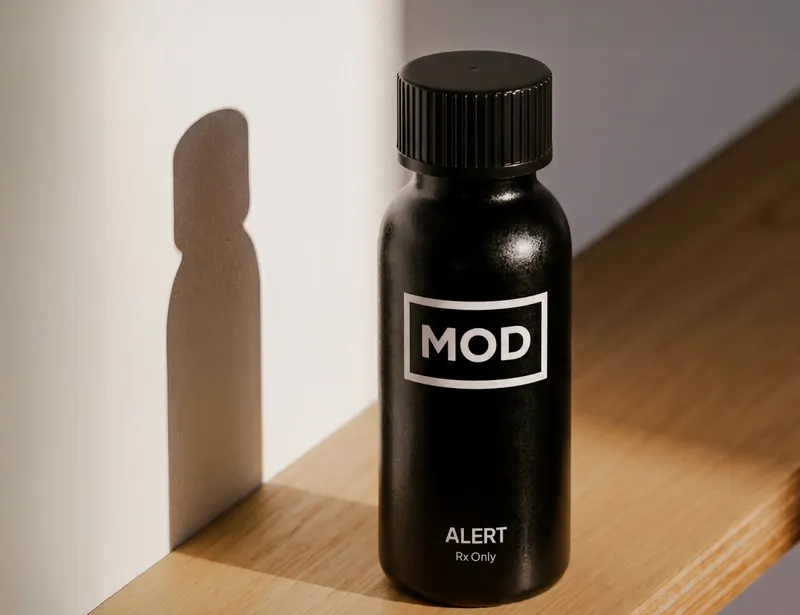
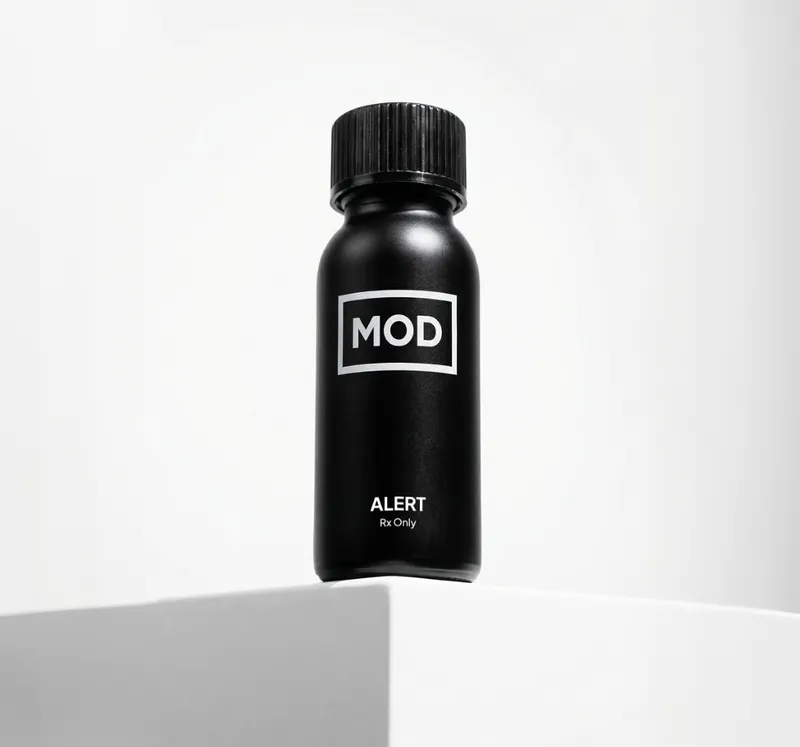
For readers exploring a provider-reviewed prescription route, MOD offers compounded prescription-strength options designed around shift workers. MOD Alert is a compounded prescription-strength drink, not an FDA-approved products. Potential side effects of modafinil-containing products can include headache, insomnia, or anxiety, so provider guidance matters. You can also review available MOD plans.
When Night Shift Fatigue Looks More Like Shift Work Sleep Disorder
Night shift fatigue starts to look more like Shift Work Sleep Disorder when your schedule is reasonably solid and you still have persistent excessive sleepiness, insomnia, or safety problems.
You should think beyond simple scheduling tweaks if you are:
- Sleeping in a protected window and still fighting to stay awake every shift
- Having near-miss driving moments on the commute home
- Lying awake for hours when you finally get into bed after work
- Feeling impaired on most workdays, not just after a bad night
That distinction matters because SWSD is a real clinical category, not just "being bad at night shifts." In a 12-week NEJM trial of 209 patients with chronic SWSD, 74% of patients on modafinil improved clinically versus 36% on placebo. The same trial found 29% of treated patients reported accidents or near accidents while commuting home, versus 54% on placebo.
That evidence does not make medication the first answer for everyone. It does mean that if a strong schedule, light control, and nap strategy still leave you unsafe or exhausted, it's important to talk to a clinician.
Final Verdict: The Best Schedule Depends on Your Shift Pattern
The best sleep schedule for night shift workers depends less on one universal template and more on whether you work permanent nights, rotating nights, or consecutive 12-hour blocks.
- Permanent nights: use anchor sleep and keep a protected core window every day.
- Rotating nights: sleep immediately after each shift, use a partial anchor, and accept that full adaptation is unlikely.
- Consecutive 12s: use split sleep when you cannot protect one uninterrupted block.
- Days off: use a partial transition for short breaks and a more complete reset only when you have enough time off to justify it.
If your current routine is built on late caffeine, sunrise commutes, and full schedule flips every weekend, those are the first levers to pull. If you already do the basics and still feel wrecked, the right move is not more willpower. It's a better evaluation.
MOD is designed for shift workers who need a provider-reviewed path after basic schedule fixes are no longer enough. A better sleep schedule should still be the foundation: protected daytime sleep, careful caffeine timing, light control, and planned recovery between shifts. When persistent on-shift sleepiness continues despite those steps, MOD can help eligible patients explore compounded prescription-strength options built around SWSD-related wakefulness needs. It is not a replacement for sleep, diagnosis, or clinician guidance, but it may fit into a broader plan for workers who need structured medical support.

Frequently Asked Questions
What is the best sleep schedule for a 12-hour night shift?
The best 12-hour plan is usually either one main post-shift block or a split schedule. Many workers do well with sleep from about 8:30 a.m. to 1:30 p.m., followed by a second block from 5:30 p.m. to 7 p.m. before the next 7 p.m. shift. The right version depends on your commute, home noise, childcare, and how many nights you work in a row.
Should you sleep right after a night shift or stay up first?
Most night workers should sleep soon after the shift ends because staying up increases light exposure and makes it easier to miss the window when sleep drive is strongest. Staying up first only makes sense when real-life constraints make immediate sleep impossible, such as childcare, a long commute, or a noisy home. If you cannot sleep right away, split sleep may help protect total rest.
How many hours of sleep do night shift workers need?
Night shift workers still need 7 to 9 hours of total sleep in 24 hours. The biology does not change just because the job is at night, which is why short daytime sleep adds up so quickly. If one full block is not realistic, a main sleep period plus a planned nap may be more practical than relying on one short daytime sleep.
Should you nap before your night shift?
Yes, if you can. A planned pre-shift nap is one of the more reliable ways to improve alertness during the back half of a night shift, especially when you are stacking consecutive work nights. A longer 90-minute nap may help before a long shift, while a shorter nap can help when time is limited. Avoid letting naps push your main sleep period too late.
How do you handle days off without destroying your schedule?
Use a partial transition when you only have 1 to 2 days off, and keep at least some anchor sleep overlap with your work schedule. If you have 3 or more days off, you have more room to shift toward daytime hours without fully blowing up the week ahead. The biggest mistake is switching randomly without planning the return to nights.
This article is provided for informational purposes only and does not constitute medical advice. The information presented is not a substitute for professional medical advice, diagnosis, or treatment. Always consult your healthcare provider to discuss the risks, benefits, and appropriateness of any treatment.
MOD offers access to healthcare providers who may prescribe compounded medications for the treatment of excessive daytime sleepiness associated with shift work sleep disorder (SWSD), when clinically appropriate.
The featured products include compounded medications that have not been approved by the FDA. Compounded medications may be prescribed under federal law but are not the same as, nor are they generic versions of, any FDA-approved medication. The FDA does not review compounded medications for safety, effectiveness, or manufacturing quality of compounded products. A prescription will only be written if deemed appropriate after the digital consultation by the licensed medical provider. Individual results may vary.