Paramedic Fatigue: How to Survive Night Shifts in 2026
If you are a paramedic on nights, fatigue can hit in a strange way: long quiet stretches, sudden high-stakes calls, charting after the adrenaline drops, and then a drive home when your body wants to shut down. The best way to manage paramedic fatigue is to protect a pre-shift sleep block, use caffeine and naps strategically, control light after shift, and escalate persistent symptoms that resemble Shift Work Sleep Disorder. A 2024 systematic review focused on paramedics linked poor sleep with impaired clinical decision-making, errors, adverse patient outcomes, depression, and insomnia.
This article breaks down what actually helps a night shift paramedic. It covers sleep before shift, overnight alertness, post-shift recovery, common mistakes, and signs that exhaustion may point to Shift Work Sleep Disorder (SWSD) instead of normal sleep debt.
Key Takeaways
- A 2024 EMS study notes that more than half of EMS clinicians report poor sleep quality, about three quarters report mental and physical fatigue, and about half report inadequate recovery between scheduled shifts.
- OSHA says accident and injury rates are higher on night shifts than day shifts, which is a direct patient-safety issue for EMS crews.
- The most useful fatigue plan is built in phases: before shift, during shift, after shift, and across a run of nights.
- Short naps, earlier caffeine cutoffs, and strict light control after sunrise matter more than generic sleep-hygiene advice.
- If symptoms keep showing up after you clean up schedule, caffeine, and recovery habits, consider clinical evaluation for SWSD.
Why Night Shifts Feel So Brutal for Paramedics
Night shifts hit paramedics hard because the work is both safety-sensitive and unpredictable. You are lifting, driving, documenting, calculating, and flipping from boredom to emergency mode with almost no warning.
A 2021 field investigation of Australian paramedics found higher sleepiness and fatigue during and after night shift than during pre-shift and day-shift periods. That pattern lines up with broader first-responder research showing that poor sleep and weak recovery can drag down cognition and safety-sensitive performance. OSHA adds another layer: frontline workers also carry severe stress, burnout, and compassion fatigue.
What Paramedic Fatigue Usually Looks Like on Shift
Paramedic fatigue usually looks less dramatic than people expect. It shows up as slower recall, more rereading, shorter patience, shakier charting, and a commute home that feels more dangerous than the hardest call of the night.
The 2024 paramedic sleep review notes that fatigued paramedics were 1.5 times more likely to report errors or adverse outcomes for patients. That is one reason long shifts can feel dangerous before they feel dramatic, because documentation slips, slower recall, and driving risk can all build before you feel like you are falling apart. In a separate case report comparing 24-hour and 8-hour EMS shifts, clinicians reported worse fatigue, sleepiness, and difficulty concentrating after the longer shift. Watch for these warning signs:
- You reread dispatch notes, med doses, or addresses more than once.
- You feel emotionally fried before you feel physically sleepy.
- You miss small handoff or documentation details.
- You are exhausted after shift and still cannot fall asleep once you get home.
- Your drive home feels harder than the calls you just handled.
Before You Start Managing Paramedic Fatigue
Before you change anything, decide whether your problem is ordinary sleep debt or a pattern that already looks clinical. If you are routinely too sleepy to drive home, making more near-miss mistakes, or lying awake for hours after shift despite being exhausted, treat that as a safety issue instead of a motivation problem.
How to Prepare for a Night Shift Before You Clock In
Good paramedic fatigue management starts before the first call. The Cleveland Clinic says shift workers should aim for at least 7 to 8 hours of sleep every 24 hours. Part of that sleep can happen before the shift instead of after it.
Use this pre-shift checklist:
- Protect a sleep block or pre-shift nap even if you do not feel tired yet.
- Eat a real meal with protein and fiber before clock-in.
- Hydrate early so you are not overdoing fluids right before daytime sleep.
- Pack food for the 1 AM to 4 AM window when choices get worse.
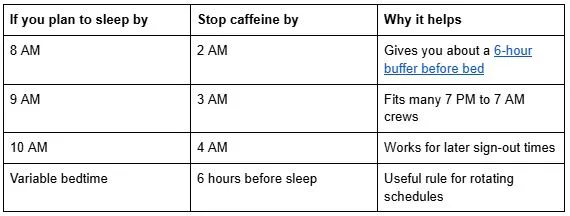
- Decide your caffeine cutoff before the shift starts.
- If you are working several nights in a row, tell the people at home exactly when your sleep window is.
Tips for Best Results Between Midnight and Sunrise
Paramedics manage fatigue during night shifts by stacking a few low-drama interventions before the circadian crash hits. Protect a pre-shift nap, use caffeine early, get bright light in the first half of the shift, move between calls, and slow down for double-checks near sign-out. The goal is not to feel amazing at 4 AM. The goal is to stay safe, accurate, and recoverable.
Use this on-shift sequence:
- Protect a pre-shift nap or early-evening rest block before the tour starts.
- Use caffeine early enough that it helps the shift without wrecking daytime sleep.
- Get bright light and movement in the first half of the shift when possible.
- Keep overnight meals smaller and easier to digest than daytime meals.
- Treat the final hours of the shift as your double-check zone for meds, charting, and handoffs.
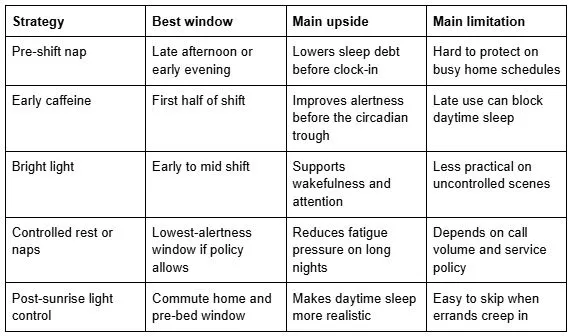
CDC/NIOSH notes that compared with 8-hour shifts, the risk of accidents and errors rises on 10-hour and 12-hour shifts. Research on public-safety shift workers also notes that many EMS clinicians report inadequate sleep and poor recovery between shifts. That is why controlled rest matters if your service permits it.
Caffeine Cutoffs for a Night Shift Paramedic
What to Do Right After a Night Shift
Your post-shift routine decides whether you actually recover or stay wired into the afternoon. The Cleveland Clinic advises night workers to go to sleep as soon as possible after work, minimize light on the way home, and keep a regular sleep schedule when possible.
Use this post-shift sequence:
- Put on dark or blue-blocking glasses before stepping into daylight.
- Keep the commute quiet and skip extra errands if you can.
- Eat lightly if needed, then go straight into your sleep routine.
- Black out the room, cool it down, and silence the phone.
- Protect the sleep window with family or roommate boundaries.
The Best Paramedic Sleep Schedule for Back-to-Back Nights
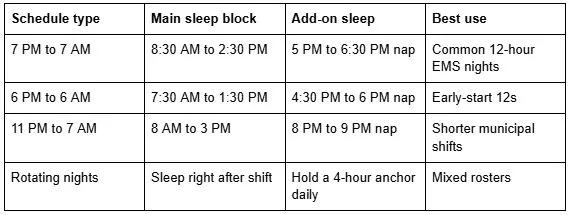
The best paramedic sleep schedule is the one you can repeat across a run of nights. For many crews, that means sleeping as soon as possible after shift, protecting a daytime anchor block, and adding a short pre-shift nap before the next tour.
The Cleveland Clinic also notes that rotating schedules are harder to tolerate than steadier ones and that long strings of night work increase recovery strain. If your schedule fails every week because you are exhausted after work but still too wired to sleep, that is a sign to escalate the conversation.
Common Mistakes to Avoid
- Saving all your sleep for after shift instead of protecting a pre-shift nap or anchor block.
- Using caffeine too late, then blaming yourself when daytime sleep falls apart.
- Running errands after sign-out and losing the dark, quiet window when sleep is most realistic.
- Treating every bad week as a discipline problem instead of noticing a pattern that may need clinical help.
When to Talk to Your Doctor About SWSD
SWSD usually looks like two problems at once: excessive sleepiness during work hours and insomnia when you finally have the chance to sleep. The Cleveland Clinic says about 10% to 40% of night workers may be affected, and it lists concentration problems, headaches, low energy, and mood disruption among common symptoms.
These red flags matter:
- You sleep enough on paper and still feel unsafe to drive home.
- You cannot hold a workable daytime sleep block for weeks.
- Mistakes, near-misses, or charting errors are climbing.
- Fatigue is bleeding into mood, family life, or off-day recovery.
- You keep increasing caffeine and still feel bad.
At that point, talk to a clinician. According to DailyMed, modafinil is FDA-approved to improve wakefulness in adults with excessive sleepiness associated with Shift Work Sleep Disorder. That matters because persistent night-shift sleepiness can move from an annoyance into a patient-safety and commute-safety problem long before most people treat it as a medical issue. In a separate placebo-controlled study of chronic SWSD, patients in the modafinil group reported fewer near-misses and commute-home accidents than patients taking placebo.
Where MOD Fits Into Night-Shift Fatigue Support
For paramedics who have already tightened their sleep, caffeine, light, and recovery routines but still struggle with excessive sleepiness during night shifts, the next step may be a clinical conversation about Shift Work Sleep Disorder.
MOD is built for that kind of shift-work problem.
- MOD is designed for shift workers dealing with persistent sleepiness and focus demands during nontraditional hours.
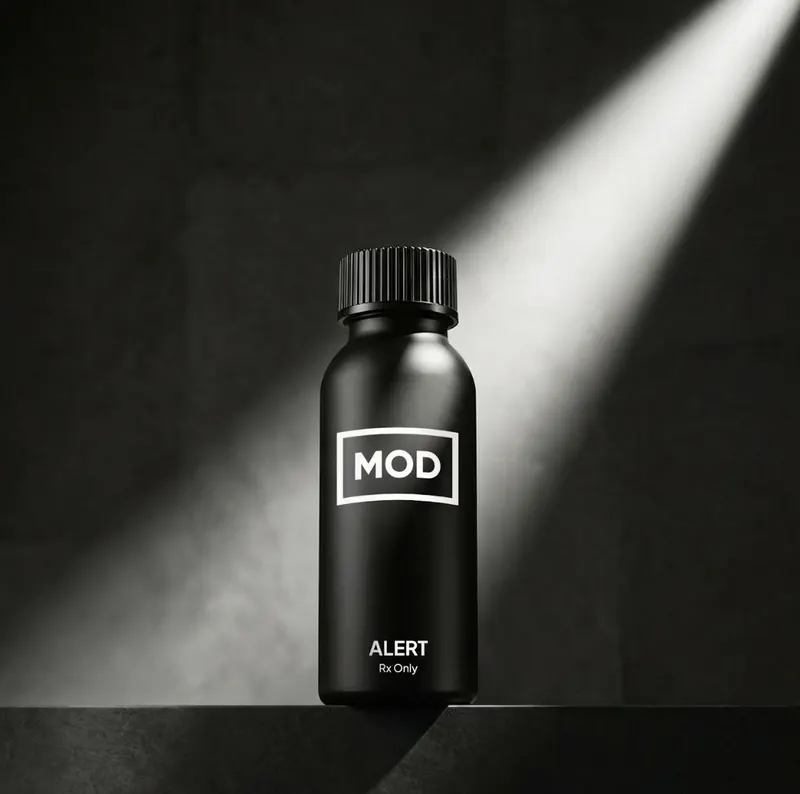
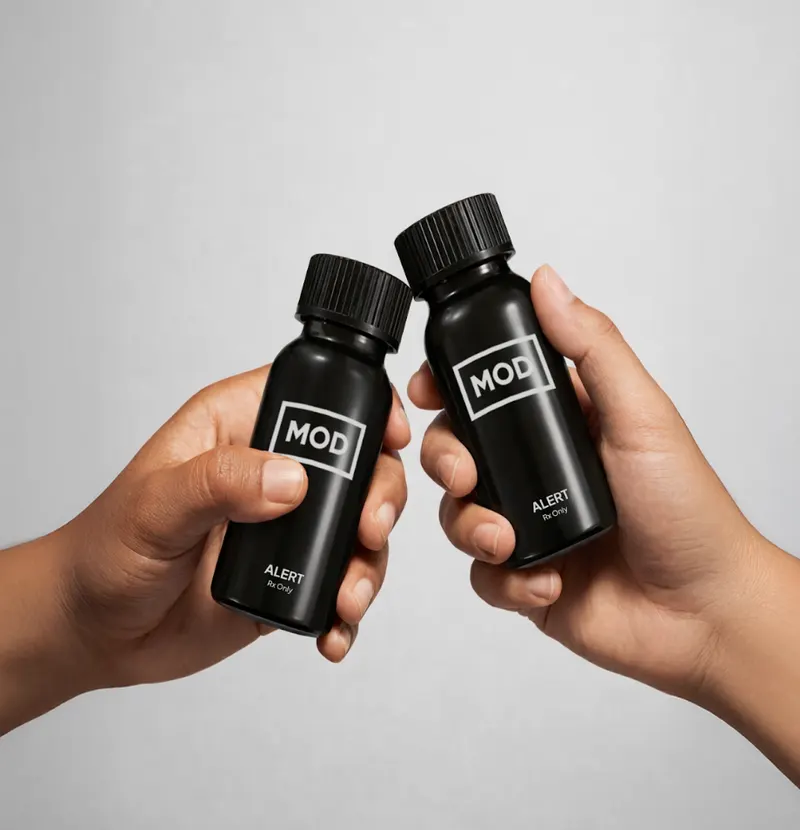
- MOD Alert combines 150 mg modafinil with 60 mg caffeine in a compounded prescription drink for sustained alertness during long shifts.
- MOD products are compounded medications.
For paramedics, the goal is not just to push through another night. It is to stay alert, accurate, and safer during the hours when fatigue can affect decisions, documentation, handoffs, and the drive home.
Frequently Asked Questions About Paramedic Fatigue
What causes paramedic fatigue on nights?
Paramedic fatigue on nights usually comes from circadian disruption, long shifts, broken sleep, emotional strain, and weak recovery between tours. A 2024 EMS study notes that poor sleep quality, mental and physical fatigue, and poor recovery are common across EMS clinicians.
How do paramedics manage fatigue during night shifts?
Paramedics manage night-shift fatigue best with a pre-shift nap, early caffeine, movement between calls, lighter meals, and strict post-shift light control. If those basics are in place and you still feel unsafe, the issue may be more than routine sleep debt.
Do shorter EMS shifts reduce fatigue?
Shorter EMS shifts can reduce fatigue, but call volume, overtime, interrupted sleep, and recovery time still shape how tolerable they feel. A case report comparing 24-hour and 8-hour EMS shifts found worse fatigue, sleepiness, and difficulty concentrating after the longer shift.
When does fatigue become a safety issue for paramedics?
Fatigue becomes a safety issue when it changes driving, calculations, documentation, communication, or your ability to recover after shift safely. If the commute home feels dangerous, charting errors are climbing, or you are rereading simple information repeatedly, the problem has already crossed from discomfort into patient- and crew-safety risk.
Can night shifts cause Shift Work Sleep Disorder?
Night and rotating shifts can cause SWSD when they create persistent excessive sleepiness at work and insomnia during planned sleep windows. The Cleveland Clinic estimates that about 10% to 40% of night workers may be affected.
Are naps useful for EMS crews on duty?
Controlled naps can help EMS crews on duty by easing fatigue during the worst circadian window when policy and call volume allow them. Controlled rest can reduce fatigue pressure during that window, especially when you are on a long run of nights and have not recovered well between shifts.
This article is provided for informational purposes only and does not constitute medical advice. The information presented is not a substitute for professional medical advice, diagnosis, or treatment. Always consult your healthcare provider to discuss the risks, benefits, and appropriateness of any treatment.
MOD offers access to healthcare providers who may prescribe compounded medications for the treatment of excessive daytime sleepiness associated with shift work sleep disorder (SWSD), when clinically appropriate.
The featured products include compounded medications that have not been approved by the FDA. Compounded medications may be prescribed under federal law but are not the same as, nor are they generic versions of, any FDA-approved medication. The FDA does not review compounded medications for safety, effectiveness, or manufacturing quality of compounded products. A prescription will only be written if deemed appropriate after the digital consultation by the licensed medical provider. Individual results may vary.
MOD is not a compounding pharmacy but a telemedicine service that links patients to licensed medical providers.