Night Shift Police Officer Guide: Patrol Sleep and Alertness for 2026
If you work patrol overnight, fatigue can show up at the worst possible times: during the quiet stretch, on the drive back, or right when a call demands fast judgment. The best way for a night shift police officer to survive nights in 2026 is a fixed daytime sleep block, early-shift caffeine timing, lighter overnight meals, planned movement between 2 a.m. and 6 a.m., and a strict no-risk commute-home rule. The goal is not to "push through" fatigue. It is to control sleep, alertness, and recovery on purpose.
This guide is for patrol officers, deputies, supervisors, and spouses trying to make overnight work more sustainable. It covers the sleep setup, pre-shift routine, caffeine timing, meal strategy, overtime damage control, and warning signs that suggest the problem may be Shift Work Sleep Disorder (SWSD), not just a rough week.
Key Takeaways
- A night shift police officer’s strongest fatigue strategy is a protected daytime sleep block, not random catch-up sleep.
- Early-shift caffeine timing, lighter overnight meals, planned movement, and bright light can help support alertness during the 2 a.m. to 6 a.m. slump.
- The commute home should be treated as part of the shift because fatigue can peak after clock-out.
- Persistent severe sleepiness, insomnia, microsleeps, or near misses may point to Shift Work Sleep Disorder, not just poor discipline or a rough schedule.
- Modafinil is a wakefulness-promoting medication used for excessive sleepiness associated with Shift Work Sleep Disorder, but MOD products are compounded medications and are not FDA-approved products.
Night Shift Police Officer Survival Checklist
A night shift police officer survives nights best by protecting daytime sleep, timing caffeine early, eating lightly overnight, moving regularly, and planning a safe commute.
- Protected daytime sleep matters more than trying to catch up randomly on days off.
- In CDC and NIOSH BCOPS findings, poor sleep quality was 70% higher among night-shift officers than day-shift officers.
- Early-shift caffeine, lighter overnight meals, and planned movement usually work better than repeated sugar hits and late energy drinks.
- The commute home may be the most dangerous part of the night when fatigue peaks after clock-out.
- If severe sleepiness, insomnia, or microsleeps keep showing up after you tighten your routine, talk to a healthcare provider about SWSD.
For most officers, the best night shift police officer routine looks like this:
- Protect daytime sleep: Get to bed as soon as practical after shift and defend one consistent sleep block.
- Wake up before roll call: Give yourself enough time to eat, hydrate, and fully wake up before patrol.
- Use caffeine early: Front-load caffeine earlier in the shift so it helps performance without wrecking post-shift sleep.
- Keep overnight meals lighter: Use a real pre-shift meal and smaller protein-forward snacks overnight instead of heavy fast food.
- Plan for the 2 a.m. to 6 a.m. drop: Use movement, bright light, and short resets before fatigue turns into unsafe performance.
- Treat the drive home like part of the shift: If you are too tired to track the road normally, use a backup ride or rest plan instead of pushing through.
Before You Start
Many departments run overnight coverage in 8-, 10-, or 12-hour blocks, and those schedules rarely stay clean once overtime, court, holdovers, and staffing shortages get layered on. Before you change anything, set up three basics:
- A dark, cool, quiet room where you can sleep as soon as you get home.
- A household plan that treats your sleep window like protected work time.
- A backup commute plan for mornings when you are too tired to drive safely.
Why Night Shifts Break Down Good Police Routines
Night shifts break down police routines because they combine circadian disruption, overtime strain, public-safety pressure, and daytime sleep that is easy to interrupt. In the CDC and NIOSH BCOPS bulletin, poor sleep quality was 70% higher among night-shift officers than day-shift officers. The same bulletin says officers on nights had 2 times the rate of long-term injury leave versus afternoon shift and 3 times the rate versus day shift.
A PMC summary of BCOPS also reported poor sleep quality in 69% of night-shift officers and found sleeping less than 7 hours was more common on nights than on day and afternoon shifts combined.
Best Sleep Plan for a Night Shift Police Officer
A fixed post-shift sleep window that starts soon after shift and stays consistent is the best sleep plan for a night shift police officer.
For many officers, that means getting home, eating lightly if needed, shutting down the phone, and being in bed as soon as practical after shift. If shift ends at 7 a.m., a sleep block from about 8:30 a.m. to 3:30 or 4:30 p.m. is usually more sustainable than random naps and weekend resets. The National Safety Council recommends a consistent sleep schedule and a dark sleep environment, so blackout curtains, white noise, and strict do-not-disturb rules matter.
Pre-Roll-Call Setup for Night Shift
Pre-roll-call prep is simple: protect the sleep block, wake up with enough runway to fully come online, eat before shift, and use caffeine on purpose.
Step 1: Protect the last stretch before bed
Do not turn your post-shift window into errand time. Bright light, scrolling, and "one quick stop" decisions often cost more recovery than they are worth.
Step 2: Give yourself enough time before you leave
That buffer gives sleep inertia time to clear and lets you eat, hydrate, and think before you are suddenly in uniform and moving.
Step 3: Eat a stable pre-shift meal
Protein, fiber, and slower carbohydrates usually hold up better than candy, pastry, or a giant fast-food meal.
Step 4: Start caffeine early, not late
Cleveland Clinic recommends using caffeine strategically. In practice, that usually means using it earlier in the shift instead of saving it for 4 a.m. desperation.
What a Night Shift Police Officer Should Eat
A night shift police officer should eat a solid pre-shift meal, stay hydrated, and use smaller protein-forward snacks instead of heavy overnight meals.
A workable patrol rhythm looks like this:
- Start the shift well hydrated.
- Eat your largest meal before roll call or early in shift.
- Use a smaller protein-based snack in the middle of the night.
- Save heavy meals for after you wake, not during the circadian low.
What to limit matters too. Late-shift caffeine can create the exact cycle officers hate: you grind through the last two hours, then cannot fall asleep once you get home.
Managing the 2 a.m. to 6 a.m. Drop
Layer movement, light, earlier caffeine timing, and an honest backup plan before you hit the wall to beat the 2 a.m. to 6 a.m. drop.
A PubMed-indexed study of 206 shift-working police officers found poor sleep quality in 69% of the sample and fatigue severity in 51%. In other words, if that stretch feels brutal, you are not imagining it.
Use these rules in the field:
- Move every chance you get between calls or reports.
- Keep the car cool and the cabin bright when possible.
- Use caffeine before the slump, not after microsleeps start.
- Break up long report-writing blocks with standing or walking.
- Tell your partner or supervisor early if you are becoming unsafe.
Strong supervisors treat fatigue reporting as a safety signal, not a discipline problem.
Why a Night Shift Police Officer Risks the Drive Home
The drive home is risky for a night shift police officer because fatigue peaks after clock-out, even when the hardest calls are over.
Many officers prepare for the shift but do not plan for the drive home. The National Safety Council says about 13% of workplace injuries can be attributed to fatigue, and Cleveland Clinic advises shift workers not to drive home if they are too sleepy to do so safely.
Build a hard commute rule now:
- Do not drive if your eyes are closing at lights or you cannot remember the last few miles.
- Take a short reset before leaving the lot if you feel yourself fading.
- Ask for a ride, rideshare, or a safe nap before driving if needed.
- Wear dark glasses on bright mornings if sunrise makes it harder to fall asleep at home.
If you are too tired to remember the last few miles, you are too tired to drive.
Overtime, Court, and Rotating-Schedule Fatigue
Night shift fatigue gets much worse when predictability disappears. Court days, mandatory holdovers, and rotating schedules take away the one thing your body needs most: a repeatable sleep pattern.
Cleveland Clinic recommends limiting consecutive night shifts and avoiding prolonged shifts or overtime when possible. When the week gets messy, protect at least one anchor sleep block and do not try to "borrow" sleep the day before court.
Night Shift Police Officer Red Flags vs Normal Adjustment
Early weeks on nights can feel rough without meaning anything is medically wrong. The issue is when your symptoms stop looking like adjustment and start looking like a pattern.
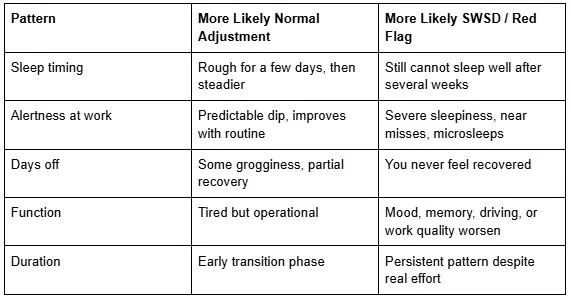
Cleveland Clinic says 10% to 40% of people who work nontraditional shifts are affected, so SWSD is common enough that persistent symptoms should be taken seriously.
Recovery Plan for a Night Shift Police Officer
Your first day off should lower sleep debt without blowing up the next work block. In most cases, that means a partial reset, not a full flip back to daytime life.
Try this sequence:
- Sleep your normal post-shift block first.
- Wake up, get outside briefly, eat a real meal, and move.
- Stay up later than a day-shift worker would, but not all the way to sunrise if you return to nights soon.
- Keep caffeine modest so you do not sabotage the next sleep block.
Common Mistakes to Avoid
Treating exhaustion like a discipline problem
If you are struggling, that does not automatically mean you need more grit. It may mean your routine is fighting biology.
Using caffeine as a substitute for sleep
Caffeine can support alertness. It cannot replace recovery.
Ignoring fatigue after court or holdover shifts
Those extra hours often show up later as risky driving, sloppy reports, short temper, and missed details.
Chasing expensive fixes before the free ones
Many of the highest-value support steps are free: a protected sleep window, a household do-not-disturb rule, a planned ride home, and a written meal-and-caffeine routine. Start there before paying a higher price for gadgets you may not need.
When Fatigue Signals Shift Work Sleep Disorder
Night shift fatigue may signal Shift Work Sleep Disorder when sleepiness and insomnia stay severe for weeks despite a consistent routine.
Talk to a healthcare provider if you have repeated near misses while driving home, unplanned sleep episodes, ongoing insomnia after shift, or worsening memory, mood, and irritability. Heavy snoring or gasping can also point to sleep apnea layered on top of shift fatigue.
Modafinil is an FDA-approved wakefulness-promoting agent for Shift Work Sleep Disorder. In a NEJM SWSD trial, modafinil improved alertness and reduced lapses of attention during night work. If behavioral fixes are no longer enough, it's important to talk to a provider about whether SWSD is part of the problem.
Prescription Support for Shift Work Sleep Disorder
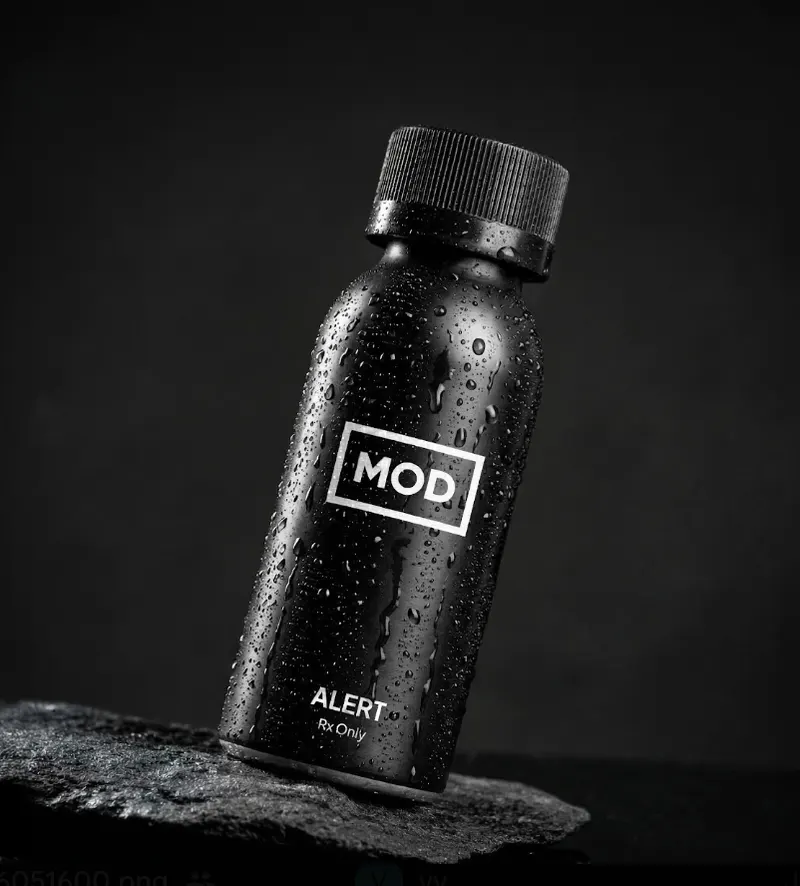
MOD offers a telehealth prescription flow built around shift workers: online intake, provider review, and shipping to your door if prescribed. MOD's products are compounded medications and are not FDA-approved as products.
Pros
- Purpose-built for shift workers rather than a general telehealth audience.
- Uses a wakefulness-promoting agent with FDA approval for SWSD as an active ingredient.
- Telehealth prescription flow keeps evaluation, review, and delivery in one process.
Best For
MOD may be worth discussing with a licensed provider for officers whose fatigue still feels unsafe after they tighten sleep, caffeine, meal, and schedule habits, especially if SWSD may be part of the problem.
Final Verdict
There is no single fix that makes every night shift police officer feel great. For a night shift police officer, the right answer depends on what is breaking first.
- If your main problem is inconsistent sleep, the strongest move is a fixed post-shift sleep window and a household plan that protects it.
- If your biggest issue is court, overtime, and rotating schedules, the better fix is schedule discipline, anchor sleep, and stricter fatigue rules around holdovers and the drive home.
- If you are getting severe sleepiness, near misses, or persistent insomnia despite a real routine, a healthcare evaluation for SWSD makes more sense than trying to out-tough it.
Frequently Asked Questions
Do police officers have night shifts?
Yes. Police departments provide 24/7 coverage, so many officers work overnight assignments in 8-, 10-, or 12-hour blocks throughout their careers. Night shift is common early in a career, but even experienced officers can still rotate onto nights, holdovers, or overnight specialty coverage.
How much do night shift police officers make?
Night shift police officers usually earn base patrol pay plus any shift differential, overtime, and court pay required by local contracts. Total pay varies widely by city, seniority, and assignment, so the more useful question is whether a department adds overnight differential pay and how often forced overtime extends the shift.
What is the 80/20 rule in police?
In police work, the 80/20 rule usually means a small share of places, calls, or offenders creates a large share of outcomes. It is a workload and deployment concept, not a fatigue rule, but it matters on nights because a few high-demand hours or hotspots can create most of the shift's stress and sleepiness cost.
How do I know if I am too tired to drive home safely?
You are too tired to drive home safely if your eyes keep closing, you miss turns, or you cannot recall recent miles. That is the point to stop and use your backup plan, not to push through.
Can night shifts cause shift work sleep disorder?
Night shifts can cause Shift Work Sleep Disorder when they repeatedly block daytime sleep and leave you unable to stay alert. SWSD is a recognized circadian rhythm sleep-wake disorder linked to nontraditional work hours.
If routine fixes are not enough and you want to explore prescription support built for shift workers, See if MOD is right for you →.
This article is provided for informational purposes only and does not constitute medical advice. The information presented is not a substitute for professional medical advice, diagnosis, or treatment. Always consult your healthcare provider to discuss the risks, benefits, and appropriateness of any treatment.
MOD offers access to healthcare providers who may prescribe compounded medications for the treatment of excessive daytime sleepiness associated with shift work sleep disorder (SWSD), when clinically appropriate.
The featured products include compounded medications that have not been approved by the FDA. Compounded medications may be prescribed under federal law but are not the same as, nor are they generic versions of, any FDA-approved medication. The FDA does not review compounded medications for safety, effectiveness, or manufacturing quality of compounded products. A prescription will only be written if deemed appropriate after the digital consultation by the licensed medical provider. Individual results may vary.
MOD is not a compounding pharmacy but a telemedicine service that links patients to licensed medical providers.