Modafinil vs. Energy Drinks: Which Is Better for Shift Workers?
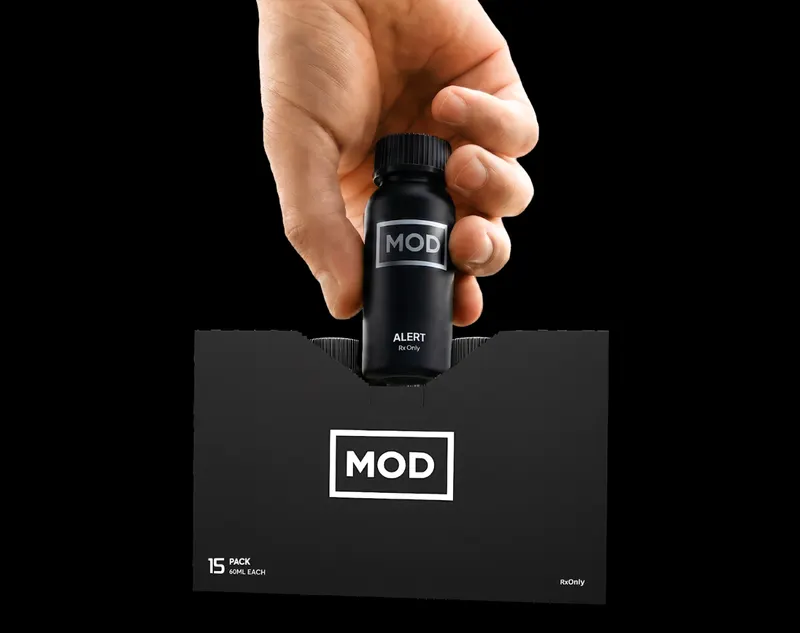
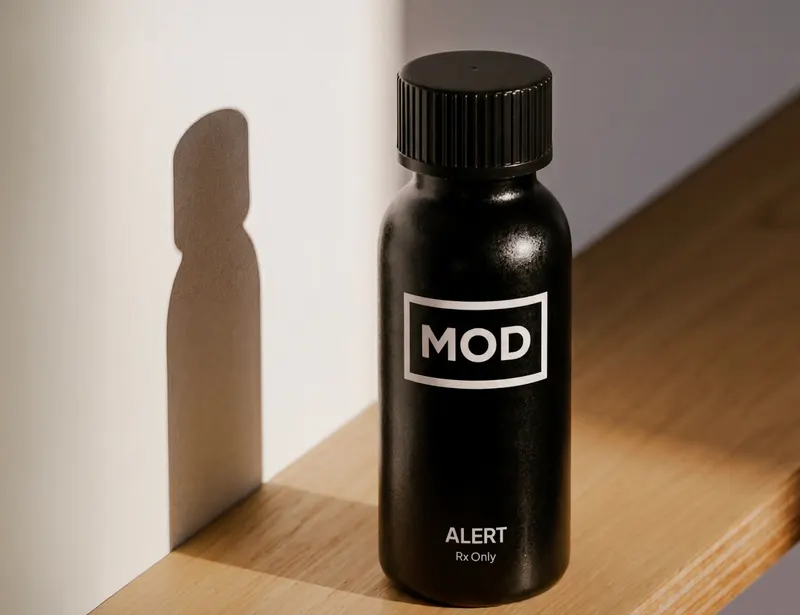
The modafinil vs. energy drinks debate comes down to one question: do you need sustained, all-day wakefulness or a quick burst of energy? Modafinil is the stronger option for shift workers who need long-lasting alertness. Energy drinks are the faster, more accessible choice for a short-term boost. Products like MOD Alert from MOD now offer modafinil in a prescription liquid medication that combines modafinil with low-dose caffeine. Here’s what the clinical research shows about modafinil vs. caffeine in energy drinks, including duration, side effects, cost, and who each one is actually built for.
Key Takeaways
- Modafinil can support 10-12 hours of wakefulness through multiple brain pathways, not just adenosine blocking like caffeine
- Energy drinks kick in faster, usually within 15-30 minutes, and cost less per serving, but their effects wear off sooner and tolerance can build quickly
- A 2002 sleep-deprivation trial found modafinil 200 mg and caffeine 600 mg produced similar early alertness benefits during sleep deprivation
- Modafinil is FDA-approved for shift work and is classified as a Schedule IV controlled substance
- Energy drinks have been linked to documented cardiovascular risks such as palpitations, elevated blood pressure, and arrhythmias, especially with high intake or when combined with alcohol or other stimulants
- If you’re a shift worker dealing with chronic sleepiness, modafinil is the more evidence-based option. If you need a one-off energy boost, an energy drink can still do the job
Quick Overview
Modafinil
Modafinil is a prescription wakefulness-promoting medication, not a traditional stimulant. It was developed in France in the 1970s and later approved in the U.S. in 1998. It is classified as Schedule IV in the U.S., which means it has accepted medical use and a lower abuse potential than Schedule II stimulants like Adderall or Ritalin.
Doctors prescribe modafinil to improve wakefulness in adults with narcolepsy, obstructive sleep apnea, and shift work disorder. The standard dose is 200 mg once daily, and its effects can last 10-12 hours because of its long half-life.
Unlike amphetamines, modafinil affects several wakefulness pathways. It weakly inhibits dopamine reuptake, increases norepinephrine activity, and appears to influence histamine and orexin systems involved in alertness. The result is typically a steadier wakefulness effect than you get from traditional stimulants.
Energy Drinks
Energy drinks are caffeinated beverages that usually contain 80-300 mg of caffeine per serving, along with sugar, taurine, B vitamins, and other additives. The big names are Red Bull, Monster, and Celsius.
Caffeine works mainly by blocking adenosine receptors. Adenosine is one of the chemicals that builds up while you’re awake and makes you feel sleepy. Blocking that signal can temporarily make you feel more alert, but it does not correct the underlying sleep debt.
Energy drinks are available everywhere, with no prescription required. That easy access is still their biggest advantage.
Feature-by-Feature Comparison
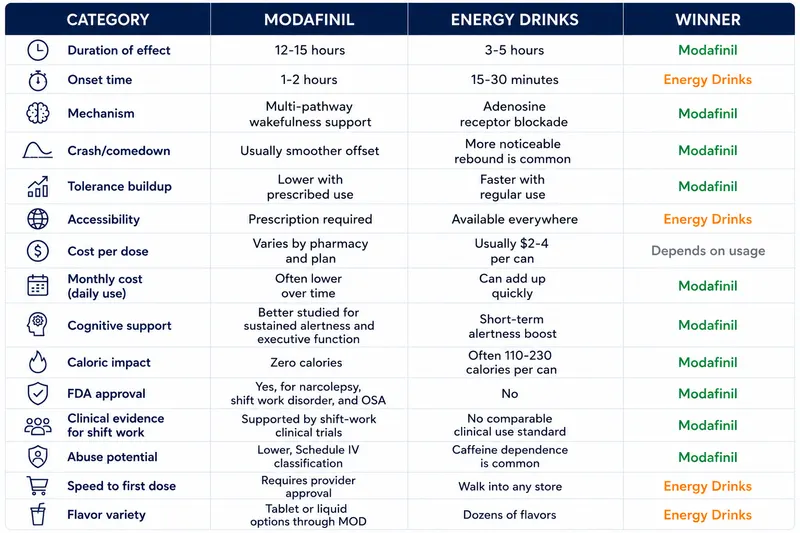
Score: Modafinil wins 10 categories. Energy drinks win 4.
That said, the categories energy drinks win still matter. If you need something right now, without a medical visit, that kicks in within 20 minutes, an energy drink is the practical choice. Modafinil is not designed for that use case.
Pricing and Access Comparison
Modafinil
- Generic modafinil: Pricing varies by pharmacy, location, and prescription details
- Brand-name Provigil: Brand-name pricing can be significantly higher than generic options
- With insurance: Coverage and prior authorization requirements vary by plan
- Requires: A prescription from a licensed provider, either in person or through telehealth
- How to get it: Online intake form, provider review, then delivery if approved. MOD offers MOD Alert (Modafinil 150 mg + Caffeine 60 mg) through an online assessment through MOD
The Real Math
Here’s what most people miss: energy drinks feel cheap per can, but the monthly cost adds up fast. If you’re buying two energy drinks a day to stay alert through a night shift, that can easily run well over $100 a month. Generic modafinil may cost less over time than buying multiple energy drinks per shift, though actual pricing varies.
The tradeoff is the upfront friction. It’s important to get a prescription, which means either an in-person visit or telehealth review. That said, services like MOD make the process more convenient with an online intake and provider review. Once prescribed, the ongoing cost and convenience may favor modafinil for frequent users.
Potential Side Effects Comparison
Both modafinil and energy drinks come with real side effects.
Potential Side Effects of Modafinil
Potential side effects include:
- Headache
- Nausea
- Decreased appetite
- Anxiety
- Insomnia, especially if taken too late in the day
- Dizziness
- Diarrhea
- Rhinitis
Potential serious side effects include:
- Stevens-Johnson syndrome and toxic epidermal necrolysis, which are rare but serious skin reactions
- DRESS syndrome
- Rare cardiovascular reactions, including palpitations or blood pressure changes
- Rare psychiatric reactions, including mania or psychosis in susceptible patients
If you develop a rash, stop taking modafinil and contact your provider right away.
In placebo-controlled studies, discontinuation from side effects was higher with modafinil than placebo, with headache being one of the most common reasons.
Potential Side Effects of Energy Drinks
Potential side effects include:
- Jitteriness and restlessness
- Anxiety and nervousness
- Insomnia and worse sleep quality
- Heart palpitations and faster heart rate
- GI upset, including nausea or reflux
- Fatigue rebound as the caffeine wears off
- Withdrawal headaches
- Elevated blood pressure
Potential serious side effects include:
- Arrhythmias
- Coronary vasospasm
- Seizures
- Other cardiovascular events reported in the medical literature, especially with heavy use or co-use with alcohol or stimulants
A review of cardiovascular effects found growing concern around energy drink-related palpitations, blood pressure increases, and arrhythmias.
The Takeaway on Side Effects
Neither option is side-effect-free. Modafinil has rare but serious risks that matter, especially early in treatment. Energy drinks have more familiar side effects, but for regular users those problems can become a daily pattern: jitteriness, poor sleep, tolerance, and rebound fatigue.
If nausea or sluggishness is part of a broader recovery issue, MOD Revive from MOD is positioned by MOD as a prescription liquid medication designed to support symptoms like nausea, fatigue, and sluggishness. If you use either option regularly, talk with your healthcare provider.
Who Should Choose Modafinil
Modafinil makes the most sense if you:
- Work rotating or night shifts and deal with chronic sleepiness that caffeine no longer fixes. This is one of the main conditions modafinil is approved to treat.
- Need all-day alertness without redosing. One dose can last 12-15 hours.
- Have built up caffeine tolerance. Modafinil works through different wakefulness pathways and does not rely mainly on adenosine blockade.
- Want to avoid the crash cycle. Modafinil usually wears off more gradually than caffeine-heavy products.
- Care about sugar and calorie intake. Modafinil does not add sugar or calories.
- Want a prescription-backed option with clinical evidence behind it rather than a consumer beverage.
If this sounds like you, MOD Alert from MOD combines Modafinil 150 mg + Caffeine 60 mg in a liquid formulation prescribed through telehealth and shipped to your door. It is built for shift workers who need steadier, longer-lasting alertness.
Who Should Choose Energy Drinks
Energy drinks are the better call if you:
- Need a quick, one-off boost. For short tasks, they’re fast and practical.
- Do not want to deal with a prescription. No provider review, no waiting for delivery.
- Use them occasionally, not daily. That helps reduce tolerance and dependence.
- Need the cheapest option today. A single can is still the easier short-term purchase.
- Enjoy the taste and convenience. That matters for real-world use.
- Do not have a diagnosed sleep disorder. If you just need occasional alertness support, a prescription medication may be more than you need.
The honest answer is this: for occasional energy, energy drinks can work fine. Modafinil is better suited to people dealing with real, ongoing excessive sleepiness.
Final Verdict
This is not a simple “one is better” answer. It depends on what you’re dealing with.
If you’re a shift worker battling chronic sleepiness, modafinil is the stronger, better-studied option. It lasts longer, has a more specific clinical role, and is the only option here with approval for shift work disorder.
If you need occasional energy for a workout, a late night, or a long drive, energy drinks are still a reasonable short-term option. They are fast, available everywhere, and effective for short bursts.
For shift workers specifically, MOD offers prescription liquid medications like MOD Alert (Modafinil 150 mg + Caffeine 60 mg). These liquid formulations are prescribed through telehealth and shipped directly to you.
See if MOD is right for you — take the free online assessment.
FAQs
Is modafinil stronger than energy drinks?
It can be stronger in terms of duration and sustained effect. It’s also now available through MOD in liquid form, so you are not limited to tablets. Modafinil supports wakefulness for 12-15 hours through multiple brain pathways, while the caffeine in energy drinks usually lasts 3-5 hours and works mainly by blocking adenosine receptors. A head-to-head sleep study found comparable early alertness benefits, though modafinil is better suited to sustained wakefulness. For a quick 2-hour boost, an energy drink is still faster and more practical.
Can you take modafinil and energy drinks together?
Because both can increase wakefulness, combining them may raise the risk of side effects such as anxiety, insomnia, or increased heart rate. It’s best to discuss that with your healthcare provider first. If you’re taking modafinil and still want caffeine, start low and pay attention to how you feel. MOD Alert already includes 60 mg of caffeine alongside modafinil, so adding more on top may not be ideal.
Does modafinil cause a crash like energy drinks do?
Modafinil is generally described as providing a smoother, more sustained wakefulness effect than energy drinks. Because it has a long half-life and works through several alertness pathways, the offset is usually more gradual. Energy drinks are more commonly linked to a noticeable rebound because caffeine temporarily blocks adenosine, then wears off.
Is modafinil addictive?
Modafinil has a lower abuse potential than many traditional stimulants. It is classified as Schedule IV in the U.S., which reflects accepted medical use and lower misuse risk than Schedule II stimulants. That said, it still affects dopamine-related systems and should be used only as prescribed. Caffeine, for comparison, more commonly leads to day-to-day physical dependence.
How much do energy drinks cost compared to modafinil?
Per serving, energy drinks are usually cheaper. But the monthly math can flip for daily users. Two energy drinks per day can add up quickly, while modafinil may be more cost-effective over time depending on the prescription, pharmacy, and insurance situation. Modafinil also does not usually require repeated redosing across a shift.
Do energy drinks work for night shift workers?
They can provide temporary alertness, but they are not specifically studied or approved for shift work disorder the way modafinil is. The main issue is duration: an energy drink usually wears off in 3-5 hours, so many shift workers end up using multiple cans in one shift. Tolerance also builds with repeated caffeine use. By contrast, modafinil has been studied in shift workers and is used specifically for that kind of excessive sleepiness. MOD Alert is a prescription liquid medications designed for that use case.
What are the long-term risks of daily energy drink consumption?
The biggest concerns are poor sleep, dependence, higher total caffeine intake, and cardiovascular strain in some users. A medical review on energy drinks linked regular use with palpitations, blood pressure increases, and arrhythmia concerns, especially at high intake or when mixed with alcohol or other stimulants. Risk varies a lot by dose, ingredients, and the person using them.
This article is provided for informational purposes only and does not constitute medical advice. The information presented is not a substitute for professional medical advice, diagnosis, or treatment. Always consult your healthcare provider to discuss the risks, benefits, and appropriateness of any treatment.
MOD offers access to healthcare providers who may prescribe compounded medications for the treatment of excessive daytime sleepiness associated with shift work sleep disorder (SWSD), when clinically appropriate.
The featured products include compounded medications that have not been approved by the FDA. Compounded medications may be prescribed under federal law but are not the same as, nor are they generic versions of, any FDA-approved medication. The FDA does not review compounded medications for safety, effectiveness, or manufacturing quality of compounded products. A prescription will only be written if deemed appropriate after the digital consultation by the licensed medical provider. Individual results may vary.
MOD is not a compounding pharmacy but a telemedicine service that links patients to licensed medical providers.