MOD Alert vs Coffee: What’s the Difference?
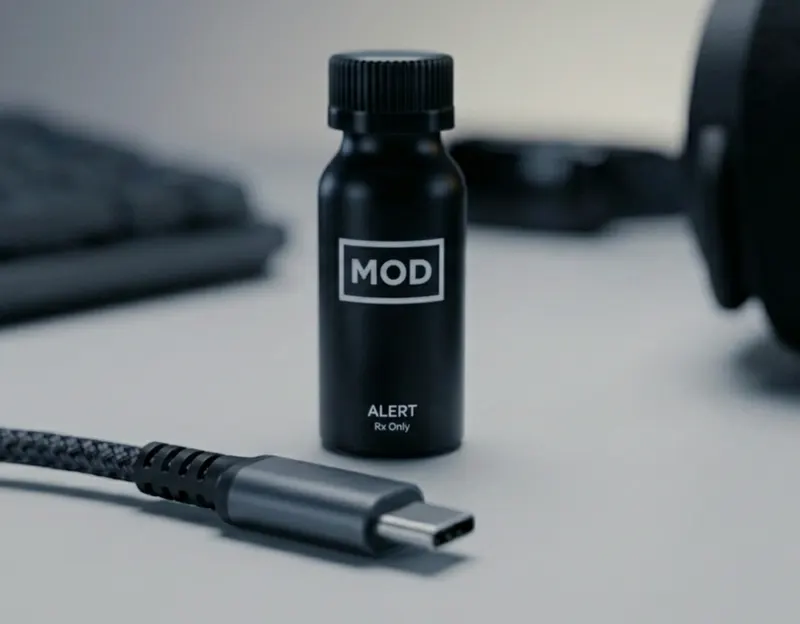
Most people start with coffee.
One cup turns into two. Two turns into an afternoon cold brew. Then maybe an energy drink before a long shift or workout. For a while, it works.
Until it doesn’t.
At some point, many people hit the same wall: the jitters get worse, the crashes get harder, and suddenly you need three coffees just to feel functional. That’s when people start looking into alternatives for wakefulness and focus — including prescription wakefulness-support medications like MOD Alert.
Below, we’ll take a look at MOD Alert vs. your daily coffee habit.
Key Takeaways
- Coffee supports alertness through caffeine, but tolerance and unwanted side effects can develop over time.
- MOD Alert combines modafinil and caffeine to support wakefulness and focus through multiple brain pathways.
- Some people find coffee becomes less effective due to sleep deprivation, shift work, stress, or high caffeine intake.
- Excessive caffeine consumption may contribute to anxiety, poor sleep, and rebound fatigue.
- MOD Alert offers prescription wakefulness support for qualifying adults seeking an alternative to caffeine alone.

What Is Coffee?
Coffee works primarily because of caffeine, a central nervous stimulant that blocks adenosine receptors in the brain. According to research, adenosine helps regulate sleepiness and fatigue. The more adenosine builds up, the more tired an individual feels. This is why blocking adenosine can temporarily improve alertness.
Coffee may:
- Increase wakefulness
- Improve concentration
- Reduce feelings of fatigue temporarily
- Boost energy levels
But caffeine also has limitations.
Research notes that excessive caffeine intake may contribute to anxiety, sleep disruption, jitteriness, and heart palpitations in some individuals.
And unfortunately, tolerance builds fast. The more caffeine you consume, the higher the risk of experiencing these unwanted side effects.
What Is MOD ALERT?
MOD Alert is designed for adults seeking prescription wakefulness support, not just for energy but also for brain optimization.
Unlike coffee or energy drinks, MOD Alert works through distinct neurochemical pathways that regulate alertness and concentration, particularly through its main active ingredient, modafinil. Modafinil works by stimulating multiple receptors in the brain associated with wakefulness, including orexin, histamine, dopamine, norepinephrine, and glutamate.
Modafinil is typically prescribed for:
- Excessive daytime sleepiness
- Shift work-related fatigue
- Circadian rhythm disruption
- Narcolepsy
With MOD Alert, you can complete an online medical intake form and have your medical history reviewed by a licensed medical provider. If they deem treatment is appropriate and safe for you, you can have your prescription mailed directly to your door.
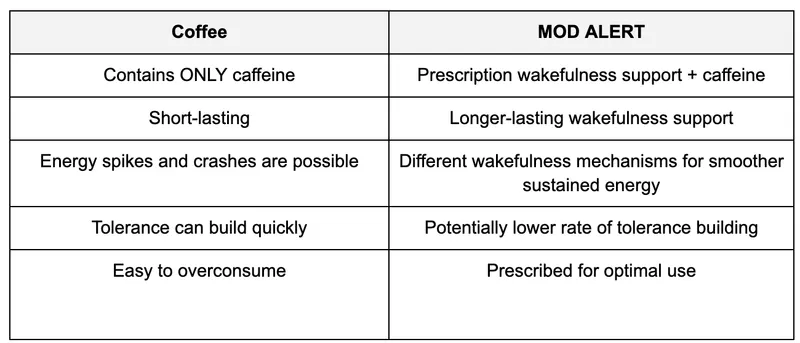
Coffee vs MOD ALERT: Key Differences
Why Coffee Stops Working for Some People
A lot of people assume they’re “just tired,” but chronic fatigue becomes more complicated over time.
Coffee may become less effective because of:
- Sleep deprivation
- Shift work
- Burnout
- Stress
- Circadian rhythm disruption
- High caffeine tolerance
According to the NIH overview of Shift Work Sleep Disorder, irregular work schedules can significantly disrupt the body’s natural sleep-wake cycle and contribute to persistent fatigue.
That’s why some people eventually feel tired and wired at the same time.
The Problem With Overdoing Caffeine
When fatigue gets severe, many people respond by simply drinking more caffeine.
That can backfire quickly.
Excessive caffeine may worsen:
- Anxiety
- Sleep quality
- Heart palpitations
- Irritability
- Rebound fatigue
Ironically, poor sleep from excessive caffeine often leads to needing even more caffeine the next day. This can trap you in a vicious cycle of increased caffeine intake, poorer sleep quality, and increased fatigue.
Final Thoughts
Coffee is one of the most widely used stimulants in the world for a reason — it works.
But if you constantly feel exhausted despite multiple cups a day, it may be worth exploring whether something else can better combat your fatigue.
MOD Alert provides an alternative pathway to enhancing energy with smoother, longer-lasting results.
Frequently Asked Questions
Is MOD Alert stronger than coffee?
MOD Alert and coffee work differently. Coffee relies on caffeine to temporarily increase alertness, while MOD Alert combines modafinil and caffeine to support wakefulness through multiple pathways involved in attention and alertness.
Why does coffee stop working for some people?
Over time, regular caffeine use can lead to tolerance, meaning the same amount may produce less noticeable effects. Sleep deprivation, stress, shift work, and circadian rhythm disruption can also make coffee feel less effective.
Can drinking too much coffee make fatigue worse?
In some people, excessive caffeine intake can interfere with sleep quality, increase anxiety, and contribute to a cycle of poor sleep and daytime fatigue that leads to even greater caffeine consumption.
Who may be eligible for MOD Alert?
MOD Alert is available by prescription for qualifying adults following a medical evaluation by a licensed healthcare provider. Eligibility depends on an individual's symptoms, medical history, and provider assessment.
Is MOD Alert FDA-approved?
MOD Alert is a compounded medication and is not FDA-approved. However, modafinil, one of its active ingredients, is FDA-approved to improve wakefulness in adults with excessive sleepiness associated with shift work sleep disorder, narcolepsy, and obstructive sleep apnea.
This article is provided for informational purposes only and does not constitute medical advice. The information presented is not a substitute for professional medical advice, diagnosis, or treatment. Always consult your healthcare provider to discuss the risks, benefits, and appropriateness of any treatment.
MOD offers access to healthcare providers who may prescribe compounded medications for the treatment of excessive daytime sleepiness associated with shift work sleep disorder (SWSD), when clinically appropriate.
The featured products include compounded medications that have not been approved by the FDA. Compounded medications may be prescribed under federal law but are not the same as, nor are they generic versions of, any FDA-approved medication. The FDA does not review compounded medications for safety, effectiveness, or manufacturing quality of compounded products. A prescription will only be written if deemed appropriate after the digital consultation by the licensed medical provider. Individual results may vary.
MOD is not a compounding pharmacy but a telemedicine service that links patients to licensed medical providers.