Joe Rogan Modafinil: Everything He's Said on the JRE (2026)
Joe Rogan has discussed modafinil on the JRE across multiple episodes, most notably JRE #1109 with Dr. Matthew Walker and several episodes with Tim Ferriss. Rogan describes modafinil as a powerful, sustained wakefulness tool that can last a long time and should be used carefully. He has discussed using it situationally, specifically for late-night drives and demanding schedules. He has also been clear about its downsides: a long wakefulness window that can interfere with sleep, and a reliance pattern he actively avoids.
Here is everything Joe Rogan has said about modafinil on the JRE, organized by episode and topic.
Key Takeaways
- Joe Rogan modafinil discussions on the JRE span multiple episodes, most notably JRE #1109 with Dr. Matthew Walker and several episodes with Tim Ferriss
- Rogan has described the Joe Rogan modafinil experience as sustained and powerful, but also long-lasting enough to require careful timing
- Modafinil (brand name Provigil) is FDA-approved for Shift Work Sleep Disorder (SWSD), narcolepsy, and obstructive sleep apnea
- Rogan has been candid about the downsides: its 12-plus-hour duration, the potential to become habitual, and the fact that it doesn't replace actual sleep
- Modafinil is a prescription medication in the US, and it is available legally for qualifying conditions like SWSD via licensed healthcare providers
Why Shift Workers and High Performers Reach for Modafinil
Most people who search for Joe Rogan modafinil aren't casual listeners, they're dealing with something real. Irregular schedules. Night shifts. Long-haul drives after an overnight. The kind of sleep deprivation that coffee stopped fixing months ago.
Modafinil is an FDA-approved prescription wakefulness medication for Shift Work Sleep Disorder. It came up in Rogan's conversations precisely because it fills a gap that caffeine and willpower can't. It was designed for people whose work schedules fight their biology. Shift Work Sleep Disorder isn't a character flaw; it's a recognized medical condition with a clinical treatment. Rogan's discussions brought that treatment into mainstream awareness, which is why Joe Rogan modafinil content continues driving search traffic years after those episodes aired.
Other notable public figures who have publicly discussed modafinil or Provigil include Dave Asprey, Tim Ferriss, and Ray Kurzweil. Former president Barack Obama’s medical records reportedly referenced physician-prescribed medication for jet lag or time-zone management, though public reporting did not confirm Provigil use.
Joe Rogan Modafinil: What He's Said on the JRE
His Personal Experience
Rogan has never been shy about discussing his cognitive performance habits, and modafinil has come up in conversations about sleep, late-night travel, and performance.
Rogan has described taking modafinil a few times for long late-night drives after shows, saying it helped him stay awake but also gave him a “weird feeling” and should be used carefully because it can interfere with sleep.
That point says something the typical modafinil discussion skips past. This isn't a short-burst medication. The wakefulness window stretches well into the day, which can be exactly what you need or a liability depending on when you take it.
In a conversation involving Tim Ferriss, Rogan discussed modafinil in the context of cognitive enhancement, sleep, and the risks of using a prescription wakefulness medication without respecting its long duration. He's made clear that the difference isn't just intensity, it's the quality and duration of wakefulness.
Rogan has also described using modafinil situationally rather than daily. After late-night shows, when he needed to stay sharp for long drives home, modafinil gave him the sustained alertness caffeine couldn't reliably provide. He's been explicit that he keeps use infrequent, partly out of caution about becoming reliant on it.
JRE Episodes Where Modafinil Came Up
JRE #1109, Dr. Matthew Walker
One of the most substantive on-air discussions of modafinil came during Rogan's conversation with Dr. Matthew Walker, author of Why We Sleep and a professor of neuroscience at UC Berkeley. Walker explained how modafinil promotes wakefulness primarily through dopamine pathways, a mechanism distinct from traditional stimulants. His key point: modafinil can offset some of the cognitive impairment caused by sleep deprivation, but it doesn't restore the physiological benefits of sleep itself. Your brain may feel alert, but the deeper repair work that sleep handles isn't happening.
Rogan pushed back thoughtfully, acknowledging the practical reality that many people, especially shift workers, don't have the luxury of perfect sleep schedules. That tension, real-world demands versus ideal biology, is what makes the JRE modafinil conversations worth listening to.
JRE #1576
Reddit threads from JRE listeners document Episode 1576 as a key JRE modafinil episode where Rogan spoke more personally about his use, his reasoning for keeping it situational, how it affects his energy and focus, and his take on using prescription-grade medications for performance outside of a clinical diagnosis. He's also referenced Joe Rogan Provigil by its brand name when distinguishing the original from generic versions.
Episodes Featuring Tim Ferriss
Tim Ferriss, who has written about modafinil in The 4-Hour Body and discussed cognitive enhancement at length on his own podcast, has appeared on the JRE multiple times. Those conversations touched on the distinction between modafinil and Adderall, why Ferriss uses it selectively, and what the research actually supports versus what's hype.
What Rogan Has Said About the Downsides
Rogan hasn't sold modafinil as a wonder drug. If anything, the JRE conversations have been more nuanced than most online coverage of the medication:
- Duration matters: The 12 to 15 hour alertness window is useful in the right context but can push into your sleep window if timing is off
- Reliance is a real concern: Rogan has noted he doesn't want to take it regularly, framing habitual use as something worth avoiding
- It doesn't replace sleep: He's echoed the science from Walker and others, modafinil can keep you functional, but the cognitive and physiological debt from poor sleep doesn't disappear because you feel alert
How Rogan's Modafinil Use Compares to Other High Performers
Rogan's pattern, situational use, avoiding daily reliance, appreciating the duration but treating it as a liability, mirrors many credible first-person accounts of modafinil from high performers. Dave Asprey has publicly discussed long-term modafinil use. Tim Ferriss, who experienced severe migraines on modafinil, represents the opposite end: for some users, it simply doesn't work. The Joe Rogan modafinil pattern sits between these extremes, effective situationally, manageable when kept infrequent.
What Is Modafinil?
Modafinil is a wakefulness-promoting agent originally developed in France in the 1970s and studied for narcolepsy before receiving FDA approval in the US in 1998 under the brand name Provigil.
The FDA has approved modafinil for three specific conditions:
- Narcolepsy, a neurological disorder causing excessive daytime sleepiness and sudden sleep attacks
- Obstructive sleep apnea, residual daytime fatigue from repeatedly disrupted nighttime breathing
- Shift Work Sleep Disorder (SWSD), the sleep disruption and cognitive impairment that results from working night shifts, rotating schedules, or early morning shifts out of sync with the body's circadian rhythm
Researchers have also studied modafinil's cognitive effects in non-sleep-deprived healthy adults, which is where much of the public interest and Rogan's commentary originates. Off-label use for cognitive enhancement has been examined in academic settings, though the FDA indications remain the three above.
How Modafinil Works
Modafinil's primary mechanism involves inhibiting dopamine reuptake, keeping more dopamine active in the brain's synapses, which promotes alertness and reduces sleepiness. It also affects norepinephrine, histamine, and orexin signaling, all of which play roles in the brain's wakefulness system.
Unlike amphetamine-based medications, modafinil doesn't flood the brain with neurotransmitters in a sudden spike. The result is a cleaner, more gradual alertness, which aligns with how Rogan describes it: alert, sustained, and not like a typical caffeine rush.
Modafinil is classified as a Schedule IV controlled substance, reflecting recognized medical use and lower abuse potential compared to Schedule II stimulants like Adderall or Ritalin. Research supports a meaningful difference in dependence profile, and a study found modafinil's abuse potential to be substantially lower than classic stimulants, though not zero.
Modafinil vs Caffeine vs Adderall: How They Compare
Rogan's most-referenced comparison is modafinil versus caffeine, and the distinction matters for understanding why high performers reach for it. Here is a direct comparison of the three most common wakefulness aids:
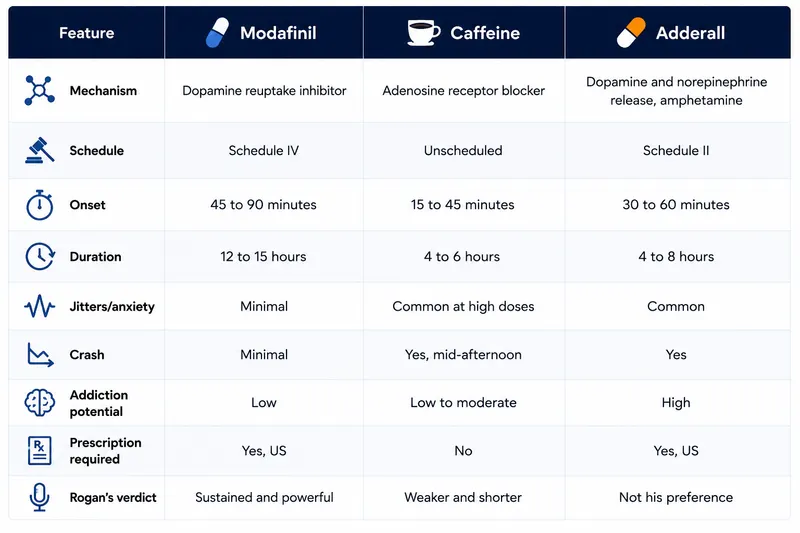
For shift workers specifically, modafinil is the only FDA-approved prescription option targeting disrupted circadian alertness rather than simply masking fatigue.
Modafinil Dosing and Timing: What the Research Shows
The most common mistake with modafinil is taking it too late in the day. Because the drug has a 12 to 15 hour active window, a noon dose can push wakefulness past midnight, the exact problem Rogan warns against.
According to clinical pharmacokinetics research, modafinil's half-life averages 12 to 15 hours, with armodafinil, the R-enantiomer, producing more sustained plasma concentrations.
According to the FDA prescribing information for Provigil, the standard clinical dose is 200 mg taken as a single dose approximately 1 hour before the start of the work shift for SWSD patients. Rogan's situational use pattern aligns with the general principle behind clinical timing: take it when wakefulness is needed, not too close to intended sleep. Because Rogan has not publicly specified his dose, his exact dose should not be assumed.
Who Should, and Shouldn't, Consider Modafinil
Potentially a fit for:
- Adults diagnosed with Shift Work Sleep Disorder affecting alertness and function on the job
- Those with diagnosed narcolepsy or sleep apnea with persistent daytime sleepiness despite treatment
- People whose cognitive impairment from disrupted sleep is affecting safety or professional performance
Not a fit for:
- People with a history of heart conditions, high blood pressure, or cardiac arrhythmia
- Those with a history of psychosis, mania, or severe anxiety disorders
- Anyone with a known allergy to modafinil or armodafinil
- People taking medications with significant interaction risk, always confirm with a provider
- Anyone looking for a recreational stimulant without a qualifying condition
Modafinil requires a prescription in the US. That's not a bureaucratic hurdle, it exists because individual medical history, current medications, and underlying conditions all affect whether modafinil is appropriate and safe for any specific person.
How to Get Started with MOD
If what Rogan describes resonates, sustained alertness through irregular hours, night shifts, or long commitments that can't wait for perfect sleep, there's a legal path designed for exactly that situation.
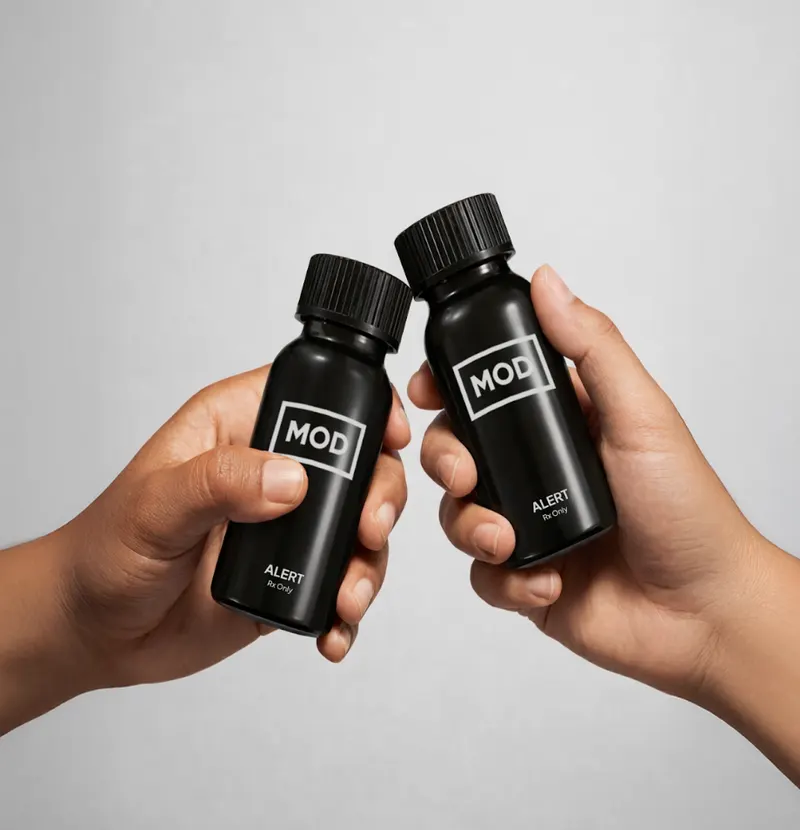
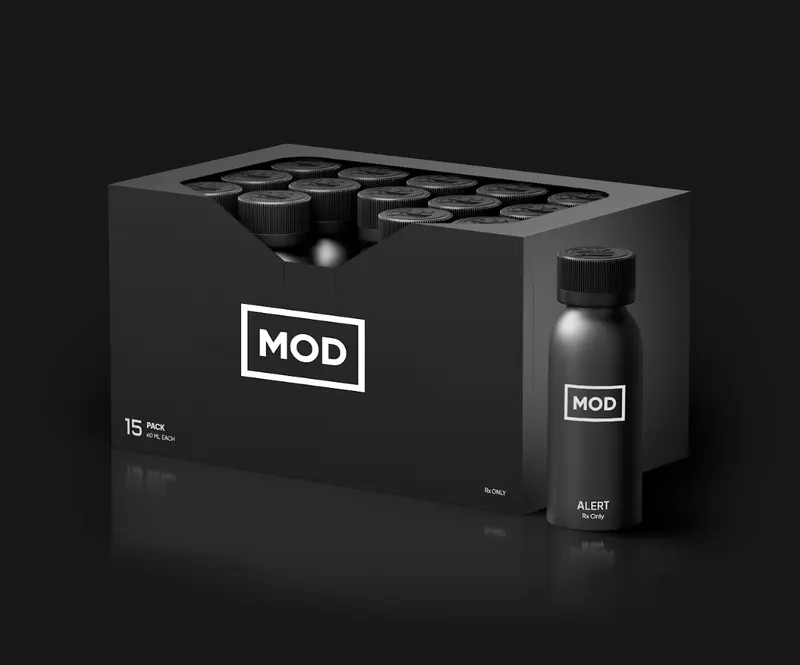
MOD.com offers compounded prescription-strength drinks formulated specifically for Shift Work Sleep Disorder. MOD Alert contains 150 mg of Modafinil plus 60 mg of caffeine for sustained wakefulness. MOD was designed for shift workers who need their medication to match their schedule, not the other way around.
The process is simple. Complete an online assessment, a licensed provider reviews your intake, and if appropriate, your prescription ships to your door. MOD products are compounded medications, not FDA-approved products themselves, though the active ingredients have established FDA approvals for the conditions they treat.

Frequently Asked Questions
What JRE episode did Joe Rogan talk about modafinil?
Joe Rogan has discussed modafinil across multiple episodes. JRE #1109 with sleep scientist Dr. Matthew Walker includes one of the most in-depth conversations about how modafinil works and its relationship to sleep. JRE #1576 is another episode where Rogan discussed his personal use. Episodes with Tim Ferriss have also touched on modafinil and related medications.
What did Joe Rogan say about modafinil?
Rogan has described modafinil as powerful and long-lasting. He has discussed using it situationally for long drives and demanding schedules, and he has been equally candid about its length and the risk of becoming reliant on it. He doesn't advocate daily use.
Does Joe Rogan still take modafinil?
Based on his JRE comments, Rogan consistently describes his use as situational, not daily. He's said he actively avoids making it a habit, and that position hasn't changed publicly.
Is modafinil the same as Provigil?
Yes. Provigil is the original brand name for modafinil. The active ingredient is identical, the difference is manufacturer and price. Generic modafinil has been widely available since 2012, which is what most patients access today.
Is modafinil legal in the US?
Yes, with a valid prescription. Modafinil is a Schedule IV controlled substance, legal for medical use, requiring a licensed provider to prescribe it. Purchasing it without a prescription or importing it without authorization is illegal.
Can I legally get modafinil if I work night shifts?
If you work irregular or overnight shifts and experience difficulty staying alert during work hours, a licensed provider can evaluate whether your symptoms are consistent with a Shift Work Sleep Disorder diagnosis, which is one of modafinil’s FDA-approved indications. Depending on provider requirements and applicable law, this may be available through telehealth. Telehealth providers like MOD can evaluate your symptoms through an online assessment and, if appropriate, prescribe and ship your medication. You don't need to tolerate the cognitive fog of shift work as a fixed cost of the job.
What's the difference between modafinil and Adderall?
Both increase alertness, but through different mechanisms and with different risk profiles. Adderall is an amphetamine. It produces stronger, faster dopamine surges with higher addiction potential and more cardiovascular strain. Modafinil is more targeted in its dopamine action, classified as Schedule IV versus Adderall's Schedule II, and generally considered lower risk. Neither is appropriate without medical evaluation.
What Else Does Joe Rogan Take Besides Modafinil?
Modafinil is one of several cognitive performance tools Rogan has discussed publicly. His broader nootropic stack includes Alpha BRAIN, an Onnit nootropic he helped develop, lion's mane mushroom, vitamin D3, fish oil, and occasionally other adaptogens. He has also discussed ketamine therapy and other performance-focused interventions on the JRE. Modafinil is the only prescription-grade wakefulness agent he has consistently mentioned by name.
How much modafinil does Joe Rogan take?
Rogan has not specified his exact dose publicly, but clinical dosing for Shift Work Sleep Disorder is 200 mg taken approximately one hour before the start of a shift, which is the FDA-approved standard. Because Rogan has not publicly specified his dose, his exact dose should not be assumed. First-time users are typically advised to start at 50 to 100 mg to assess individual tolerance.
Is Modafinil Used for Reasons Beyond Sleep Disorders?
Researchers have studied modafinil's cognitive effects in non-sleep-deprived healthy adults, and there is an academic literature on off-label use. However, the FDA approvals and the established safety and efficacy evidence are specific to narcolepsy, obstructive sleep apnea, and Shift Work Sleep Disorder. Off-label use depends on individual provider assessment.
This article is provided for informational purposes only and does not constitute medical advice. The information presented is not a substitute for professional medical advice, diagnosis, or treatment. Always consult your healthcare provider to discuss the risks, benefits, and appropriateness of any treatment.
MOD offers access to healthcare providers who may prescribe compounded medications for the treatment of excessive daytime sleepiness associated with shift work sleep disorder (SWSD), when clinically appropriate.
The featured products include compounded medications that have not been approved by the FDA. Compounded medications may be prescribed under federal law but are not the same as, nor are they generic versions of, any FDA-approved medication. The FDA does not review compounded medications for safety, effectiveness, or manufacturing quality of compounded products. A prescription will only be written if deemed appropriate after the digital consultation by the licensed medical provider. Individual results may vary.
MOD is not a compounding pharmacy but a telemedicine service that links patients to licensed medical providers.