How to Handle Shift Work Anxiety: A Step-by-Step Guide
Shift work anxiety is the chronic stress, fatigue, and low-grade dread that builds when your schedule forces wakefulness during your body's natural sleep hours. It is a physiological response to circadian disruption, not simply job stress, and can affect people who work non-traditional schedules, a group that includes roughly 20% of workers in the US, Australia, and Europe.
How to handle shift work anxiety:
- Stabilize your sleep schedule, same window every day, including days off
- Use strategic light exposure to reset your body clock
- Build consistent pre- and post-shift routines
- Time exercise 4–6 hours before your shift, not before sleep
- Cut caffeine in the final 4–6 hours before your intended sleep
- Seek professional evaluation for CBT-I or prescription treatment, Modafinil is FDA-approved for diagnosed SWSD
This guide covers each step in order of impact, with the evidence behind each one.
Here's what's driving your anxiety, why generic advice often doesn't work for shift workers, and the specific steps you can take, from stabilizing your sleep schedule to talking to a provider about prescription options for Shift Work Sleep Disorder.
Key Takeaways
- Shift work disrupts your circadian rhythm, which can affect cortisol and other stress-related hormones, potentially contributing to anxiety symptoms.
- Consistency beats perfection: keeping a more stable sleep schedule, even on days off when possible, may help reduce circadian disruption that can worsen fatigue and anxiety.
- Strategic light exposure before and after shifts is one of the most effective and underused circadian reset tools available.
- Caffeine timing matters more than amount: taking it too late in your shift amplifies anxiety and fragments daytime sleep.
- Alcohol as a wind-down tool is one of the most common mistakes shift workers make. It fragments sleep and can worsen next-day anxiety.
- For workers with diagnosed Shift Work Sleep Disorder (SWSD), Modafinil is FDA-approved to promote wakefulness, which may help reduce the fatigue that can worsen anxiety.
- If anxiety persists beyond a few weeks, it's worth talking to a healthcare provider. Evidence-based options exist specifically for shift workers.
Why Shift Work Causes Anxiety
Shift work anxiety isn't just being stressed about your job. It has a clear biological mechanism.
Your body runs on a circadian rhythm, a roughly 24-hour internal clock that regulates when you feel alert, when you feel sleepy, and when your stress hormones peak. The primary driver of this clock is light. When your shift schedule forces you to be awake during dark hours and asleep during daylight, that clock gets desynchronized from the environment.
Here's where anxiety enters: cortisol, your body's main stress hormone, normally peaks in the morning to help you wake up and drops at night to help you sleep. When you're working nights, that pattern can become inverted or blurred.
Your body may send wakefulness signals when you're trying to sleep and sleep-pressure signals when you need to be alert. That hormonal confusion doesn't just cause fatigue, it can create a physiological state that mimics anxiety.
Add the social friction, missing family events, feeling out of sync with the world, struggling to make daytime appointments, and the anxiety compounds further. Research published in Sleep Medicine confirms that shift work disorder is associated with symptoms of depression, anxiety, and chronic stress, with anxiety prevalence higher among shift workers than standard-hours workers.
The result is a fatigue-anxiety loop: too tired to cope, everything feels more threatening, which makes sleep harder, which deepens the fatigue. Addressing this requires working at the biological root, circadian disruption, not just managing symptoms.
Before You Start
Steps 1–5 in this guide require no prescriptions, no appointments, and no special equipment. You can start implementing them today.
Step 6, talking to a healthcare provider about clinical options, is the next move if you've been dealing with shift work anxiety for several weeks or if lifestyle changes alone haven't moved the needle. If you want to explore a telehealth assessment for Shift Work Sleep Disorder, MOD's online intake process connects you with a licensed provider who specializes in SWSD.
Step 1: Stabilize Your Sleep Schedule
The most important thing you can do for shift work anxiety is sleep at the same time every day, including days off.
Rotating your sleep timing wildly between workdays and days off keeps your circadian rhythm disrupted. Your brain never settles into a predictable rhythm, which can keep cortisol volatile and anxiety elevated.
Practical steps:
- Pick a consistent sleep window and defend it. If you sleep 8 AM to 4 PM on workdays, aim for the same window on days off, or shift it gradually, such as 9 AM to 5 PM, rather than snapping back to a "normal" schedule.
- Limit consecutive night shifts. UCLA Health recommends no more than five consecutive night shifts, with days off in between to allow partial circadian recovery.
Your sleep environment:
- Create a sleep environment that blocks daylight. Blackout curtains, a cool room, white noise or earplugs, and a "do not disturb" arrangement with people in your home all signal to your brain that it's time to sleep, regardless of what the sun is doing.
- Avoid large meals within 2 hours of sleep. Digestion can be alerting. Keep it light.
Sleep schedule consistency won't resolve shift work anxiety immediately, but it's the foundation everything else builds on. Nothing else works well without it.
Step 2: Use Light Strategically to Reset Your Body Clock
Light is the most powerful external signal your body uses to set its internal clock. Strategic light exposure is one of the most effective free interventions available to shift workers, and one of the most consistently underused. Most night shift workers never use it deliberately, which is a significant missed opportunity.
If you work night shifts:
- Get bright light exposure in the evening before your shift starts. This signals your brain to delay its "nighttime" phase, making it easier to stay alert during work hours.
- Avoid bright light, especially blue light from phone screens and overhead LEDs, when heading home after your shift. Wear blue-light-blocking glasses on your commute or walk home through shade. This prevents triggering your brain's morning "wake-up" signal right as you're heading to bed.
If you work early mornings:
- Get natural daylight immediately after waking up. This reinforces your earlier wake time and helps stabilize your rhythm.
- Dim your environment 2–3 hours before bedtime.
The American Academy of Sleep Medicine notes that appropriately timed bright light exposure can shift circadian rhythms enough to meaningfully reduce the misalignment driving fatigue and sleep disruption.
Melatonin can support this, but timing matters more than dose. It's important to consult your healthcare provider before adding melatonin, especially if you're on other medications. A small amount, such as 0.5–1 mg, taken before your intended sleep time may reinforce the sleep signal. Higher doses don't necessarily work better, and they may linger and leave you groggy during your shift.
Step 3: Build a Pre- and Post-Shift Routine
Anxiety thrives in the absence of predictable cues. Your brain needs consistent signals to move between alert mode and rest mode, and for shift workers, those cues have to be deliberately constructed.
Pre-shift routine, 30–60 minutes before your shift: bright light exposure, a light meal, brief movement, such as a short walk, and any prescribed wakefulness medications per your provider's instructions.
Post-shift wind-down: dim lights, blue-light-blocking glasses, avoid phone screens, try 4-7-8 breathing or progressive muscle relaxation, and avoid alcohol, more on that in Common Mistakes.
The goal is to train your brain to associate these cues with state transitions. Over time, the shift between alertness and rest may become smoother.
Step 4: Move Your Body, Even Briefly
Exercise is one of the most consistent anxiety reducers in the research. But timing matters especially for shift workers.
Exercise raises cortisol and core body temperature temporarily, which is exactly what you want before a shift, and exactly the opposite of what you want before sleep.
- Time exercise 4–6 hours before your shift starts, not right before bed.
- Even 10–20 minutes of moderate cardio or a brisk walk can meaningfully reduce anxiety. You don't need a full gym session. Consistent brief movement beats occasional intense sessions.
- On days off, morning exercise in natural daylight helps reinforce a healthier circadian anchor.
Avoid intense workouts within 3 hours of your intended bedtime. The post-exercise cortisol spike may delay sleep onset, increase nighttime arousal, and feed the anxiety cycle you're trying to break.
Step 5: Watch What You Use to Stay Awake
This is where shift workers often make their anxiety significantly worse without realizing it.
Caffeine: Caffeine has a half-life of 5–6 hours. A 200 mg dose at the start of your night shift means roughly 100 mg may still be active in your system 5–6 hours later, right when you're trying to sleep. That residual caffeine can fragment sleep quality, reduce restorative sleep, and elevate next-day anxiety.
Better timing for night shift workers:
- Take caffeine at the start of your shift, not the middle or end
- Avoid caffeine in the final 4–6 hours before your intended sleep
- Don't rely on caffeine to mask fatigue. It addresses alertness, not the underlying sleep debt
Energy drinks: High-sugar energy drinks can produce a caffeine and sugar spike followed by a crash, which may worsen fatigue, irritability, and anxiety for some shift workers. If you're using multiple cans to get through a shift, the stimulant cycle itself may be feeding your anxiety.
A note on prescription wakefulness options: For shift workers with diagnosed Shift Work Sleep Disorder, prescription options exist that work through different pathways than caffeine. Modafinil is an FDA-approved wakefulness-promoting medication for SWSD. Its exact mechanism is not fully understood, but it appears to influence several wakefulness-related neurotransmitter systems, including dopamine, histamine, and orexin pathways, without the same crash cycle associated with high-dose caffeine.
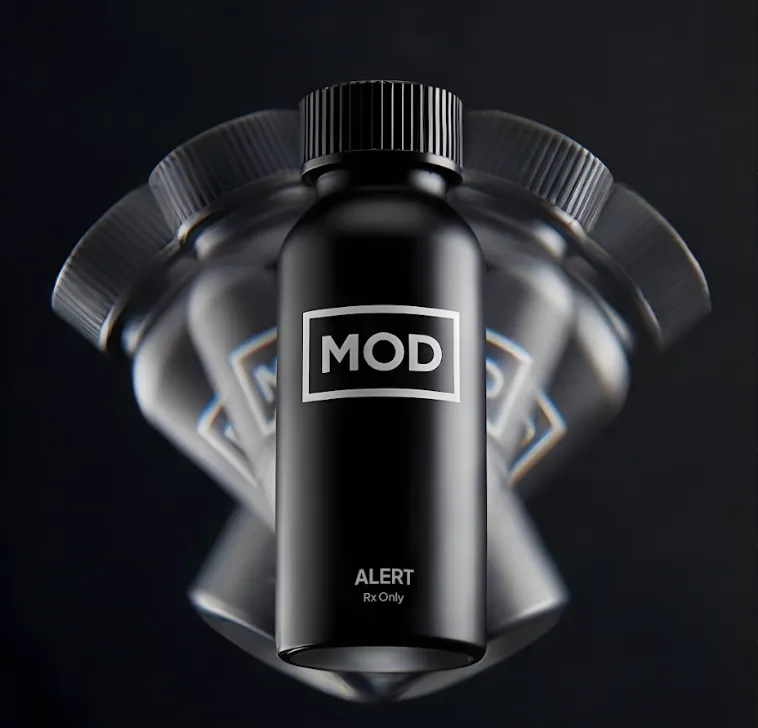
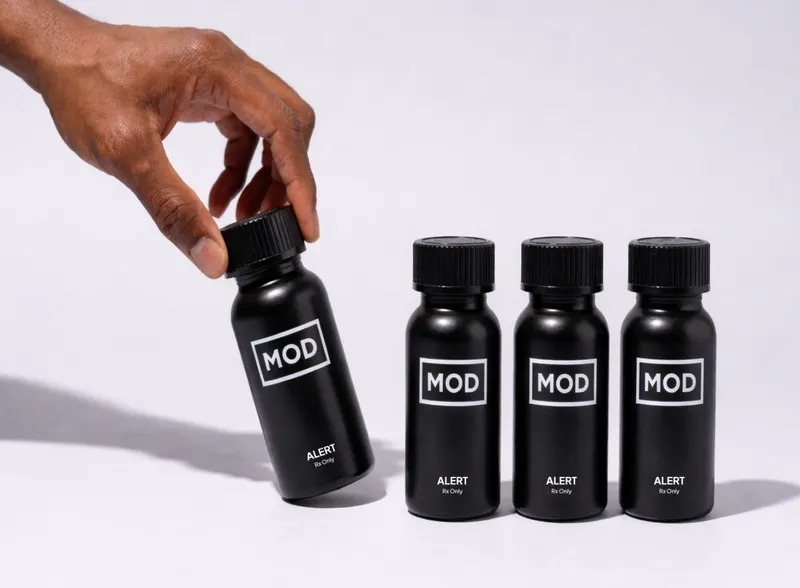
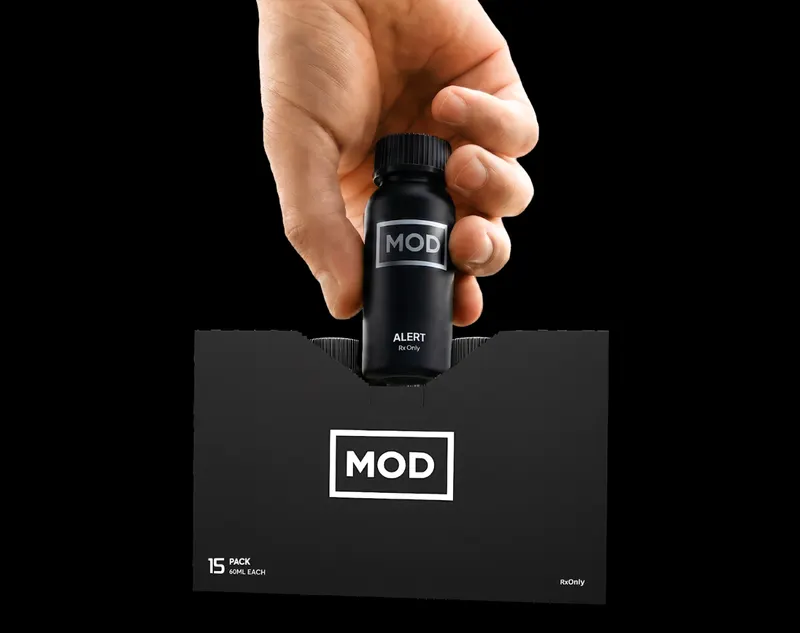
It lasts up to 12 hours with a steadier profile, which means much less of a crash-and-rebound cycle and less anxiety amplification at the end of your shift. MOD Alert is a compounded prescription-strength drink containing 150 mg of Modafinil and 60 mg of Caffeine, available through a telehealth assessment. This is a compounded medication and not FDA-approved, but is prescribed by licensed providers who evaluate whether MOD is appropriate for your situation.
Step 6: Talk to a Healthcare Provider
If you've been dealing with shift work anxiety for more than a few weeks, or if it's affecting your relationships, job performance, or quality of life, it's time to bring in professional support.
What to ask about:
- Shift Work Sleep Disorder evaluation. SWSD is a recognized medical condition. A formal diagnosis opens up treatment options, including prescription wakefulness agents that lifestyle changes can't replicate.
- Cognitive Behavioral Therapy for Insomnia (CBT-I). CBT-I is the gold-standard non-medication treatment for insomnia and can be especially useful when sleep problems and anxiety reinforce each other.
Medical options:
- Prescription wakefulness medications. Modafinil is FDA-approved for Shift Work Sleep Disorder. Randomized controlled trials demonstrate it improves nighttime wakefulness, reduces attention lapses, and lowers accident risk during commutes. It's a Schedule IV medication, meaning it carries lower abuse potential than Schedule II stimulants like Adderall.
- Anxiety treatment. If your anxiety has developed beyond sleep-related causes, a provider may recommend therapy, SSRIs, or a combination alongside sleep interventions.
Potential Modafinil side effects include headache, nausea, dry mouth, and reduced appetite. Tell your provider about any cardiovascular history before starting. A licensed provider will evaluate whether it's appropriate for your situation.
MOD offers a telehealth prescription process: complete an online assessment, a licensed provider reviews your case, and your medication ships to your door.
Tips for Best Results
- Stack the interventions. Sleep consistency + light timing + exercise timing together produce faster improvement than any single change alone.
- Give it 2 weeks before judging. Circadian-based changes need time to compound. Many people notice improvement within 10–14 days of consistent practice.
- Hydrate before caffeine. Dehydration amplifies fatigue and irritability. Water first thing after waking reduces how much caffeine you actually need to reach baseline alertness.
- On your first day shift after a run of nights, get 30 minutes of morning daylight. Natural light is the fastest circadian reset signal available.
- If you're prescribed Modafinil, take it on schedule. Inconsistent dosing produces inconsistent results. Your provider will guide timing, and consistency is what makes it effective.
Common Mistakes That Make Shift Work Anxiety Worse
Using alcohol to wind down. Alcohol feels sedating initially, but it disrupts REM sleep and can leave you more anxious, not less.
Trying to "catch up" on sleep instead of staying consistent. Sleeping 10 hours one day and 4 hours the next perpetually disrupts your circadian rhythm and keeps stress hormones dysregulated.
Taking caffeine through the second half of your shift. By the time you get home, you may have caffeine still active in your system, making sleep harder and next-day anxiety worse.
Assuming it'll resolve on its own. Shift work anxiety tends to compound over time without intervention. The fatigue-anxiety loop gets harder to break the longer it runs unchecked.
Frequently Asked Questions
What causes anxiety in shift workers specifically?
Shift work anxiety is primarily driven by circadian rhythm disruption. When your schedule forces wakefulness during your body's natural nighttime phase, cortisol and other stress-related hormones can become dysregulated. This hormonal state can mimic the physiology of anxiety, even without a direct psychological trigger. Social isolation and unpredictable scheduling can amplify the effect.
Does working the night shift get easier over time?
For some people, yes, particularly those who maintain a consistent nighttime schedule year-round. But research shows that even long-term night shift workers often demonstrate ongoing circadian disruption, especially when they alternate to a daytime schedule on weekends. Partial adaptation is common; full adaptation is rare.
Can melatonin help with shift work anxiety?
Melatonin can help with the sleep component of shift work anxiety by reinforcing circadian timing. It won't directly reduce anxiety, but improving sleep quality and consistency may reduce the fatigue-anxiety loop. Dose and timing matter, and 0.5 to 1 mg before intended sleep is often used in circadian rhythm strategies. Talk to a healthcare provider before adding melatonin, especially if you take other medications.
Is Modafinil FDA-approved for Shift Work Sleep Disorder?
Yes. Modafinil is FDA-approved for Shift Work Sleep Disorder (SWSD). It promotes wakefulness during shift hours, which may reduce the fatigue that can contribute to anxiety. It's classified as a Schedule IV medication, meaning it carries lower abuse potential than Schedule II stimulants like amphetamines.
What is pre-shift anxiety?
Pre-shift anxiety is the dread or nervousness that builds in the hours before a shift begins, most common in night and rotating shift workers. It typically combines anticipatory work stress with the residual effects of sleep-wake cycle disruption, and ranges from mild nerves to panic that interferes with pre-shift sleep.
How do I calm down before a night shift?
Get bright light exposure before your shift, do a short walk, practice box breathing, 4 counts in, hold 4, out 4, hold 4, and eat a light meal. Save dim lights and blue-light-blocking glasses for your post-shift wind-down. A predictable pre-shift routine, same steps, same order, may reduce the sense of uncertainty that can make pre-shift anxiety worse.
Can shift work cause depression?
Yes. Research consistently shows that shift workers have a 33% higher risk of depressive symptoms and a 30% increased risk of depression compared to day workers, according to a meta-analysis published in the American Journal of Public Health. The same biological mechanism that can drive shift work anxiety, circadian misalignment disrupting cortisol, serotonin, and other neurotransmitters, may also raise depression risk. Workers on rotating schedules face higher risk than those on fixed night shifts.
This article is provided for informational purposes only and does not constitute medical advice. The information presented is not a substitute for professional medical advice, diagnosis, or treatment. Always consult your healthcare provider to discuss the risks, benefits, and appropriateness of any treatment.
MOD offers access to healthcare providers who may prescribe compounded medications for the treatment of excessive daytime sleepiness associated with shift work sleep disorder (SWSD), when clinically appropriate.
The featured products include compounded medications that have not been approved by the FDA. Compounded medications may be prescribed under federal law but are not the same as, nor are they generic versions of, any FDA-approved medication. The FDA does not review compounded medications for safety, effectiveness, or manufacturing quality of compounded products. A prescription will only be written if deemed appropriate after the digital consultation by the licensed medical provider. Individual results may vary.