Energy Drinks vs Prescription Stimulants: What Actually Works (And What’s Actually Safe)
The majority of Americans reach for an energy drink each day. Millions more take prescription stimulants to stay alert, focused, and functional. If you’ve ever compared energy drinks vs prescription stimulants and wondered which one actually delivers, and which one may carry more risk, you’re asking the right question.
Here’s the reality: these two categories work in very different ways, carry different risk profiles, and are regulated under different standards. One you can buy at a gas station. The other requires a prescription and medical oversight. But “easier to get” does not mean “better for you,” and “prescription” does not automatically mean “more dangerous.”
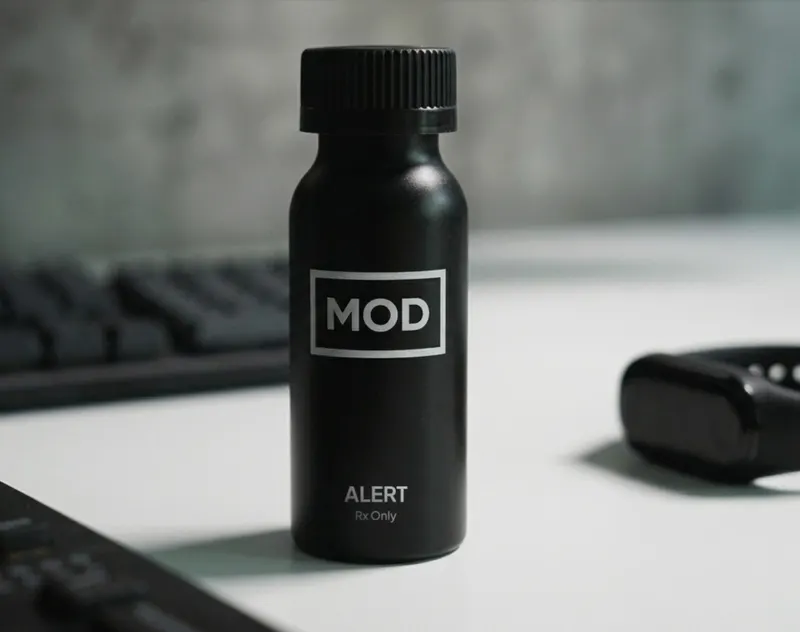
This guide breaks down the science, safety data, and honest pros and cons of energy drinks vs prescription stimulants so you can make a more informed choice about what you put in your body. And if you’re a shift worker who has outgrown energy drinks, MOD offers prescription liquid medications that give you another option beyond convenience-store caffeine and traditional stimulant pills.
Key Takeaways
- Prescription options usually last longer and come with medical oversight — effects can last 4–15 hours, compared with about 4–6 hours for many energy drinks, and they come with provider monitoring and more clearly defined safety profiles. Some active ingredients may be FDA-approved in other forms, but MOD’s liquid medications themselves are not FDA-approved.
- Energy drinks are usually regulated as foods or supplements and do not go through the same pre-market review as prescription medications.
- Crash factor is a major difference — energy drinks are more likely to cause a noticeable rebound, while modafinil is generally described as producing steadier wakefulness.
- Addiction risk varies a lot — caffeine can lead to dependence, while prescription stimulants range from lower-risk options like modafinil, a Schedule IV medication, to higher-risk options like amphetamines, which are Schedule II.
- Do not stack them casually — mixing energy drinks with prescription stimulants can increase side-effect risk and should only be done with medical guidance.
What’s Actually in Energy Drinks
Most people know energy drinks contain caffeine. What many miss is that caffeine is only part of the picture.
Caffeine (80–300 mg per serving)
Caffeine is the main active ingredient in most energy drinks. For comparison, a standard cup of coffee has about 95 mg of caffeine. Some energy drinks pack 300 mg into one can, which is roughly the equivalent of three cups of coffee consumed quickly instead of gradually. The FDA lists 400 mg per day for healthy adults as a general upper limit.
Caffeine works by blocking adenosine receptors in the brain. Adenosine is one of the signals that helps you feel tired. When caffeine blocks that signal, you feel less sleepy. It can be effective, but it mainly masks fatigue rather than creating sustained wakefulness.
Taurine (500–2,000 mg)
Taurine is an amino acid naturally found in foods like meat and seafood. It is heavily marketed in energy drinks, but the research on its standalone effects on energy and cognition is mixed. What is clearer is that taurine can affect calcium signaling in the body, which matters for the heart, brain, and muscles. Some reviews note limited long-term safety data for taurine supplementation at higher doses.
Guarana
Guarana is a plant extract whose seeds contain very high natural caffeine levels. It also contains theobromine and theophylline, which are additional stimulant compounds. When a label lists both caffeine and guarana, the total stimulant load may be higher than many people realize.
B Vitamins (B3, B6, B12, and others)
B vitamins are real and important. They are involved in cellular energy and metabolism. But if you are not deficient, taking very high doses in an energy drink does not automatically mean you will feel more energetic. In many cases, your body simply gets rid of what it does not need.
Sugar (up to 54 g per can)
Many energy drinks contain more sugar than a can of soda. That can lead to a quick rise in blood sugar followed by a crash later. Sugar-free versions avoid that specific issue, but they do not change the short-lived nature of caffeine-heavy stimulation.
The Combination Problem
The concern is often not one ingredient by itself, but the mix. A large review in Nutrients found that combinations of caffeine, taurine, guarana, and other stimulant compounds may intensify stimulant-related effects, including higher blood pressure, faster heart rate, anxiety, arrhythmias, and sleep disruption. These products are also not tested before sale the way prescription medications are.
What Are Prescription Stimulants?
Prescription stimulants and wakefulness-promoting medications fall into a few main groups, each with a different mechanism and risk profile.
Amphetamines (Adderall) — Schedule II
Adderall contains mixed amphetamine salts. These medications increase dopamine and norepinephrine activity more directly than modafinil does. They are effective, but they also carry a higher misuse risk. The DEA classifies amphetamines as Schedule II controlled substances.
- Duration: 4–6 hours (immediate release), 10–12 hours (extended release)
- FDA-approved for: ADHD, narcolepsy
- Common side effects: Insomnia, appetite suppression, increased heart rate, elevated blood pressure, irritability, dry mouth
Methylphenidate (Ritalin, Concerta) — Schedule II
Methylphenidate raises dopamine and norepinephrine differently from amphetamines, but it is still a stimulant medication with meaningful misuse potential. It is also classified as a Schedule II controlled substance.
- Duration: 3–4 hours (IR), 8–12 hours (ER)
- FDA-approved for: ADHD
- Common side effects: Insomnia, appetite loss, nervousness, increased heart rate
Wakefulness-Promoting Medication: Modafinil (Provigil) — Schedule IV
Modafinil works differently from amphetamines. As described in this review of modafinil’s mechanism, it affects several brain systems involved in wakefulness and attention. Modafinil also supports dopamine, serotonin, norepinephrine, histamine, glutamate, and orexin activity, all impacting energy levels.
- Duration: 12–15 hours
- FDA-approved for: Shift Work Sleep Disorder, narcolepsy, obstructive sleep apnea
- DEA classification: Schedule IV
- Potential side effects: Headache, nausea, decreased appetite, anxiety, insomnia
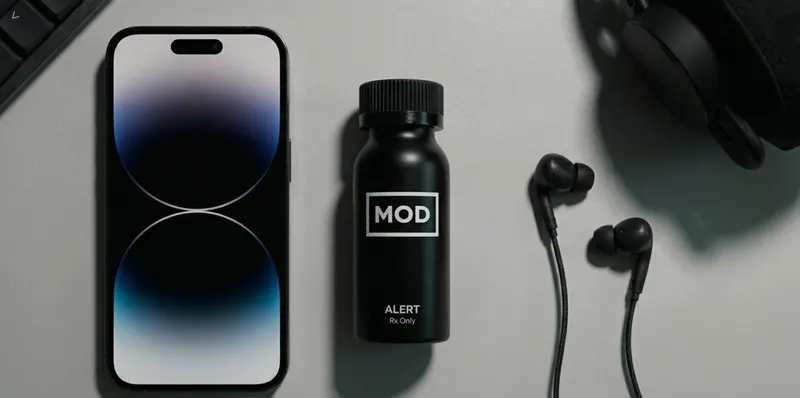
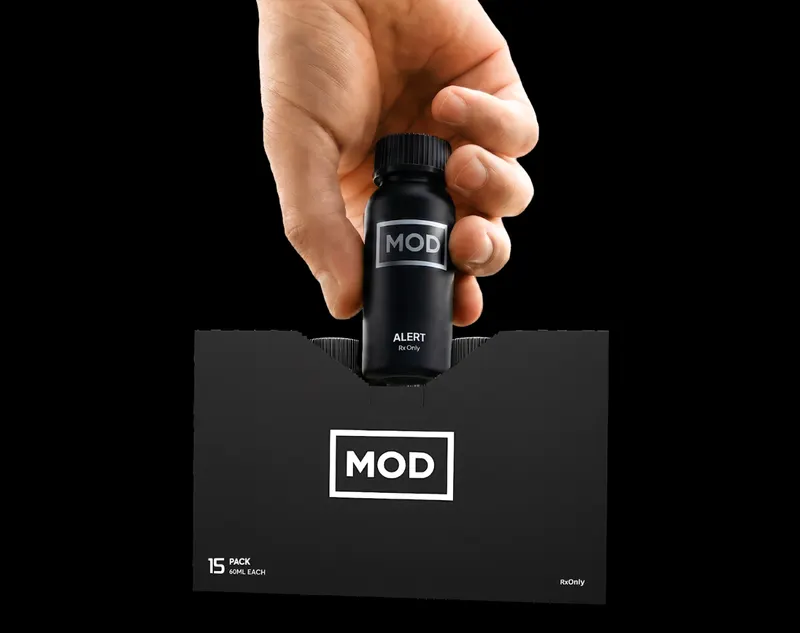
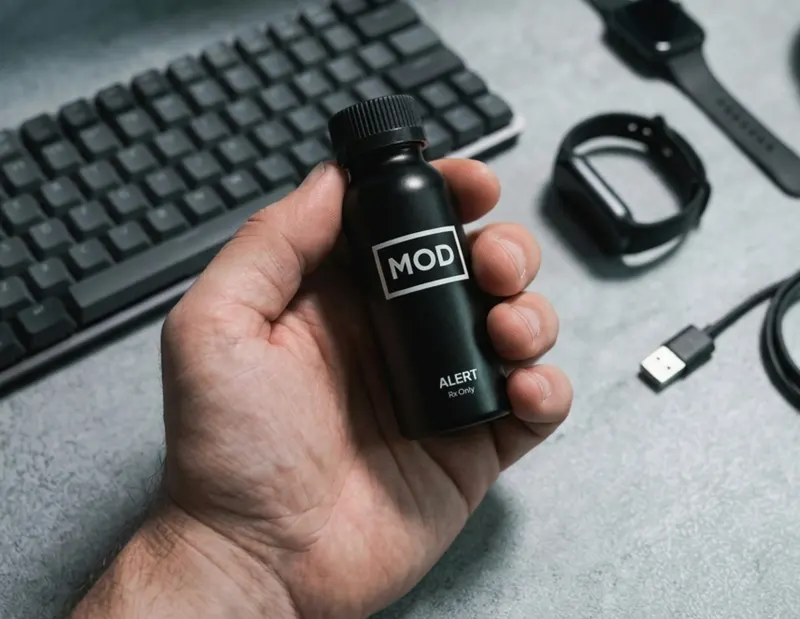
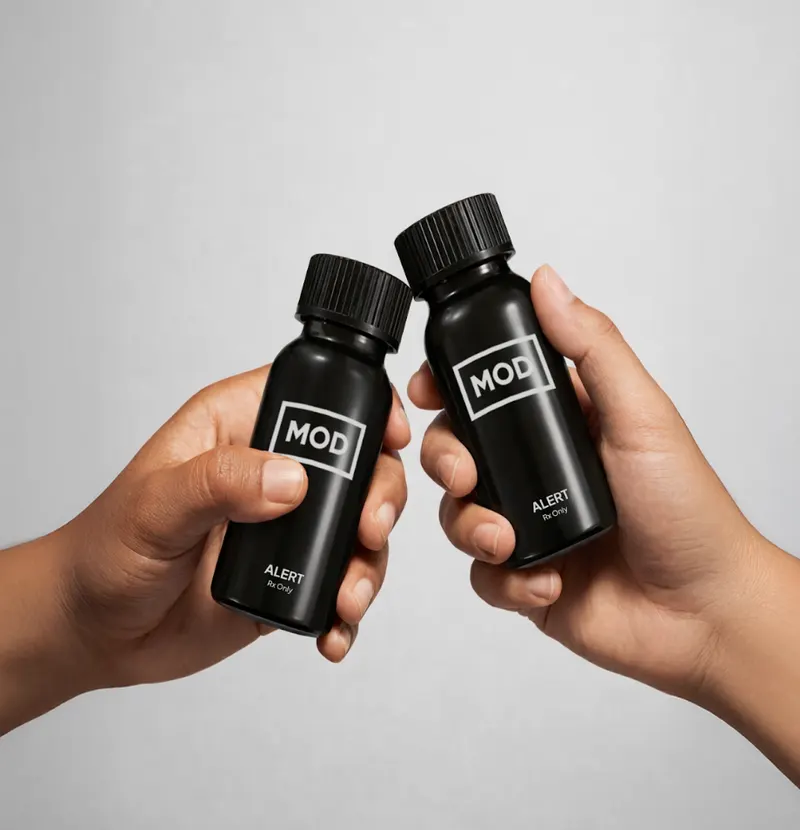
- Liquid options through MOD: MOD Alert contains modafinil and caffeine
Modafinil’s Schedule IV classification matters. It reflects a lower abuse potential than Schedule II stimulant medications, though it still requires a prescription and should still be used under medical supervision.
How Energy Drinks vs Prescription Stimulants Work Differently
This is where the comparison gets more interesting. These are not just different products. They affect the brain in different ways.
Caffeine: Blocking Fatigue Signals
Caffeine is an adenosine receptor antagonist. In other words, it blocks one of the brain’s key tiredness signals. That is why it can help quickly, but it does not usually create the same long-lasting steadiness as a wakefulness-promoting medication.
Modafinil: Supporting Wakefulness More Broadly
Modafinil affects multiple systems tied to wakefulness and attention. Research comparing the two has found that modafinil outperformed caffeine later on during sleep deprivation, especially after the earlier part of the testing period. Another study in military aircrew also found longer-lasting alertness than caffeine.
Amphetamines: Stronger Stimulant Effect
Amphetamines take a more forceful approach by sharply increasing dopamine and norepinephrine signaling. That is part of why they can feel more intense, but also why they carry more misuse and crash risk.
Pricing and Access Comparison
Understanding the real cost of energy drinks vs prescription stimulants matters, especially if you use them regularly.
Energy Drinks
- Per-serving cost: $2–5
- Monthly cost (daily use): $60–150
- Prescription required: No
- Insurance coverage: None
- Doctor visits: None
- Available at: Gas stations, grocery stores, convenience stores, online
Prescription Stimulants (Traditional)
- Monthly cost: $30–200+ depending on the medication and insurance
- Prescription required: Yes
- Insurance coverage: Varies
- Doctor visits: Initial visit plus follow-ups
- Available at: Pharmacies
Prescription Liquid Medications (MOD)
- Monthly cost: Varies by plan
- Prescription required: Yes, through an online assessment at MOD
- Insurance coverage: Not typically covered
- Provider process: Online intake form, licensed medical provider review, home delivery
- Available at: MOD.com prescription plans
The hidden cost of energy drinks is easy to underestimate. Daily use can add up fast, and you are still paying for a short-lived product with no provider oversight.
Safety and Side Effects of Energy Drinks vs Prescription Stimulants
Let’s be clear: neither category is risk-free.
Energy Drink Risks
Cardiovascular concerns are one of the biggest issues with energy drinks. A randomized trial in the Journal of the American Heart Association found changes in blood pressure and QTc after energy drink use, which helps explain why these products raise concern in people with heart risk factors.
Common energy drink side effects include:
- Jitteriness, anxiety, and restlessness
- Heart palpitations and faster heart rate
- Elevated blood pressure
- Insomnia and poorer sleep quality
- GI upset
- Sugar crash in sweetened versions
- Headaches, especially with withdrawal
Prescription Stimulant Risks
Prescription medications have their own side-effect profiles, and those vary by medication class.
Amphetamines (Adderall) may cause:
- Insomnia
- Appetite suppression and weight loss
- Increased heart rate and blood pressure
- Dry mouth
- Irritability
- Potential psychological dependence
- Withdrawal symptoms with abrupt discontinuation
Potential side effects of modafinil include:
- Headache
- Nausea
- Decreased appetite
- Anxiety
- Insomnia
- Dizziness
- Diarrhea
- Runny nose
That list matches the potential side effects described in MOD’s modafinil materials. The difference is that prescription medication side effects are better documented, and a provider can monitor for problems.
The Combination Risk: Why Mixing Them Can Backfire
A lot of people take prescription stimulants and still reach for energy drinks. That can be risky.
A review in Pharmaceutics found that stimulant drugs combined with energy drinks have been associated with serious cardiovascular complications. SAMHSA data also shows that emergency visits involving energy drinks often included other stimulant substances.
Stacking caffeine on top of a prescription stimulant can push heart rate, blood pressure, anxiety, and sleep disruption even higher. It’s important to talk to your provider before combining them.
Who Might Choose Energy Drinks
Energy drinks may make sense if you:
- Need an occasional short-term boost
- Do not rely on them daily
- Do not take stimulant medications
- Do not have major cardiovascular risk factors
- Understand that the product is lightly regulated compared with prescription medications
If you are using two or three energy drinks a day just to function, that is usually a sign that it’s worth talking to a healthcare provider about what is driving the fatigue.
Who Might Choose Prescription Options
Prescription options may make more sense if you:
- Have a diagnosed condition such as ADHD, narcolepsy, or Shift Work Sleep Disorder
- Need sustained wakefulness for longer stretches
- Want medically supervised dosing
- Have already tried caffeine and found it unreliable
- Need more consistency than energy drinks can offer
For shift workers specifically, modafinil has one of the strongest evidence bases. It is FDA-approved for Shift Work Sleep Disorder. MOD Alert contains modafinil ideal for wakefulness support .
Final Verdict
There is no single answer to the energy drinks vs prescription stimulants debate. The better option depends on your situation.
If you want a quick boost once in a while, an energy drink may be enough. Just keep the dose reasonable and do not turn it into a daily habit without thinking about the tradeoffs.
If you need reliable, sustained alertness, prescription options are generally the stronger category. That is especially true for people dealing with excessive daytime sleepiness or shift work.
For people stuck in the middle, using multiple energy drinks a day but wanting something more structured, MOD Alert offers another route. MOD Alert combines modafinil and caffeine. It is prescribed through an online process with a licensed medical provider's review.
Whatever you choose, it’s important to know what you’re taking, understand the risks, and talk with a healthcare provider if you are unsure what makes sense for you.

FAQs
Are energy drinks safer than prescription stimulants?
Not necessarily. Energy drinks are easier to buy, but that does not mean they are safer. Prescription medications go through formal review, have clearer dosing, and come with provider oversight. Energy drinks do not.
Can you take energy drinks with Adderall or other prescription stimulants?
That is generally discouraged unless your provider tells you otherwise. Combining the two can raise the risk of side effects such as fast heart rate, anxiety, and elevated blood pressure.
How does caffeine compare with modafinil for staying awake?
Caffeine can help quickly, but modafinil tends to last much longer. Head-to-head research found better later vigilance with modafinil during sleep deprivation.
Is modafinil addictive?
Modafinil has a lower misuse risk than amphetamines and is classified as Schedule IV rather than Schedule II. That does not mean there is no risk, but it is generally considered lower-risk than traditional stimulant medications.
How many energy drinks per day is safe?
The FDA says up to 400 mg caffeine daily is the general limit for healthy adults. But that does not account for hidden stimulants, personal sensitivity, or underlying health conditions.
What is Shift Work Sleep Disorder, and how is it treated?
Shift Work Sleep Disorder affects people who work non-traditional hours and feel excessive sleepiness during work or insomnia during planned sleep time. Treatment may include sleep hygiene, light strategies, and prescription wakefulness-promoting medication. MOD Alert contians modafinil and caffeine for the treatment of Shift Work Sleep Disorder.
Are energy drinks regulated by the FDA?
They are regulated differently from prescription drugs. Most energy drinks are sold as food or supplement products, which means they are not reviewed the same way medications are before they reach the market.
What are the long-term risks of daily energy drink use?
Long-term daily use has been linked to cardiovascular, neurologic, gastrointestinal, and metabolic concerns. A large review in Nutrients documented serious adverse events across systems, including cardiac events.
This article is provided for informational purposes only and does not constitute medical advice. The information presented is not a substitute for professional medical advice, diagnosis, or treatment. Always consult your healthcare provider to discuss the risks, benefits, and appropriateness of any treatment.
MOD offers access to healthcare providers who may prescribe compounded medications for the treatment of excessive daytime sleepiness associated with shift work sleep disorder (SWSD), when clinically appropriate.
The featured products include compounded medications that have not been approved by the FDA. Compounded medications may be prescribed under federal law but are not the same as, nor are they generic versions of, any FDA-approved medication. The FDA does not review compounded medications for safety, effectiveness, or manufacturing quality of compounded products. A prescription will only be written if deemed appropriate after the digital consultation by the licensed medical provider. Individual results may vary.