Celsius vs MOD Alert: Which Is Better for Shift Workers?
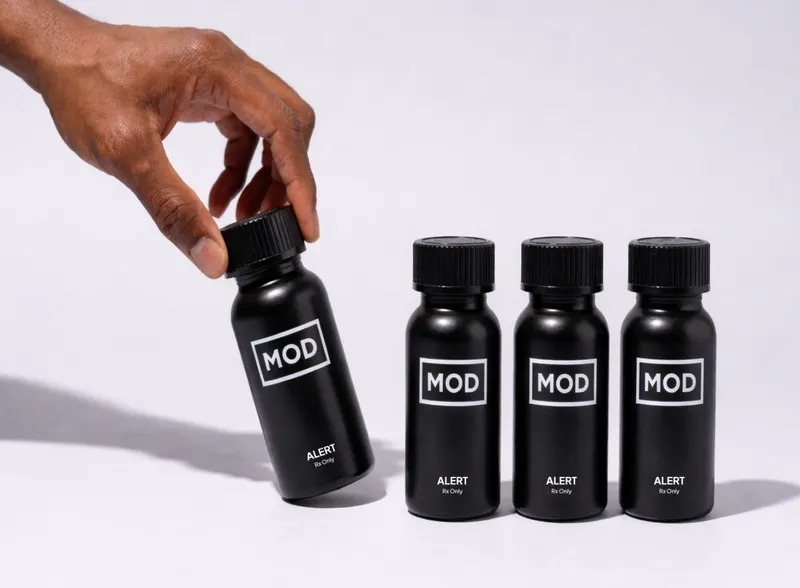
MOD Alert is a prescription-strength wakefulness drink containing 150 mg Modafinil plus 60 mg Caffeine, designed for shift workers with Shift Work Sleep Disorder. It delivers up to 12 hours of sustained alertness per dose. Celsius is an OTC energy drink with 200 mg caffeine lasting 4-6 hours. For SWSD and long shifts, MOD Alert is the more relevant option. Celsius may be convenient for short-term energy, but it is not designed for shift work sleep disorder.
You're three hours into a twelve-hour night shift. The Celsius you cracked open at the start of your shift is long gone, and you're already thinking about your second one. That 200 mg caffeine hit may have helped for a few hours, but now it's fading, and you still have nine more to go.
Here's the Celsius problem: it's designed for workouts and afternoon pick-me-ups, not for the specific, brutal demands of rotating shift work. MOD Alert takes a completely different approach. Instead of stacking more caffeine, it uses Modafinil, an FDA-approved wakefulness-promoting agent, combined with caffeine to support sustained alertness across a full 12 hour shift.
Here's the complete Celsius vs MOD Alert breakdown.
Key Takeaways
- MOD may provide longer-lasting support for shift workers, with effects that can last around 12 hours, which may better align with the demands of a full shift.
- Energy drinks like Celsius typically last about 4 to 6 hours, which can lead some people to consume multiple cans during a 12-hour shift and significantly increase total caffeine intake.
- Higher caffeine intake from repeated energy drink use may raise the risk of side effects such as jitters, palpitations, and an eventual crash, especially for people who are caffeine-sensitive.
- MOD is positioned as a lower-caffeine option per dose, which may appeal to people looking for sustained wakefulness support without relying on repeated high-caffeine beverages.
- Clinical support is an important distinction in this category, and MOD is associated with evidence in shift work populations, particularly in the context of shift work sleep disorder.
- Access differs between these options, since energy drinks are available over the counter while MOD requires provider evaluation and approval, making it a more structured option for people who may be dealing with SWSD.
What Is Celsius?
Celsius is an over-the-counter energy drink marketed as a "fitness drink," with claims around metabolism and calorie burning during exercise. It's regulated as a dietary supplement (and in some cases conventional food), not a drug. Its core mechanism is caffeine: each 12 oz can delivers 200 mg, sourced from guarana seed extract and added caffeine.
Celsius also includes green tea extract (EGCG), taurine, glucuronolactone, ginger extract, B vitamins, vitamin C, and sucralose as a zero-calorie sweetener. It has 10-15 calories per can with zero added sugar.
Celsius is not FDA-approved as a drug. It's regulated as a dietary supplement (or conventional food), a key distinction when comparing it to a prescription-grade option.
What Is MOD Alert?
Duration: 12-15 hours | Contains caffeine | Access: Telehealth prescription via mod.com
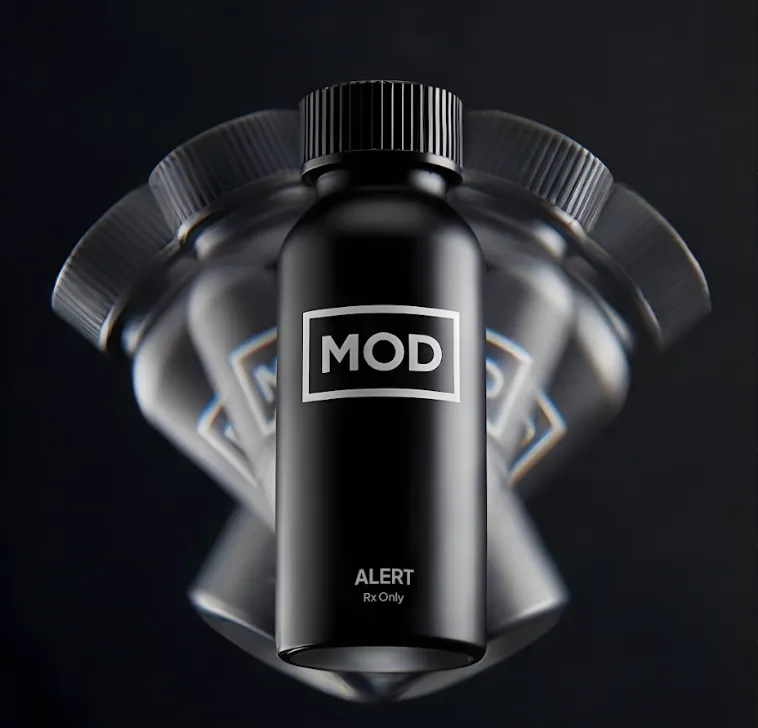
MOD Alert is a compounded prescription-strength drink, not an energy drink or a dietary supplement. It contains two active ingredients: Modafinil 150 mg and Caffeine 60 mg. It's prescribed through MOD's telehealth platform and shipped directly to your door after a provider reviews your intake.
Modafinil, the primary active ingredient, is a Schedule IV wakefulness-promoting agent that is FDA-approved for three conditions: narcolepsy, obstructive sleep apnea, and, critically, Shift Work Sleep Disorder (SWSD). The MOD Alert product as a whole is a compounded medication, which means it is not FDA-approved as a finished product, though its active ingredients carry their own FDA approvals for specific conditions.
MOD Alert targets shift workers specifically: nurses, EMTs, police officers, military personnel, pilots, and anyone else whose schedule forces them to be alert when their body expects sleep. Its caffeine content is paired with modafinil to complement wakefulness support rather than relying on caffeine alone. The telehealth intake takes about 15 minutes, fill out an online assessment, a provider reviews it, and your medication ships to your door.
Key Features: Active Ingredients
- Modafinil (150 mg): the same FDA-approved wakefulness-promoting agent prescribed for SWSD; works through multiple wakefulness-related pathways, not just adenosine blockade
- Caffeine (60 mg): included to complement Modafinil's onset without relying on caffeine alone
- Up to 12 hours of coverage: matched to Modafinil's ~12-15 hour elimination half-life; one dose covers most shift lengths without mid-shift redosing
How They Work: Adenosine Blocking vs. Orexin Activation
The most important difference in the Celsius vs MOD Alert comparison is one most energy-drink articles skip entirely.
How Celsius works: Caffeine blocks adenosine receptors, the molecule that builds up the longer you're awake. This masks fatigue temporarily, but adenosine keeps accumulating. When caffeine clears your system (4-6 hours later), that accumulated adenosine floods back in. That's the crash. Caffeine also doesn't address the underlying circadian rhythm disruption that makes Shift Work Sleep Disorder different from ordinary tiredness.
How MOD Alert works: Modafinil operates through different pathways. Research shows it activates the orexin/hypocretin system, the brain circuit responsible for regulating wakefulness, and also inhibits dopamine reuptake and modulates norepinephrine in the hypothalamus. In other words, it doesn't just block a sleep signal; it activates the wakefulness system itself.
This matters for shift workers with SWSD, whose sleep and wake schedules are disrupted by circadian rhythm misalignment. Modafinil's ~15-hour half-life explains why it lasts far longer than caffeine.
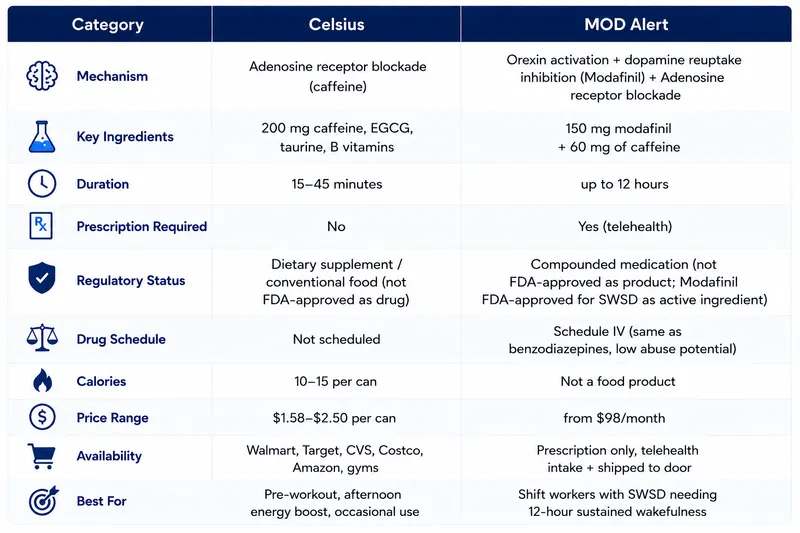
Celsius vs MOD Alert: Side-by-Side Comparison
Who Should Choose MOD Alert?
MOD Alert is built for a specific person: a shift worker whose schedule regularly forces them to be awake and alert when their body is signaling sleep.
You're likely a good fit for MOD Alert if:
- You work 10-12+ hour rotating, night, or evening shifts as a nurse, EMT, pilot, police officer, military service member, or similar role
- You've tried energy drinks and found them insufficient, wearing off mid-shift, causing jitters, or leaving you crashing before your shift ends
- Your provider has evaluated you for Shift Work Sleep Disorder (SWSD) or you have symptoms consistent with it (difficulty staying awake at work, difficulty sleeping when you should)
- You prefer a single prescription-grade dose to multiple cans of caffeinated drinks per shift
- You're comfortable with the telehealth process and want provider oversight on your wakefulness support
In a double-blind NEJM trial of 209 SWSD patients, Modafinil produced a 74% clinical improvement rate versus 36% with placebo, significantly improving nighttime performance and sustained attention.
That clinical evidence is what separates MOD Alert from any energy drink, including Celsius, and it's the defining factor in the Celsius vs MOD Alert comparison for shift workers.
Frequently Asked Questions
Which Is Better for Shift Workers: Celsius or MOD Alert?
For shift workers with Shift Work Sleep Disorder, MOD Alert is the better choice, it's designed specifically for this population. Its active ingredient, Modafinil, is FDA-approved for SWSD and has been shown in clinical trials to significantly improve sustained alertness across a full night shift. Celsius provides shorter-term caffeine-based energy, which may wear off well before a 12-hour shift ends and can lead some people to use multiple cans.
Can you drink Celsius while taking MOD Alert?
This is not recommended. MOD Alert already contains caffeine in addition to Modafinil. Adding a full Celsius (200 mg caffeine) creates excess stimulant exposure, raising the risk of anxiety, heart palpitations, and insomnia. Clinical review finds no evidence that combining an energy drink with Modafinil improves wakefulness versus Modafinil alone. If you're taking MOD Alert, avoid high-caffeine beverages.
Is MOD Alert FDA approved?
Modafinil, the active ingredient in MOD Alert, is FDA-approved for Shift Work Sleep Disorder, narcolepsy, and obstructive sleep apnea. MOD Alert as a compounded product is not FDA-approved as a finished medication. Compounded medications are prepared specifically for individual patients and are regulated differently from FDA-approved drugs.
This article is for informational purposes only and does not constitute medical This article is provided for informational purposes only and does not constitute medical advice. The information presented is not a substitute for professional medical advice, diagnosis, or treatment. Always consult your healthcare provider to discuss the risks, benefits, and appropriateness of any treatment.
MOD offers access to healthcare providers who may prescribe compounded medications for the treatment of excessive daytime sleepiness associated with shift work sleep disorder (SWSD), when clinically appropriate.
The featured products include compounded medications that have not been approved by the FDA. Compounded medications may be prescribed under federal law but are not the same as, nor are they generic versions of, any FDA-approved medication. The FDA does not review compounded medications for safety, effectiveness, or manufacturing quality of compounded products. A prescription will only be written if deemed appropriate after the digital consultation by the licensed medical provider. Individual results may vary.